

Alabama Bass
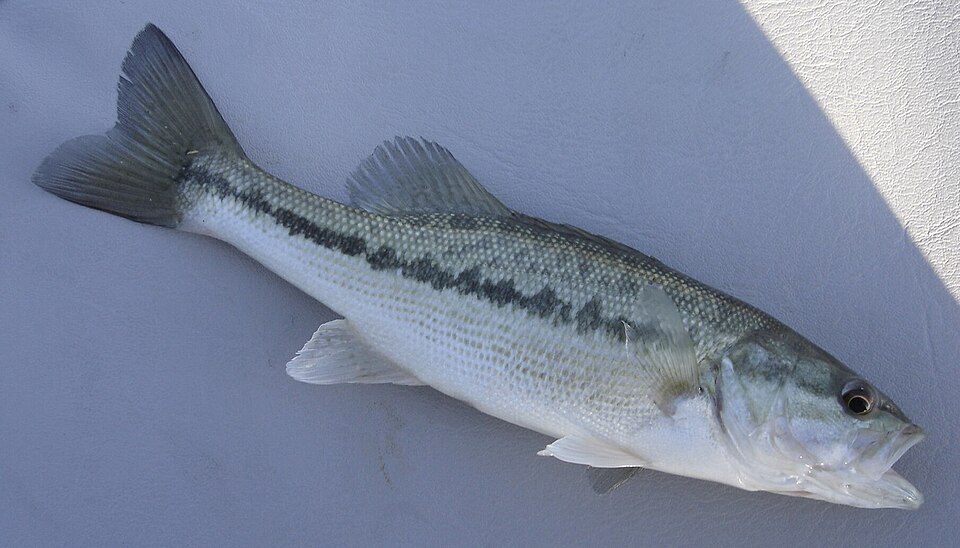
A spotted bass look-alike that has quietly taken over lakes across the Carolinas and Virginia. Alabama bass out-compete and hybridize with native spotted bass, but they also grow fast and fight hard, which is why anglers keep chasing them.
Alabama bass are nearly identical to spotted bass, and the truth is most anglers cannot tell them apart on sight. Both have a rough, sandpapery patch of teeth on the tongue, which separates them from largemouth right away. On a largemouth that tongue patch is smooth, and the upper jaw stretches back well past the eye. Spotted bass and Alabama bass both have upper jaws that end near the back of the eye, not far behind it.
The real difference between spotted bass and Alabama bass is technical: it comes down to scale counts along the lateral line and the shape of the dorsal fin dip, details you need a hand lens and a fish in hand to check. Alabama bass tend to run slightly more elongated with a more sharply pointed second dorsal fin, and the dark blotch at the base of the tail is usually more distinct and diamond-shaped. Since the two species also hybridize where they overlap, do not trust a quick look. If it matters for a record or a regulation, assume any spotted-bass-looking fish from a lake known to have Alabama bass could be either, or a mix of both.
The app forecasts these conditions for your spot, and learns which ones you catch on.
Season
Where it lives
Alabama bass live in reservoirs and the rivers that feed them, favoring clear to moderately stained water with rock, gravel, or clay bottoms. They school around deep structure: main-lake points, humps, bluff walls, and standing timber. Unlike largemouth, they do not hug shallow cover for long once summer sets in. They push out to open water and suspend over deep structure, often near baitfish schools.
In North Carolina they have spread through reservoirs like Lake Norman, Lake Wylie, and other Catawba River lakes, usually after being introduced illegally as bait bucket transplants. Once established, they tend to dominate the spotted bass and even push largemouth to the shallower margins.
What it eats
Shad and other small baitfish make up most of the diet once a fish is past a few inches long. They also eat crawfish, small bluegill, and insects, but they are built to chase open-water baitfish, and that is where you find them feeding hardest, often busting shad on the surface early and late in the day.
How to catch it
Find them by finding bait. A graph showing shad balls suspended over a point or hump in twenty to forty feet of water is a better clue than any bank cover. Drop a shaky head or a small jigging spoon straight down into the school and work it vertically. A drop shot with a four-inch finesse worm does the same job and is easier for a beginner to fish confidently.
Early and late in the day, watch open water near points for surface activity. When shad get pushed up, a topwater walking bait or a small popper thrown into the commotion draws hard, fast strikes. Alabama bass hit aggressively and pull well above their size, so use the same tackle you would for spotted bass, nothing needs to be heavier than that.
- How big do Alabama bass get?
- Most run one to three pounds, but they grow faster than spotted bass and fish over five pounds show up in reservoirs with heavy shad populations. The current world record is over eleven pounds.
- What do Alabama bass eat?
- Mainly shad and other baitfish, along with crawfish and small bluegill. They key in hard on open-water baitfish schools more than largemouth or spotted bass do.
- When do Alabama bass spawn?
- In spring when water temperatures reach the low to mid 60s, similar timing to largemouth and spotted bass. They bed on gravel or hard bottom in shallow coves and pockets.
- What is the best time to catch Alabama bass?
- Early morning and late evening when shad get pushed to the surface near points and humps. Summer and fall are strong months since these fish stay active chasing open-water bait.
- Are Alabama bass good to eat?
- Yes, the meat is white, mild, and similar to other black bass. Many lakes actually encourage keeping them since they outcompete native bass species.
- Is it legal to move or stock Alabama bass?
- No, in most states it is illegal to transport or release Alabama bass into new waters. They spread aggressively and hybridize with native spotted bass, so moving them causes real damage to local fisheries.