

Alligator Gar
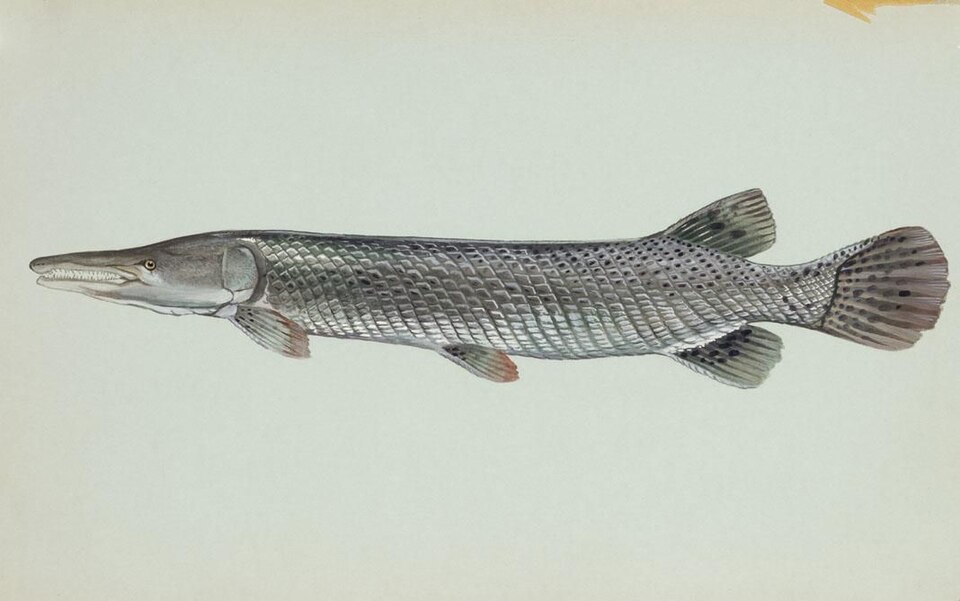
The largest gar in North America, a prehistoric-looking predator that can grow longer than a grown man. Alligator gar are heavily regulated in most places, so check local rules before you target one.
Alligator gar get mistaken for other gar species, mainly the longnose gar and the shortnose gar, but the head gives them away fast. Alligator gar have a short, broad snout with a double row of large teeth on the upper jaw, closer to the wide, alligator-like mouth they are named for. Longnose gar have a thin, needle-like snout that makes up most of the head length, and only a single row of teeth. Shortnose gar have a shorter snout too, but they stay much smaller and lack the second tooth row.
Size is a good clue once a fish is mature. Alligator gar are the giants of the family, regularly topping six feet and sometimes stretching past eight, while other gar species rarely get past four or five feet. Body color is olive to brown on top fading to lighter sides, with dark blotches that get heavier toward the tail, and thick, diamond-shaped ganoid scales cover the whole body on every gar species, so scale pattern alone will not separate them.
The app forecasts these conditions for your spot, and learns which ones you catch on.
Season
Where it lives
Big slow rivers, oxbow lakes, and reservoirs across the Gulf coast and the lower Mississippi River basin. Alligator gar like warm, sluggish water with soft bottoms and heavy cover. They hold near logjams, deep holes, and backwater sloughs, and they often lie just under the surface in calm water where you can spot their long, armored bodies.
They tolerate brackish water too, so you can find them near river mouths and coastal marshes along the Gulf. In summer they push into flooded backwaters and oxbows to feed and spawn.
What it eats
Mostly fish. Alligator gar eat shad, carp, catfish, and mullet, along with turtles, waterfowl, and anything else slow enough to catch. They are ambush feeders that hang motionless near the surface, then strike with a sideways snap of their long, tooth-lined jaw.
How to catch it
Most anglers fish for alligator gar with big cut bait, whole dead fish like shad or carp, fished on the bottom with heavy tackle. A stout rod, 50 to 80 pound line, and a wire or heavy mono leader are standard, since these fish have rows of sharp teeth and enough size to straighten weak hooks. Circle hooks are common and often required, since they hook the fish cleanly in the jaw and make release easier.
Fish deep holes and slow current seams in summer when the water is warm and gar are active near the surface. Many anglers also bowfish for gar at night with a light and a bow, but rod and reel anglers should be ready for a long fight and a fish that can weigh well over a hundred pounds. Alligator gar are slow to reproduce and heavily protected in many states, with tight bag limits or catch and release only rules. Always check your state's regulations before keeping one.
- How big do alligator gar get?
- They are the largest gar species in North America. Six to seven feet is common for a mature fish, and some individuals have been documented over eight feet and past 300 pounds.
- What do alligator gar eat?
- Mostly other fish, especially shad, carp, and other rough fish, along with waterfowl and small mammals when the opportunity comes up. They are ambush feeders that grab prey sideways before turning it to swallow head first.
- When is the best time to catch an alligator gar?
- Warm months are best, when they push into shallow backwaters and oxbows to spawn and feed. Many anglers target them at dawn, dusk, or after dark when the fish sit near the surface in calm water.
- Are alligator gar good to eat?
- The meat is white, firm, and considered good table fare by people who fish for them, but the eggs are toxic and must never be eaten. Check local regulations before keeping one, since many states limit harvest or require release.
- Can alligator gar hurt you?
- They are not aggressive toward people and there is no real record of unprovoked attacks, but they have rows of sharp teeth and enough size to cause injury if handled carelessly. Use pliers, a wire leader, and caution around the mouth when unhooking one.
- Why are alligator gar so regulated?
- They grow slowly, take years to reach spawning age, and were overharvested and poisoned as a rough fish in the past, so populations dropped sharply in parts of their range. Most states now have tight bag limits, size limits, or permit requirements to protect them.