

Atlantic Croaker
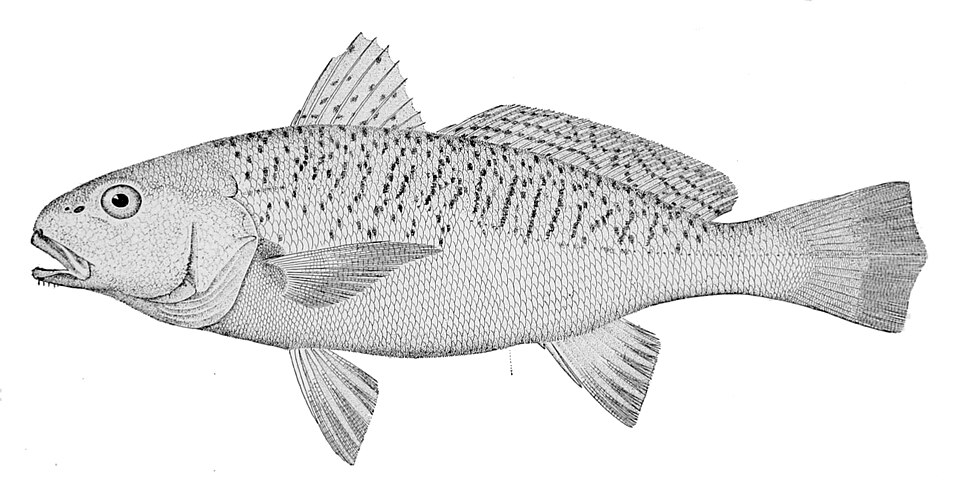
A sound sport fish makes for a great beginner catch. Croaker bite readily, fight decently for their size, and make a odd drumming grunt when you reel them up, hence the name.
Atlantic croaker are most often mixed up with spot and small black drum, since all three share the same coastal water and the same coppery, silvery-gray body. Look at the mouth first. Croaker have a small, distinctly downturned mouth set under a blunt snout, built for feeding on the bottom, along with several tiny barbels or fringe along the chin edge that spot and black drum do not have. Spot are shorter-bodied with a single dark shoulder spot behind the gill and no chin barbels, and their mouth is smaller and less obviously underslung. Black drum share the chin barbels but grow far larger, have a deeper, humped body, and show faint vertical bars when young rather than the wavy, broken lines that run along a croaker's back and sides.
Croaker also have a rougher feel to their scales than spot, and their dorsal fin has a noticeable notch between the spiny front section and the soft rear section. Coloration runs silvery to brassy with a pattern of dark, squiggly lines that gives the back a marbled look, fading to white on the belly. If you catch one and squeeze it gently near the gills, it will make a distinct croaking or drumming sound, which is where the name comes from and is a quick way to confirm you have a croaker and not a spot.
The app forecasts these conditions for your spot, and learns which ones you catch on.
Season
Where it lives
Croaker live in bays, sounds, and coastal rivers over mud and sandy bottom. They tolerate a wide range of salinity, so you find them well up into brackish water as well as right off the beach in the surf.
Look for them around inlets, piers, channel edges, and grass flat drop-offs. They school tight to the bottom, so once you find one you usually find several more in the same spot.
What it eats
Bottom feeders through and through. Croaker eat worms, small crabs, shrimp, and other small crustaceans, plus the occasional small fish. They locate food by smell and taste more than sight, feeling around the bottom with sensory barbels near the mouth.
How to catch it
A simple bottom rig with a small hook, a light sinker, and a piece of bloodworm or shrimp is all you need. Fish it right on the bottom near piers, bridges, or inlet edges. Croaker have small mouths, so keep hooks small, a size 4 to 1 works well, and cut your bait into small pieces rather than using a whole shrimp.
They school up thick, so once you get a bite, drop right back into the same spot. A double-hook bottom rig lets you catch two at a time when they are running. Summer evenings on a lit pier are hard to beat.
- What does an Atlantic croaker eat?
- Croaker feed on the bottom on worms, small crabs, shrimp, and other small invertebrates. They will also take pieces of cut fish. A simple bottom rig baited with bloodworm, shrimp, or squid works well.
- When is the best time to catch croaker?
- Late spring through fall is the main season in most areas, with summer being peak activity in bays, sounds, and surf. They tend to bite best in the evening and at night, especially in warm months.
- How big do Atlantic croaker get?
- Most croaker you catch run 8 to 14 inches and under a pound. A big one can push past 3 pounds, but anything over 2 pounds is considered a very good fish.
- Are Atlantic croaker good to eat?
- Yes, croaker have mild, white, flaky meat and are a popular table fish, especially fried whole or filleted. They are easy to clean since they run small but firm.
- Why do croaker make noise?
- Croaker drum a set of muscles against their swim bladder to produce a croaking sound, which is used for communication and is more common in males, especially during spawning season.
- Do I need a license or is there a size limit for croaker?
- Rules vary by state and whether you are fishing from shore or a boat, and some areas set minimum size or bag limits. Check your local regulations before keeping a batch of croaker.