

Atlantic Spadefish
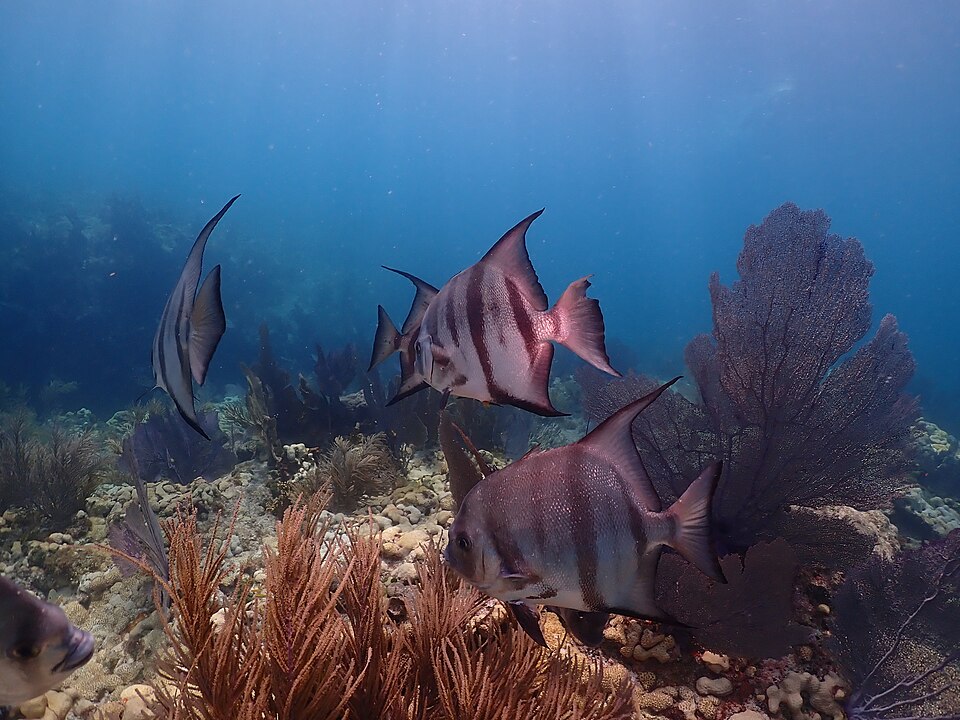
A saucer-shaped, black-striped fish that schools around structure in coastal waters. Odd looking, hard fighting, and famously fussy about what it eats.
Atlantic spadefish have a deep, round, silver-dollar-shaped body flattened side to side, with a small mouth set right at the tip of a blunt snout. Four to six wide black vertical bars cross the body, though these fade or nearly disappear on larger, older fish. The dorsal and anal fins are long and trail back with a sickle-like sweep, giving the fish a distinct outline in the water.
Anglers new to saltwater often confuse spadefish with juvenile black drum, since both can show dark vertical bars on a silvery body. Black drum have a longer, more torpedo-shaped body, a subterminal mouth built for eating shellfish off the bottom, and barbels under the chin, none of which spadefish have. Spadefish are also sometimes mixed up with permit, but permit have a more angular, deeply forked tail, a steeper forehead, and no barring at all. The disc-shaped body, tiny mouth, and bold bars on a young fish are the quickest way to confirm a spadefish.
The app forecasts these conditions for your spot, and learns which ones you catch on.
Season
Where it lives
Atlantic spadefish live around nearshore and inshore structure: reef wrecks, artificial reefs, piers, navigation markers, and buoy chains. They also school around the pilings of bridges and inlet jetties. Look for them suspended in the water column rather than hugging bottom, often in loose schools you can spot from above on calm days.
They show up inshore and around structure close to the beach starting in late spring, then move to deeper nearshore wrecks and reefs as the water warms through summer.
What it eats
Jellyfish, small crustaceans, sea squirts, and other soft invertebrates that grow on pilings and reef structure. They graze more than they chase, picking food off structure and out of the current rather than ambushing prey. This picky, grazing habit is exactly why they can be tough to hook.
How to catch it
Small pieces of jellyfish are the classic bait, when you can get them. Cannonball jellyfish cut into strips, cast on a small hook with just enough weight to sink slowly near a piling or buoy line, is the go-to rig. Some anglers do just as well with frozen clam or shrimp fished the same slow, light way.
Fish light: a small hook, light leader, and no more weight than you need. Spadefish have small, tough mouths and spook easily around clear water, so downsize everything and let the bait sink naturally through the school. Once hooked, they pull hard and turn sideways against the drag, punching well above their size.
- What do Atlantic spadefish eat?
- Mostly jellyfish, small crustaceans, worms, and other invertebrates they pick off structure. They are not aggressive predators, which is why small, natural-looking baits work far better than lures.
- How big do spadefish get?
- Most fish caught run one to eight pounds, with a foot to a foot and a half in length. Fish over 15 pounds show up around deep wrecks and reefs but are uncommon.
- When is the best time to catch spadefish?
- Late spring through summer, when they school up around nearshore structure to spawn. Warm, clear water brings the biggest schools shallow enough to target from a boat.
- What is the best bait for spadefish?
- Small pieces of clam, shrimp, or jellyfish fished on a small hook near structure. A light leader and a quiet approach matter more than the exact bait, since spadefish spook easily and have small, soft mouths.
- Are Atlantic spadefish good to eat?
- Yes, the meat is white, mild, and well regarded by anglers who target them. Many people rate them highly compared to other structure-dwelling saltwater fish.
- Where do you usually find spadefish?
- Around nearshore wrecks, reefs, piers, and pilings, often suspended in the water column rather than sitting on the bottom. They school tightly, so hooking one often means more are nearby.