

Barred Sand Bass
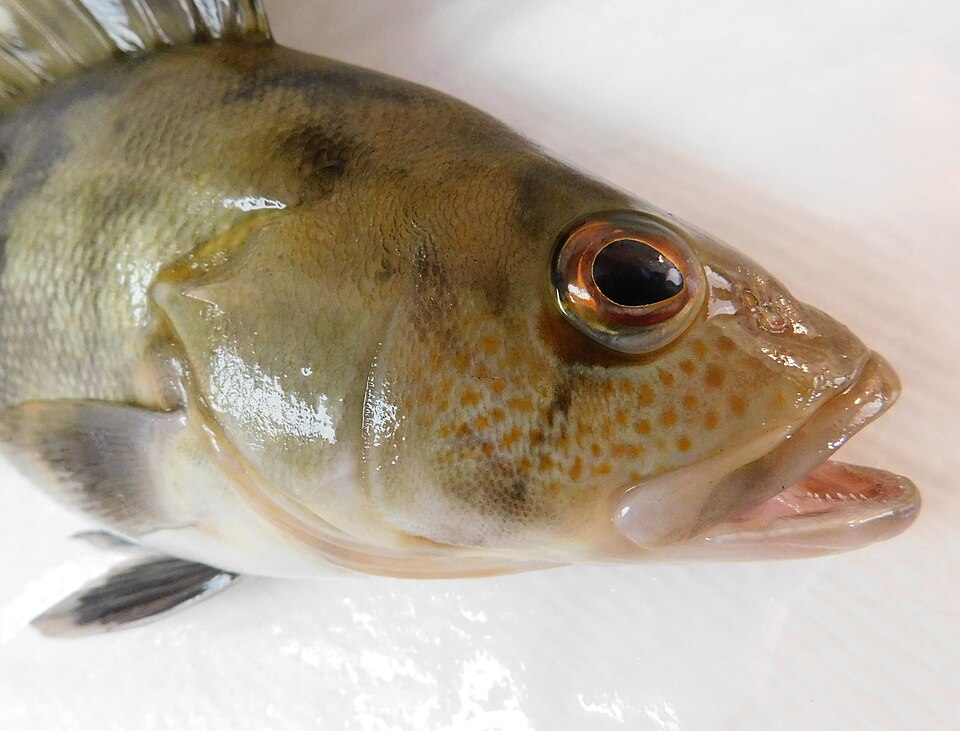
A stocky, hard-fighting bottom fish common off the Pacific coast. Sand bass hold over structure in big schools, so finding one often means finding a dozen.
Barred sand bass are chunky, big-headed fish with a mottled olive to brown back fading to a pale, sometimes white belly, covered in dark blotchy bars that break up their outline rather than forming clean stripes. The dorsal fin is the giveaway: it has a deep notch between the spiny and soft portions, with the third spine noticeably taller than the others, giving the front of the fin a spiky, uneven look.
The main lookalike is the kelp bass, and the two overlap in the same rocky reefs and kelp beds. Kelp bass run more mottled green-brown overall without the bold barring, and their dorsal spines are more even in height, so the fin looks smoother and less jagged along the top. Barred sand bass also have a slightly deeper, more compressed body and a blunter head than kelp bass. Spotted bay bass are a third species in the same family and can confuse things further, but they run smaller, show rounder dark spots instead of bars, and stick to bay and estuary habitat rather than open rocky reef.
The app forecasts these conditions for your spot, and learns which ones you catch on.
Season
Where it lives
Found along the Pacific coast, mainly over sand flats, mussel beds, and rocky reefs in bays and nearshore waters. They like structure that breaks up an otherwise flat sandy bottom: reefs, kelp edges, pipelines, and drop-offs where sand meets rock.
In late spring and summer, sand bass move onto shallow sandy flats to spawn, often stacking up in large aggregations. The rest of the year they scatter over deeper structure, generally in water from twenty to a hundred feet deep.
What it eats
Sand bass are opportunistic ambush feeders. They eat small fish like anchovies, sardines, and squid, along with crabs and other bottom-dwelling crustaceans. They sit near structure and dart out to grab anything that swims or drifts too close.
How to catch it
Drop a dropper-loop rig baited with a live anchovy or a strip of squid straight down onto reef or sand structure. Sand bass hold tight to the bottom, so keep your bait within a foot or two of it. Slow-trolled or drifted plastics on a leadhead jig also work well when you find a school.
Once you hook one, stay on the spot. Sand bass school heavily, especially during the summer spawning aggregations, and a single piece of structure can produce fish after fish. Check your local regulations before keeping any, since size and bag limits are actively managed to protect spawning aggregations.
- When do barred sand bass spawn?
- They spawn in summer, typically from June through August, and often gather in large aggregations over open sand or mud flats near structure during this time. Fishing can be excellent then, but many areas restrict harvest during peak spawning to protect these aggregations.
- What do barred sand bass eat?
- They feed on small fish, squid, crabs, and other bottom-dwelling creatures. They are ambush feeders, so they hold near structure or transition zones and dart out to grab prey rather than chasing it far.
- How big do barred sand bass get?
- Most fish caught run 12 to 18 inches and one to three pounds. A big one pushes five pounds, and anything over that is a genuine trophy for the species.
- What is the best way to catch barred sand bass?
- Fish the bottom near sandy patches close to reefs, rock piles, or drop-offs using cut bait, live squid, or a swimbait bounced along the bottom. They hold tight to structure edges rather than sitting in open sand, so target the transition zones.
- Are barred sand bass good to eat?
- Yes, they have mild, white, flaky meat and are a popular table fish. Just check local size and bag limits first, since populations have been managed more tightly in recent years due to fishing pressure on spawning aggregations.
- Is there a best time of year to target them?
- Summer is the peak season since fish concentrate for spawning and feed heavily, but they are catchable year round over their usual rocky and sandy bottom habitat. Water temperature drives activity more than the calendar.