

Barred Surfperch
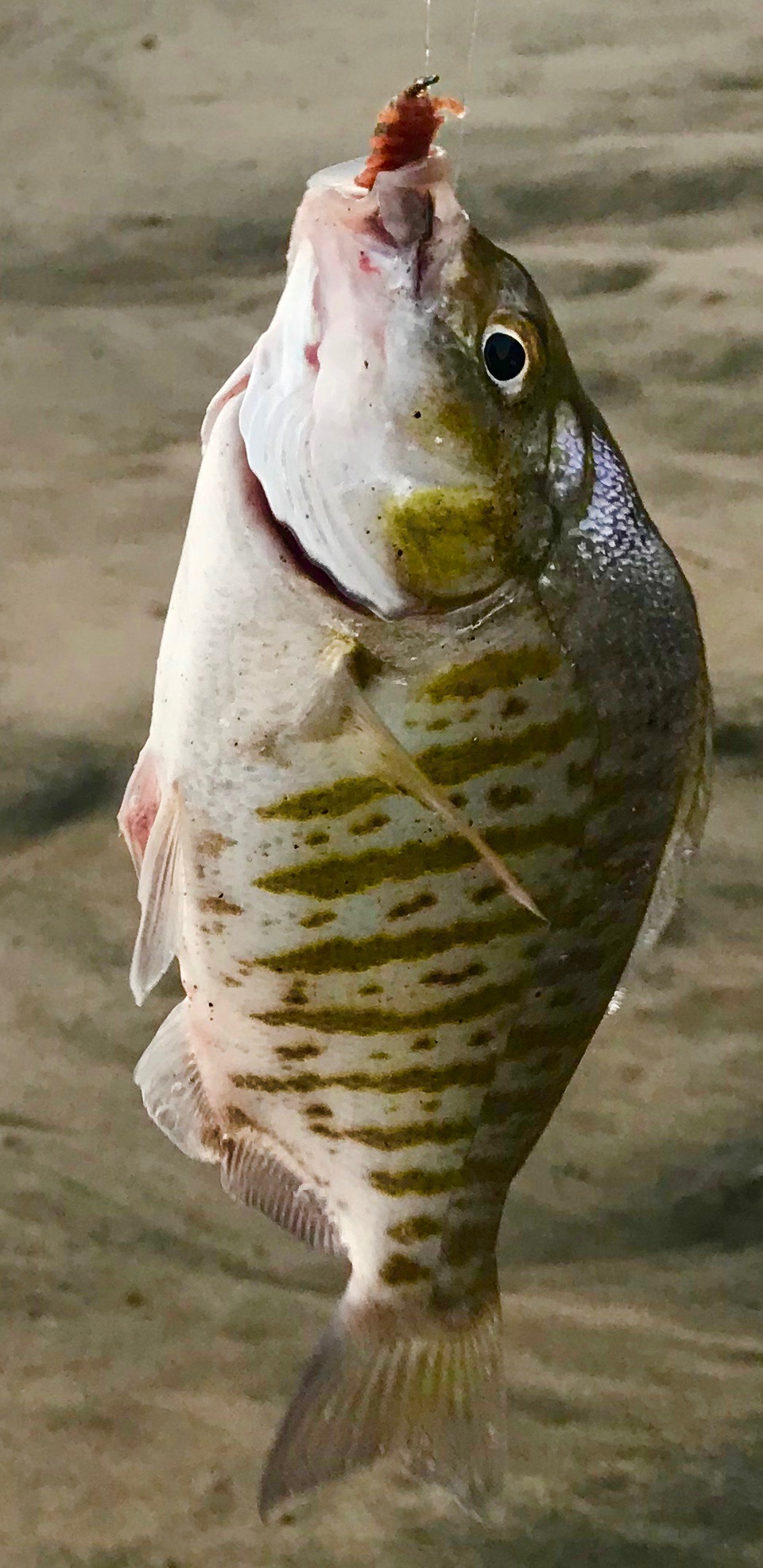
A silvery, deep-bodied perch that cruises right in the surf zone. Barred surfperch are the fish that make bank fishing on the Pacific coast so approachable, easy to reach and steady to bite.
Barred surfperch have a deep, oval body flattened side to side, a small mouth, and a long dorsal fin with a mix of spines and soft rays running most of the length of the back. Look for the vertical bars along the sides that give the fish its name, usually seven to eleven dusky bars over a silver to brassy background. The tail is moderately forked and the anal fin base is long, which is typical of the surfperch family.
The most common mix-ups are with calico surfperch and redtail surfperch. Calico surfperch have a mottled, blotchy pattern instead of clean vertical bars, and they run smaller. Redtail surfperch show a reddish or pink tint to the tail and lower fins, which barred surfperch lack, and their bars are usually fainter or absent. Barred surfperch also tend to run larger and deeper bodied than most other surfperch you will catch in the same wash, and the bold, evenly spaced barring on a bright silver body is the fastest way to confirm you have the right fish.</identification_md"> <parameter name="faqs">[{"question": "Where do barred surfperch spawn?", "answer": "They do not lay eggs like most fish. Barred surfperch are livebearers, and females release fully formed young after an internal gestation. Mating happens nearshore, mostly in cooler months, and females can give birth over an extended season."}, {"question": "What do barred surfperch eat?", "answer": "Sand crabs are the main food source, along with small clams, worms, and other invertebrates they dig out of the wash. Anytime you find a heavy sand crab population in the surf, you will usually find feeding perch nearby."}, {"question": "When is the best time to catch them?", "answer": "Early morning and late afternoon on an incoming tide are usually most productive. Many anglers also do well fishing right after a storm churns up the sand and exposes sand crabs and other food."}, {"question": "How big do barred surfperch get?", "answer": "Most run 8 to 12 inches, with larger fish pushing 14 to 16 inches and a pound or more. They are one of the larger members of the surfperch family."}, {"question": "Are barred surfperch good to eat?", "answer": "Yes. The meat is mild and white, and they are a common table fish wherever they are caught. Clean them fresh since the fillets are thin and do not hold well for long."}, {"question": "What is the best bait or rig for them?", "answer": "A simple high-low rig with size 4 to 6 hooks baited with sand crabs, mussel, or bloodworm works well. Cast just past the breaking waves and let the bait settle into the trough where the fish feed."}]
The app forecasts these conditions for your spot, and learns which ones you catch on.
Season
Where it lives
Barred surfperch live along the Pacific coast, from sandy beaches up and down the coastline of California and into southern Oregon. They stay close to shore in the surf zone itself, often just beyond the breaking waves.
Look for sandy beaches with a bit of structure: troughs that run parallel to shore, sandbars, and the deeper holes that form between them. A beach with an obvious trough close to the sand, especially near a rip current or a low spot in the sandbar, will usually hold fish. They move with the tide, feeding hardest as incoming water stirs up the bottom.
What it eats
Sand crabs are the main course, along with small clams, worms, and other invertebrates they root out of the sand as waves churn the bottom. They feed by picking through disturbed sand right where the surf breaks, which is why fishing the wash after a wave is so effective.
How to catch it
A simple high-low rig with two hooks, a pyramid sinker to hold bottom in the current, and fresh sand crabs or bloodworms is the standard setup. Cast just past the breakers and let the sinker settle into a trough, then wait. Barred surfperch bite with a series of light taps rather than a hard pull, so give them a moment before setting the hook.
Fish an incoming tide if you can, and target the deeper troughs and cuts in the sandbar rather than the flat, shallow stretches. No wetsuit or long cast is needed. Most of these fish are caught within thirty feet of the beach, which makes this an easy one to learn surf fishing on. Check your state's regulations for size and bag limits before you keep any.
- When do barred surfperch spawn?
- They do not lay eggs. Barred surfperch give birth to live young, and mating and birthing happen mostly in late winter through spring. Pregnant females are common in the surf during that stretch, which is part of why many anglers practice catch and release then.
- What do barred surfperch eat?
- Sand crabs are the top food source, along with small clams, worms, and other invertebrates that get stirred up in the wash. Their small, low mouth is built for digging these out of sand rather than chasing baitfish.
- When is the best time to catch barred surfperch?
- Early morning and late afternoon around an incoming or high tide are usually best. Look for a flat stretch of beach with a trough close to shore, since that is where the fish feed on crabs and other prey washed in by the waves.
- How big do barred surfperch get?
- Most run 8 to 12 inches, with bigger fish pushing 14 to 16 inches and a pound or more. A fish over a pound and a half is a solid catch for this species.
- Are barred surfperch good to eat?
- Yes, they have mild, white meat and are a popular eating fish where they are common. Many anglers keep a few for the table while releasing pregnant females, especially in spring.
- What is the easiest way to catch them?
- A simple high-low rig with small hooks baited with sand crabs or bloodworms, cast into a surf trough, works well. No boat or special gear is needed, just a spinning rod and a spot to wade into the wash.