

Black Rockfish
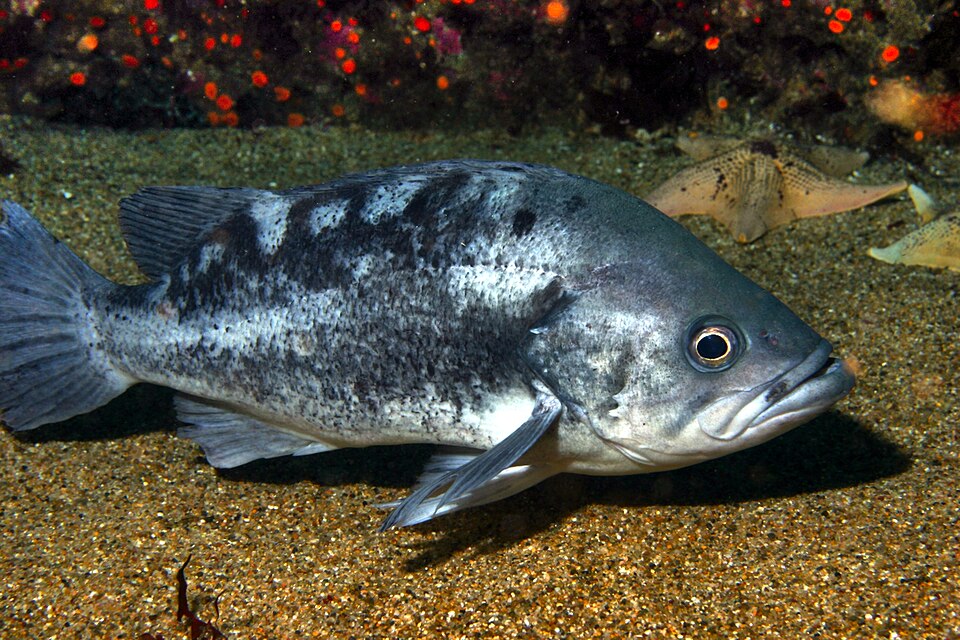
A hard-fighting bottom-and-mid-water rockfish that schools near the surface over rocky structure. Black rockfish are common along the Pacific coast and a great pick for a beginner who wants steady action on a boat or a jetty.
Black rockfish are dark, football-shaped fish, usually slate gray to black on the back fading to lighter gray or white on the belly, with a mottled pattern along the sides. The dorsal fin has 13 spines and is not deeply notched, which gives the fin a fairly even, continuous outline from front to back. The mouth is medium sized and does not reach far past the eye.
The most common mix-up is with blue rockfish, which run a similar dark color and school in the same water. Blue rockfish have a smaller mouth, a distinct notch between the spiny and soft parts of the dorsal fin, and a flatter, more compressed face. Black rockfish also get confused with dusky and yellowtail rockfish. Yellowtail rockfish usually show olive or yellow tints on the fins and tail that black rockfish lack, and dusky rockfish tend to run smaller with a more slender body. When in doubt, check the anal fin: on black rockfish it slants backward at an angle, while several lookalikes have a straighter, more vertical anal fin edge.
The app forecasts these conditions for your spot, and learns which ones you catch on.
Season
Where it lives
Black rockfish live along the Pacific coast from the northern reaches down through central California, holding around rocky reefs, kelp beds, jetties, and nearshore pinnacles. Unlike many rockfish that hug the bottom, blacks often suspend well up in the water column, sometimes right near the surface, especially where current sweeps bait past a point or headland.
You can catch them from jetties and rocky shorelines, but most anglers find better numbers from a boat working reefs and kelp lines in 30 to 150 feet of water. They school by size, so once you find fish, you can often stay on that same class of rockfish all day.
What it eats
Black rockfish feed on small baitfish like anchovies, herring, and sand lance, along with squid and krill. They are aggressive, opportunistic feeders that will chase a jig or a swimming lure much more readily than most other rockfish species, which is part of why they are a good beginner target.
How to catch it
Drop a leadhead jig or a metal jig straight down over a reef and let it sink to the depth where you mark fish on the sonar, often well off bottom. Jig it with a steady lift and drop. Black rockfish will often hit on the fall, so keep slack out of the line.
A simple two-hook shrimp fly or bait rig with a heavy sinker also works well when fished near structure. From a jetty or rocky bank, cast a jig or a bait rig out and let it sink along the rocks, retrieving slowly.
Black rockfish are managed with size and bag limits that vary by region and change often, and some areas require descending devices to release fish caught deep. Check your state's current regulations before you go.
- How big do black rockfish get?
- Most run 12 to 20 inches and one to three pounds. A large one can push past 24 inches and five or six pounds, but fish that size are uncommon.
- What do black rockfish eat?
- Small baitfish, squid, krill, and other crustaceans. They feed aggressively in the water column, which is why jigs and small swimbaits work so well on them.
- When is the best time to catch black rockfish?
- They bite all year, but spring through fall is most productive since they move shallower and school tighter around structure. Early morning on an incoming tide is a reliable window.
- Where do you find black rockfish?
- Around rocky reefs, kelp beds, jetties, and pinnacles, often suspended off the bottom rather than sitting right on it. They school, so once you find one you usually find more.
- Are black rockfish good to eat?
- Yes. The meat is white, firm, and mild, and they are one of the more popular rockfish for the table.
- Do I need to worry about barotrauma with black rockfish?
- Yes. Like other rockfish, they can suffer swim bladder expansion when brought up from any real depth. If you plan to release fish, use a descending device to get them back down instead of releasing them at the surface.