

Black Sea Bass
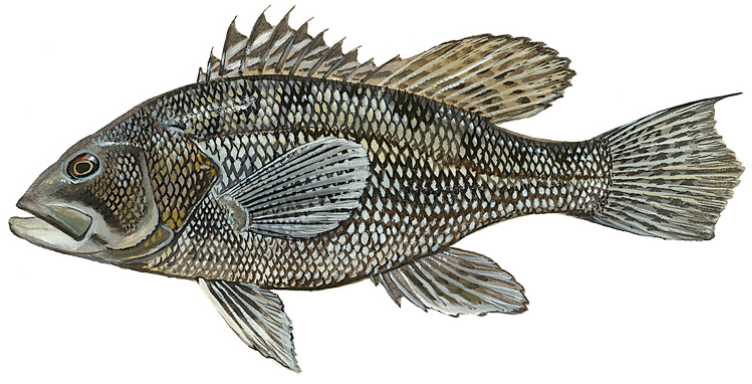
A chunky, hard-fighting bottom fish with a big head and grumpy underbite. Black sea bass are common off the Carolinas and Virginia, easy to find over structure, and excellent on the table, which makes them one of the best saltwater fish for a beginner to target.
Black sea bass are chunky, humped-back fish with a big head, a large mouth, and a spiny dorsal fin that runs the length of the body. Color ranges from dark smoky gray to almost black, with faint mottled bars and pale blotches along the sides, and some fish show a blue tint around the face. Males develop a fleshy hump on the forehead as they age, which is a giveaway no lookalike shares.
They get confused with other bottom-dwelling bass and grouper, especially small gag or black grouper, but grouper have a more rounded tail and a heavier, less spiny dorsal fin, while black sea bass have a squared-off or slightly notched tail and a dorsal fin with sharp visible spines you can feel. They are also mixed up with tautog, which share similar dark coloring and rocky habitat, but tautog have thick rubbery lips and no spiny dorsal fin, while black sea bass have a spinier profile overall and a more streamlined, less blocky head shape.
The app forecasts these conditions for your spot, and learns which ones you catch on.
Season
Where it lives
Black sea bass live over hard bottom: rock piles, ledges, artificial reefs, wrecks, and jetties. They stack up on any structure that breaks up sand or mud bottom, from nearshore reefs in twenty feet of water out to deeper wrecks past a hundred feet.
In spring and fall they move inshore, showing up around jetties, piers, and nearshore live bottom. In the heat of summer and through winter, the bigger fish push out to deeper offshore structure.
What it eats
Crabs, shrimp, squid, and small baitfish. Black sea bass are opportunistic bottom feeders with strong jaws built for crushing shellfish, and they will grab almost any cut bait or small live bait dropped in front of them.
How to catch it
A simple bottom rig or a two-hook chicken rig with squid, cut bait, or shrimp is the standard approach. Drop it straight down to structure and lift it a foot or two off bottom once it hits, since sea bass hold right on top of the reef or wreck. Bites are sharp and unmistakable.
A bucktail jig tipped with squid strip also works well, especially over shallower reefs, and it lets you cover a school quickly once you find one. Anchor or drift directly over hard bottom rather than fishing open sand nearby, since these fish rarely stray far from cover.
- When do black sea bass spawn?
- Spawning happens in spring through summer, timing varies by latitude but generally runs from April into July. Black sea bass are protogynous hermaphrodites, meaning many start life as females and some switch to males as they grow, so bigger fish are more likely to be male.
- What do black sea bass eat?
- They feed on crabs, shrimp, small fish, worms, and just about anything living on or near structure. Cut bait, squid, and clams all work well because they match what these fish already eat.
- What is the best time to catch black sea bass?
- Look for them around wrecks, reefs, jetties, and rocky bottom, they hold tight to structure year round. Fishing tends to peak in warmer months when fish move onto nearshore structure, though they stay catchable well into fall before pushing back to deeper, warmer water in winter.
- How big do black sea bass get?
- Most fish caught run 1 to 3 pounds and 10 to 15 inches, with true trophies pushing 5 to 8 pounds. Anything over 3 pounds is a solid, above-average fish.
- Are black sea bass good to eat?
- Yes, they have firm, mild white meat and are considered one of the better eating bottom fish. They hold up well to almost any cooking method, from frying to steaming whole.
- Do black sea bass have size or bag limits?
- Yes, minimum size and bag limits are common and change often based on stock assessments. Check current regulations for your area before keeping fish, since rules can differ significantly even between nearby regions.