

Bluefish
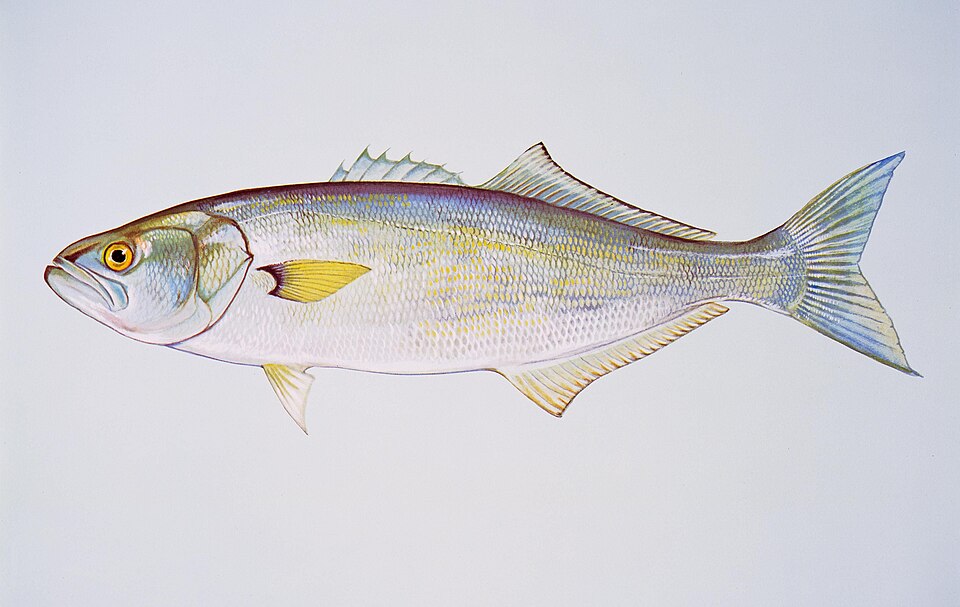
Bluefish are fast, toothy, and mean about it. They run through baitfish in packs and hit anything that moves, which makes them one of the easiest saltwater fish to catch when they are around.
Bluefish have a torpedo-shaped, silvery body with a faint bluish-green back and no real markings, which is where the confusion starts. Anglers new to them often mix them up with jack crevalle or small tuna. Jacks are deeper-bodied and have a more sharply forked tail with black spots near the gill cover, while bluefish are longer and leaner with a single, low, spiny dorsal fin set apart from the soft dorsal behind it. The giveaway with bluefish is the mouth: it opens wide and is packed with a single row of flat, triangular, razor-sharp teeth, far more noticeable than the smaller teeth of jacks or the toothless mouths of small tunny.
Bluefish are also confused with false albacore and little tunny at a glance because of the similar size and silver color. Tuna species have smooth, firm, almost rubbery skin and no visible scales, while bluefish have easily seen scales and a rougher feel. Bluefish also have a protruding lower jaw and a noticeably underslung look to the mouth that tuna do not share. If you handle the fish, the teeth settle any doubt fast.
The app forecasts these conditions for your spot, and learns which ones you catch on.
Season
Where it lives
Bluefish are open-water predators found along the whole NC, SC, and VA coast, from the surf and inlets out to nearshore structure and open ocean. They follow bait, not a fixed address, so their location shifts with the schools of menhaden and mullet they chase.
Look for diving birds working the water. That is a bluefish blitz from below pushing bait to the surface. You will find them in the surf, off piers, around inlets, and over nearshore reefs and live bottom.
What it eats
Baitfish, especially menhaden, mullet, and silversides, plus squid and just about anything smaller than they are. Bluefish feed in aggressive, fast-moving schools and often slash through bait rather than eating it cleanly, leaving cut and wounded fish behind. They will keep biting even after they are full.
How to catch it
Cast a metal spoon, a topwater plug, or a bucktail into a breaking school and retrieve fast. Bluefish chase speed, so a slow presentation is usually wasted on them. From piers and the surf, a cut mullet or menhaden head on a wire leader fished on bottom will also draw strikes.
Always use a wire or heavy mono leader. Bluefish teeth cut through light monofilament with no effort, and losing rigs to bite-offs is the most common beginner mistake. Once you hook one, keep it moving toward you steadily. They thrash hard boatside and at the surf line, so handle them with pliers, not fingers.
- How big do bluefish get?
- Most bluefish caught inshore run one to five pounds, often called snapper blues or tailor blues depending on size. Bigger fish in the eight to fifteen pound range show up further offshore or during fall runs, and anything over fifteen pounds is a genuinely large fish.
- What do bluefish eat?
- Bluefish eat almost anything smaller than they are, especially schooling baitfish like menhaden, mackerel, and sardines. They feed in aggressive, fast-moving packs and will slash through bait schools, often leaving cut and wounded fish behind even when not actively eating.
- When is the best time to catch bluefish?
- Bluefish bite best during their spring and fall migrations, when large schools move along the coast chasing baitfish. Early morning and low light periods tend to trigger the most aggressive feeding, though blitzes can happen any time of day when bait is present.
- Are bluefish good to eat?
- Yes, but the flesh is oily and starts to lose quality quickly once the fish is out of the water. Bleed and ice bluefish immediately after catching them, and eat them fresh rather than freezing for best flavor.
- Why are bluefish so hard to handle?
- Their teeth are the main reason. Bluefish have sharp, close-set teeth that can easily cut fingers, lines, and leaders, so most anglers use pliers to unhook them and a short wire or heavy mono leader when targeting them.
- Do bluefish schools stay in one place?
- No, bluefish are constantly moving and follow bait migrations along the coast. A spot loaded with fish one day can be empty the next, so success often comes down to finding where the bait and moving schools currently are.