

Bluegill
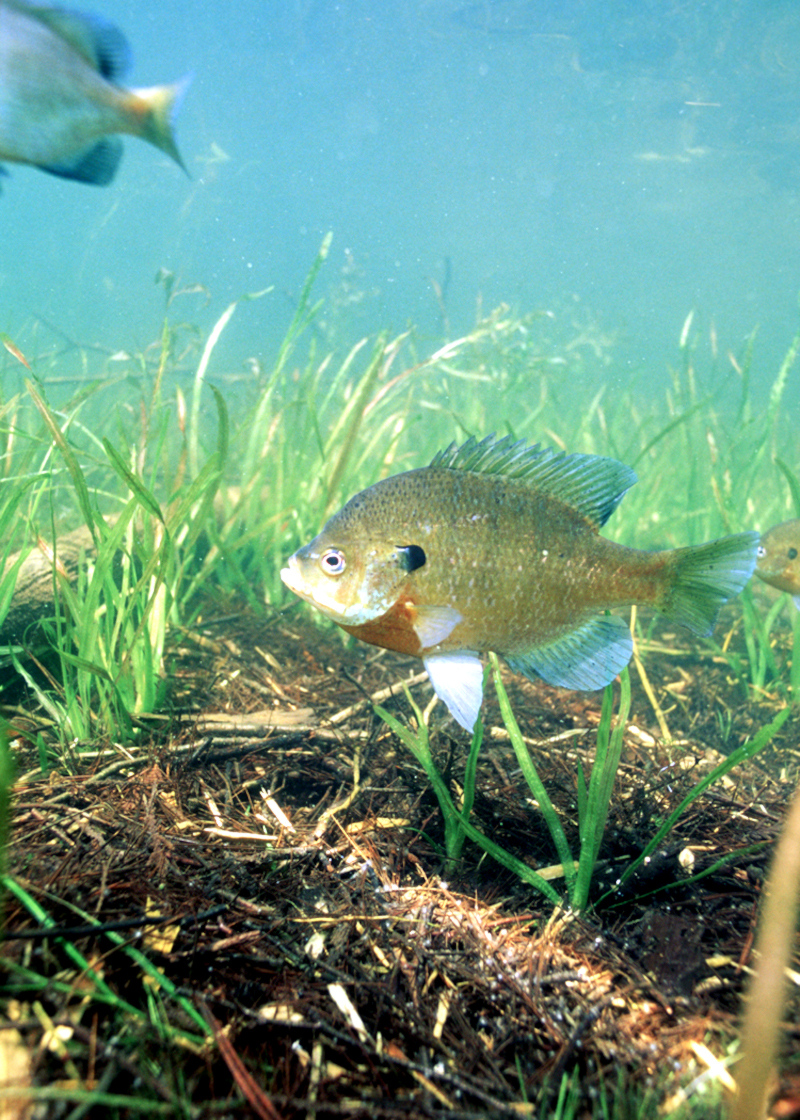
If you want to catch a fish today, catch a bluegill. They live in almost every pond in the country and they are willing to bite.
Bluegill are the classic "sunfish" most people picture, but they get mixed up with other panfish in the same family, especially redear sunfish, green sunfish, and warmouth. The easiest tell on a bluegill is the solid black spot at the back of the gill flap and another black spot at the base of the dorsal fin, combined with a deep, round, heavily compressed body. Their mouth is small, barely reaching the front of the eye when closed, which rules out warmouth and green sunfish, both of which have noticeably bigger mouths.
Redear sunfish are the closest look-alike since both species share that dark gill spot. The difference is color: redear have a red or orange edge on the gill flap instead of solid black, and their overall body color runs more olive and washed out compared to the bluegill's mix of blue, purple, and yellow shading, especially on the cheeks and belly. Bluegill also show faint vertical bars on their sides that fade in and out depending on mood and water clarity, a pattern redear rarely show as clearly.
The app forecasts these conditions for your spot, and learns which ones you catch on.
Season
Where it lives
Ponds, lakes, and the slow parts of rivers. Bluegill sit close to cover in shallow water. Look along weed edges, around submerged brush, under dock pilings, and beneath overhanging banks.
In late spring they fan out round spawning beds in sand or gravel shallows. They nest in colonies, so you can often spot them from the bank: a cluster of pale rings about the size of dinner plates, sitting in two to four feet of water.
What it eats
Insects, larvae, small crustaceans, zooplankton, and the odd tiny fish. They hunt by sight and feed all day long. That is most of the reason they are easy to catch. A bluegill will usually eat anything small that drifts past its nose.
How to catch it
A small hook, a split shot, a float, and a piece of worm. That is the whole method. Set the float so the bait hangs a foot or two off the bottom near cover, then watch it. If nothing happens in five minutes, move twenty yards and try again.
Bluegill have small mouths. Size your hook down further than feels right. A size 8 or 10 will out-fish anything bigger. When they are bedding in late spring, work a small jig slowly through the colony and you can catch fish until your arm gets tired.
- When do bluegill spawn?
- Bluegill spawn in late spring through summer once water temps hit the mid 60s to low 80s. You will see them bedding in colonies, clearing round saucer-shaped nests in shallow water over sand or gravel.
- What do bluegill eat?
- Insects, larvae, worms, small crustaceans, and tiny baitfish make up most of their diet. They will also eat fish eggs and bits of vegetation, but insects and larvae are the bulk of it.
- What is the best time to catch bluegill?
- Spring and early summer during the spawn is the easiest time, since they hold in shallow, visible beds and bite aggressively defending them. Early morning and evening are best once summer heat sets in and they retreat to deeper, cooler water during the day.
- How big do bluegill get?
- Most run 4 to 9 inches, with a good one pushing 10 inches and a pound. Anything over a pound is a genuinely big bluegill worth bragging about.
- Are bluegill good to eat?
- Yes, they are one of the best-tasting freshwater fish around, with mild, firm white meat. Their small size is the only downside, since it takes a good number of fish to make a meal.
- Are there limits on keeping bluegill?
- Most states allow generous limits on bluegill since they are prolific and rarely overfished, but limits vary by state and even by lake. Check local regulations before keeping a big batch.