

Bowfin
An ancient, hard-fighting predator that anglers either love for the fight or avoid for the teeth. Bowfin can breathe air, survive nearly anywhere, and pull harder than almost anything else swimming in warm, slow water.
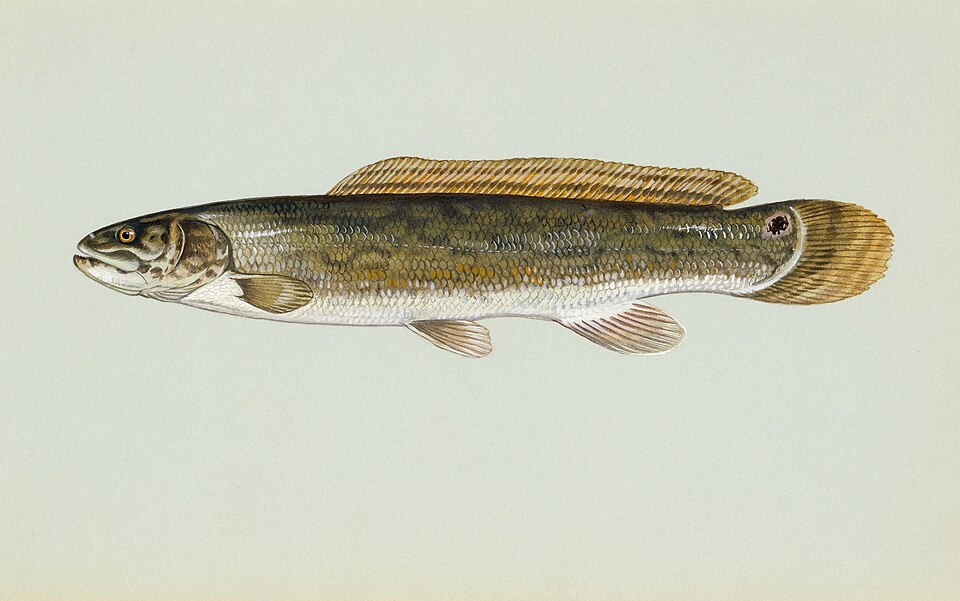
Bowfin get lumped in with snakeheads and juvenile gar, but a few features make them easy to sort out. A bowfin has one long dorsal fin that runs more than half the length of its back, a rounded tail, and a stout, cylindrical body covered in tough scales. Snakeheads look similar at a glance but have a longer anal fin and a flatter, more elongated head that looks almost snake-like from above, hence the name. Bowfin have a more rounded snout and a mouth full of sharp conical teeth built for grabbing, not shearing.
The other common mix-up is with young gar. Gar have long, thin, needle-like snouts full of teeth. A bowfin's mouth is short and broad by comparison, nothing like a beak. Male bowfin also carry a distinct black spot ringed in orange or yellow near the base of the tail, a mark females usually lack or show only faintly. That eyespot, combined with the long dorsal fin, is the fastest way to confirm you have a bowfin in hand.
The app forecasts these conditions for your spot, and learns which ones you catch on.
Season
Where it lives
Bowfin live in swamps, backwaters, oxbow lakes, and slow, weedy rivers across the Gulf coast, the Mississippi River drainage, the Great Lakes region, and much of the Southeast and Midwest. They favor warm, shallow water with heavy vegetation, submerged timber, and soft bottom.
They have a modified swim bladder that works like a lung, so they tolerate low-oxygen water that would push most other fish out. That means you can find them in backwaters and stagnant sloughs where nothing else survives. Look for them near lily pads, downed trees, and thick weed edges, especially early and late in the day.
What it eats
Bowfin are aggressive predators that eat almost anything they can catch. Crayfish, frogs, insects, and smaller fish make up most of the diet. They hunt mostly by ambush, sitting motionless in cover before exploding out at passing prey.
How to catch it
Cast a spinnerbait, jig, or soft plastic around heavy cover and work it slowly. Bowfin will also take live bait like shiners or cut fish fished near the bottom under a float. Warm months are best, since bowfin slow down and burrow into mud when the water cools.
Once hooked they fight far harder than their size suggests, with long runs and violent headshakes. Use a wire leader or heavy fluorocarbon since their teeth will cut light line. Handle them carefully with pliers or a jaw gripper. Bowfin are usually catch and release, since the meat is soft and not widely eaten, and some states have specific rules protecting them as a native species, so check your local regulations before keeping one.
- When do bowfin spawn?
- Bowfin spawn in spring when water temperatures climb into the 60s. Males build nests in shallow, weedy areas and guard both the eggs and the young fry for weeks after hatching, which is unusual for a freshwater fish.
- What do bowfin eat?
- Bowfin are aggressive predators that eat crayfish, frogs, insects, and just about any fish they can fit in their mouth. They are opportunistic feeders and will hit lures and bait meant for bass without hesitation.
- What is the best time to catch bowfin?
- Warm months are best, especially late spring through summer when they are active in shallow, weedy water. They feed heavily in low light, so early morning and evening tend to produce the most action.
- How big do bowfin get?
- Most bowfin run one to five pounds, but they can grow much larger. Fish over ten pounds show up regularly in good habitat, and they fight hard for their size with strong, sustained runs.
- Are bowfin good to eat?
- Bowfin have soft, mushy flesh that most anglers do not enjoy, and the meat spoils fast if not iced quickly. Most people release them, though some do eat them fresh or use the flesh for other purposes.
- Can bowfin survive out of water or in low oxygen conditions?
- Yes, bowfin have a modified swim bladder that works like a primitive lung, letting them gulp air at the surface. This lets them survive in stagnant, weedy, low-oxygen water where most other fish cannot.