

Brown Bullhead
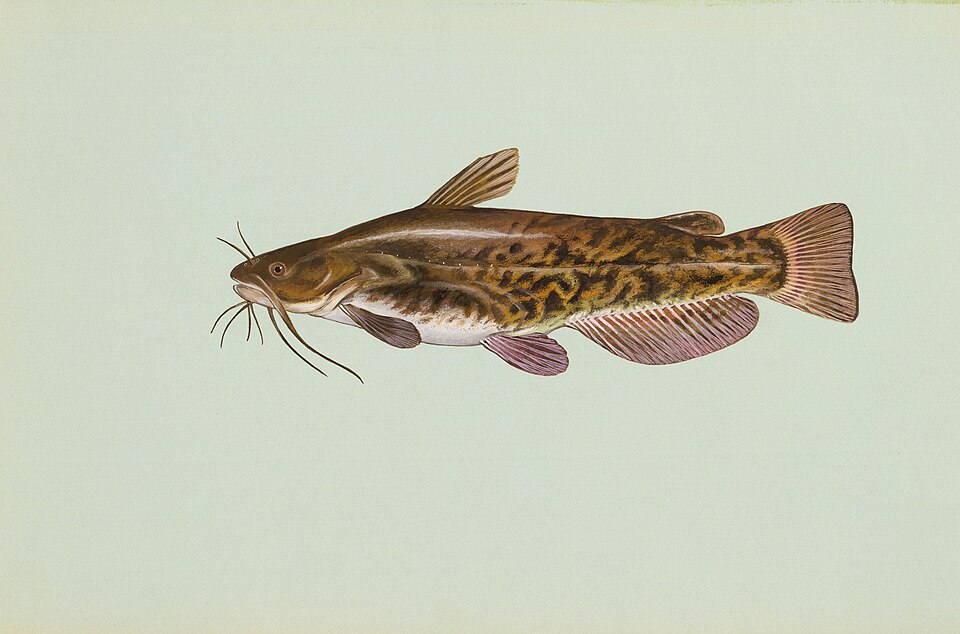
A stubby, whiskered bottom-feeder that bites at night, tolerates ugly water, and makes a fine fish to hand a beginner who wants a bend in the rod without much fuss.
Brown bullhead get mixed up with channel catfish and black or yellow bullhead, and telling them apart comes down to barbel color, tail shape, and body markings. Brown bullhead have dark chin barbels (the whiskers under the jaw), a body that is olive-brown to yellowish with mottled, blotchy sides, and a squared-off or slightly notched tail, not forked. Channel catfish have a deeply forked tail and pale, gray-blue chin barbels, and they usually run bigger and leaner than any bullhead.
The real mix-up is with black bullhead and yellow bullhead. Yellow bullhead have white or pale chin barbels, which rules them out at a glance from brown bullhead's dark barbels. Black bullhead are harder, since both have dark barbels, but black bullhead usually show a plain, unmottled dark body, while brown bullhead have that mottled or blotchy pattern on their flanks. A brown bullhead's pectoral fin spine also has weak barbs on the rear edge that you can feel if you run a finger along it, where a black bullhead's spine is smoother.
The app forecasts these conditions for your spot, and learns which ones you catch on.
Season
Where it lives
Ponds, lakes, sluggish creeks, and slow river pools with a soft mud or silt bottom. Brown bullhead tolerate low oxygen and warm, murky water better than almost any other fish in the region, so you will find them in spots bass and bream avoid: weedy farm ponds, drainage ditches, oxbow lakes, and the still backwaters off bigger rivers.
They hide under logs, undercut banks, and thick weed mats during the day and move onto open mud flats and shallows to feed at night.
What it eats
Bottom scavengers with a strong sense of smell and taste, thanks to the barbels around their mouth. They eat worms, insect larvae, crayfish, snails, dead or dying baitfish, and just about any scrap of rotting matter they find on the bottom. Almost nothing edible gets ignored.
How to catch it
Fish on the bottom with a simple sliding sinker rig, a small hook, and something smelly: nightcrawlers, chicken liver, cut bait, or shrimp. Cast into a still pool or pond edge, let it sit, and wait. No need to work the bait; the fish will find it.
Nighttime and low light are best. Bullhead move shallow to feed after dark, so an evening spent bank fishing a pond with a lantern nearby is a classic way to catch a stack of them. Watch your hands when you unhook one: the dorsal and pectoral fins carry sharp spines that can prick you.
- When do brown bullhead spawn?
- They spawn in late spring to early summer once water temperatures reach the mid 60s to low 70s. Both parents guard the nest and will even stay with the young for a while after they hatch, which is unusual for catfish.
- What do brown bullhead eat?
- Just about anything on or near the bottom: worms, insect larvae, crayfish, dead or dying baitfish, and scraps. They feed mostly by smell and touch using their barbels, so they will find bait even in muddy or dark water.
- When is the best time to catch brown bullhead?
- Night fishing is best since they feed most actively after dark, especially in warm months. They will also bite during the day in stained or muddy water, and spring through fall is the most productive stretch overall.
- How big do brown bullhead get?
- Most run 8 to 14 inches and under a pound, though fish over 2 pounds show up in good water. Anything approaching 3 or 4 pounds is a big one for this species.
- Are brown bullhead good to eat?
- Yes, the meat is mild and firm, similar to other small catfish. Skin them before cooking since the skin can carry a muddy taste, especially from warm, still water.
- Do I need to be careful handling them?
- Yes. The pectoral and dorsal fins have sharp spines that can cause a painful puncture, and the pectoral spine has small barbs that can catch on the way out. Hold the fish firmly behind the head and avoid gripping near those fins.