

Cabezon
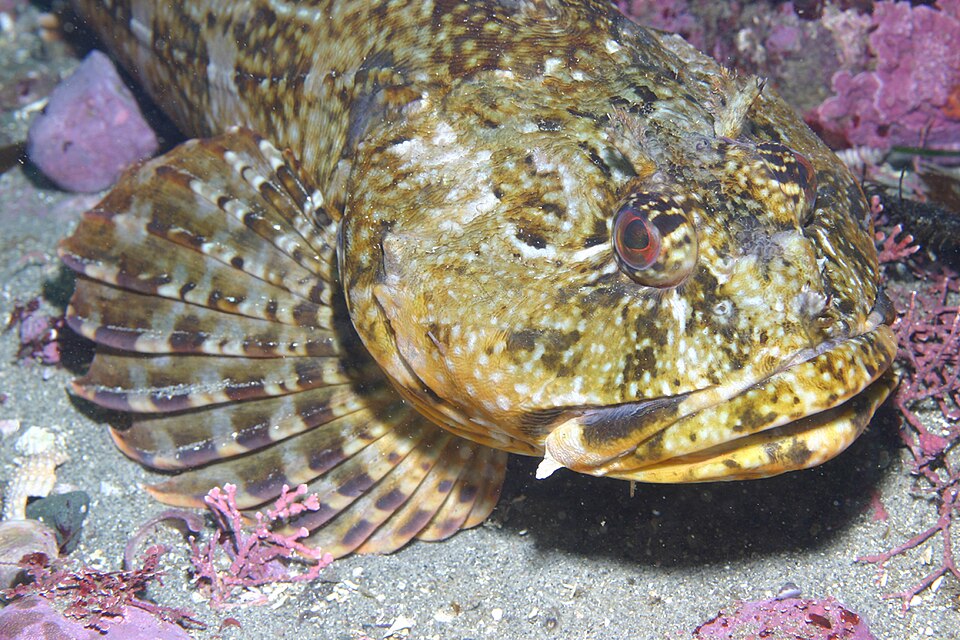
A big, homely sculpin with a mouth full of attitude. Cabezon lurk in rocky Pacific coast structure and reward anglers willing to fish slow and heavy right on the bottom.
Cabezon are big-headed sculpins with a wide, flat head, a huge mouth, and a single fleshy flap over each eye that looks like a little horn. Skin is scaleless and slimy, and color runs from mottled green to brown to reddish, matching whatever rock or kelp bed they sit on. That mottled camouflage plus the fact that their meat and bones can look blue-green when raw throws off a lot of new anglers, but the color cooks out and the fish is perfectly good to eat.
The main mix-up is with true sculpins and with lingcod. Sculpins in the same family are smaller and lack that oversized head and the paired eye flaps. Lingcod have a slimmer, more torpedo-shaped body, a mouth full of sharp visible teeth, and two dorsal fins instead of cabezon's single long dorsal fin. Look at the head first: if it looks too big and too flat for the body, and it has those little skin flaps over the eyes, you have a cabezon.
The app forecasts these conditions for your spot, and learns which ones you catch on.
Season
Where it lives
Cabezon live along the Pacific coast, from nearshore rocky reefs and kelp beds down to depths of a couple hundred feet. They favor structure: boulder fields, jetties, pilings, and the broken rock at the edges of kelp forests. Tide pools and shallow rocky shorelines hold smaller fish, especially in the cooler months.
You will find them from the Pacific Northwest down through California, wherever there is rocky bottom instead of sand or mud. They do not roam much. A cabezon picks a hole in the rocks and sits tight to it, so once you find one spot that holds fish, it usually holds fish again.
What it eats
Cabezon are bottom ambush predators with a huge mouth for their body size. They eat crabs, shrimp, small fish, squid, and octopus, and they are not shy about hitting something almost as big as they are. Most of their diet comes off the bottom, which is why baits and lures fished right on the rocks outfish anything worked higher in the water column.
How to catch it
Fish heavy enough to hold bottom in rocky structure, usually a jig head or a sliding sinker rig with a stout leader, because you will lose gear to snags. Bounce a bucktail jig, a soft plastic swimbait, or a whole shrimp or cut fish bait right along the rock edges and let it sit for a few seconds between hops. Cabezon do not chase far. The bite is usually a slow, heavy pull rather than a sharp strike, so give the fish a second to load up before you set the hook.
Work jetties, harbor rock walls, and kelp edges from a boat or from shore where the rock drops into deeper water. Low light and higher tides tend to bring fish tighter to shallow structure. Cabezon roe is toxic to humans, so if you keep a fish, do not eat the eggs, and check your state's size and bag limits since some areas manage cabezon tightly.
- Can you eat cabezon?
- Yes, the meat is white and firm and well regarded. The one thing to know is that cabezon eggs are toxic to humans, so never eat the roe.
- How big do cabezon get?
- Most fish caught are one to five pounds, but they can grow past 20 pounds and over two feet long. A fish over ten pounds is a genuinely big one.
- What do cabezon eat?
- They ambush crabs, shrimp, small fish, and other bottom-dwelling creatures from a stationary spot on the rocks. A slow-moving bait or jig bounced right along the bottom near structure is what triggers a strike.
- When is the best time to catch cabezon?
- Cabezon fishing is steady year-round wherever water stays cold enough, but many anglers find them most active in the cooler months. Slack tide or the last hour of an outgoing tide, when current is easiest to fish along the bottom, tends to produce best.
- Where do you find cabezon?
- Look for rocky reefs, kelp beds, jetties, and other hard structure close to shore. They sit tight to cover and do not roam far, so once you find good rock you can often catch several fish in the same spot.
- Are there size or bag limits on cabezon?
- Yes, in most places cabezon have a minimum size limit and a small daily bag limit, and seasons can close at certain times of year. Check local regulations before you keep one, since rules vary quite a bit by area.