

California Halibut
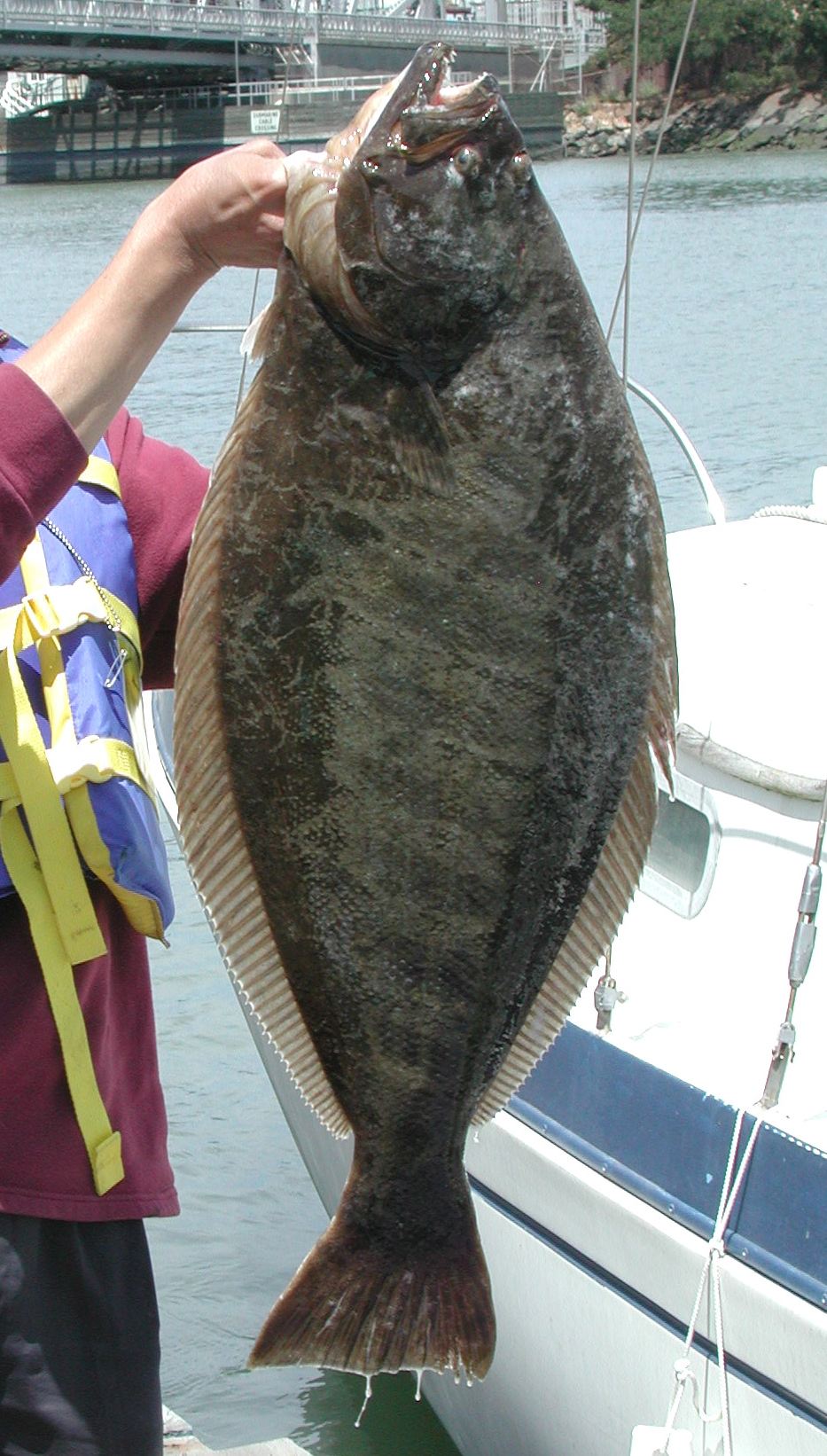
A flat, left-eyed ambush predator that buries in the sand along the Pacific coast and inhales anything that swims too close. Prized for its mild, firm meat and a real challenge for anglers used to round fish.
California halibut are left-eyed flatfish, meaning both eyes sit on the left side of the body when the fish is held with the belly facing you and the head pointed left. That single trait separates them from Pacific halibut and most other large right-eyed flounders, which have their eyes on the right side. Body shape is another clue: California halibut are more elongated and less rounded than Pacific halibut, with a mouth that reaches well back under the eye and a large set of teeth built for grabbing baitfish, not crushing shellfish.
The other common mix-up is with other flatfish sharing the same sandy flats and bays, like diamond turbot or various sanddabs. Those species are much smaller at maturity, rarely pushing past a foot or two, while California halibut regularly reach two to three feet and can top forty pounds. Coloration also helps: California halibut are a mottled brown to gray on the eyed side, blending with sand or mud, and both eyes are positioned close together with enough of an arched line between them that you can tell the head shape apart from rounder-bodied flatfish at a glance.
The app forecasts these conditions for your spot, and learns which ones you catch on.
Season
Where it lives
California halibut live along the Pacific coast from central California down through Southern California, with the best fishing concentrated around bays, harbors, and open coastline south of the major coastal cities. They favor sandy or muddy bottoms rather than rock or reef.
Look for them in bays, estuaries, along sandy beach breaks, and near river mouths where current sweeps baitfish over open sand. They also hold near structure edges: the sandy seams next to rock piles, kelp edges, and channel drop-offs. Many fish sit in water as shallow as ten feet in bays, while larger fish move onto deeper flats and nearshore sand in the twenty to sixty foot range.
What it eats
Ambush feeders. California halibut bury themselves in sand with just their eyes exposed and wait for baitfish to pass overhead, then explode upward to grab them. They eat anchovies, sardines, smelt, small croakers, and squid, along with shrimp and other small crustaceans that drift along the bottom.
How to catch it
Drift fishing live bait is the standard method. Hook a live anchovy, sardine, or small smelt through the nose or lips on a sliding sinker rig, let it sink to the bottom, and drift slowly over sandy flats near channels or bay mouths. Keep the bait close to bottom since halibut rarely chase far off the sand.
Bucktail jigs and swimbaits worked slowly along the bottom also produce fish, especially over open sand adjacent to structure. Whatever you use, resist the urge to set the hook the instant you feel a bite. Halibut often grab bait and hold it before turning to swallow, so give the fish a few seconds of slack or a slow lift before driving the hook home. Check your state's size and bag limits before keeping fish, since minimum size rules are strictly enforced.
- When do California halibut spawn?
- Spawning runs from late spring through summer, peaking in the warmer months. Fish move into shallow sandy areas near the coast to spawn, which is also when they are most active and easiest to target from shore or boat.
- What do California halibut eat?
- They are ambush predators that feed heavily on small baitfish like anchovies, sardines, and smelt, along with squid. They bury themselves in sand and blend in, then dart up to grab prey swimming overhead.
- What is the best way to catch one?
- Drift or slow-troll live bait like anchovies or small sardines along sandy bottom near structure, drop-offs, or current edges. Soft plastic swimbaits bounced along the bottom also work well and let you cover more water.
- How big do California halibut get?
- Most fish caught run one to two feet and a few pounds, but they can grow much larger. Fish over thirty pounds show up every year, and the biggest on record push past sixty pounds.
- Are California halibut good to eat?
- Yes, the meat is mild, firm, and well regarded, similar to other halibut species. It holds up well to grilling, searing, or frying.
- Is there a size or bag limit?
- Most areas set a minimum size limit and a daily bag limit to protect younger, non-spawning fish. Rules vary by location and change over time, so check current regulations before you keep one.