

Chinook Salmon
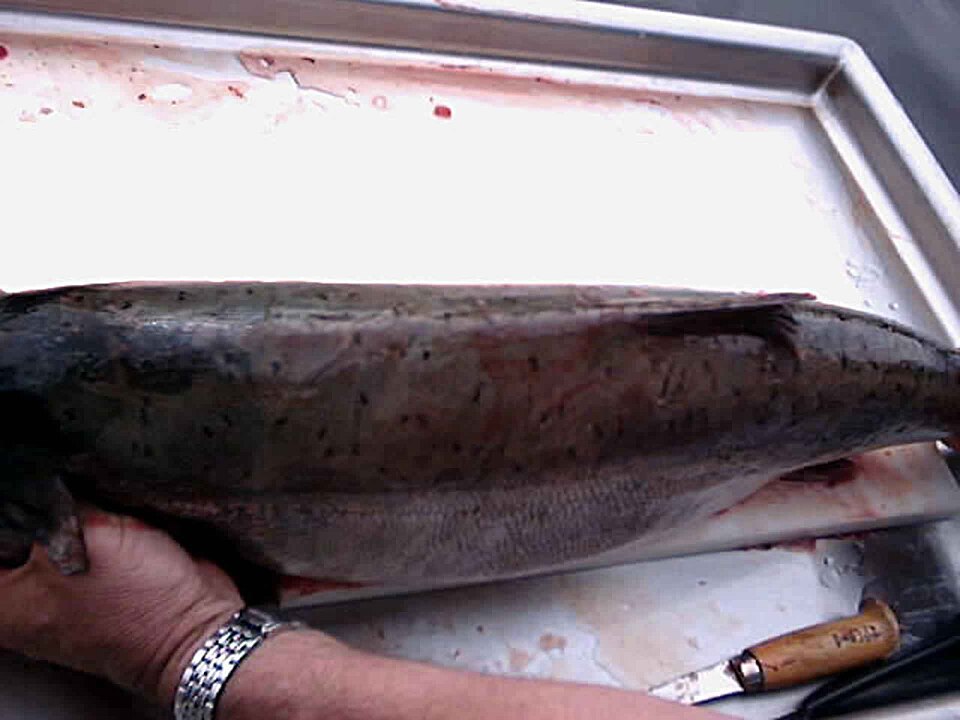
The biggest salmon in North America, prized for its size and rich flesh. Chinook demand real gear, real patience, and a willingness to grind through slow days for one huge fish.
Chinook salmon get confused with coho salmon and with the big lake-run rainbow trout (steelhead) that share the same rivers. The surest field mark is inside the mouth: chinook have black gums at the base of the teeth on both the upper and lower jaw, while coho have black gums only on the upper jaw and a white lower gum line. Chinook also have irregular black spots on both the upper and lower lobes of the tail, where coho usually show spots only on the upper lobe or none at all.
Body shape helps too. Chinook are thicker through the body and shoulders, with a heavier, blockier head, especially on spawning males, which develop a pronounced hooked jaw called a kype. Steelhead, by contrast, keep a slimmer trout-like profile, a smaller mouth, and lack the black gum line entirely. In salt water or fresh, a chinook's tail spotting and heavy build are the fastest way to separate it from either lookalike.
The app forecasts these conditions for your spot, and learns which ones you catch on.
Season
Where it lives
Chinook, also called king salmon, spend most of their adult lives in the open Pacific and return to freshwater rivers to spawn. Anglers find them in coastal rivers and their tributaries up and down the Pacific Northwest and into the Alaskan interior, plus big water like Puget Sound and the lower Columbia system. They also run up rivers feeding the Great Lakes, where they were introduced decades ago and now support a strong sport fishery in their own right.
In salt water, look for them near river mouths, tide rips, and bait balls. Once they enter rivers to spawn, they hold in deep, slow pools and travel lanes on their way upstream, often staging below riffles or in deep bends before pushing further.
What it eats
In the ocean and the Great Lakes, Chinook feed heavily on baitfish like herring, anchovies, smelt, and alewives, along with squid where available. Once they enter rivers to spawn, they stop feeding entirely. Any strike from a river fish is a reaction or territorial response, not hunger, which is a big part of why they are hard to catch consistently.
How to catch it
In salt water and big lakes, trolling is the standard approach. Run cut plug herring, spoons, or flashers paired with a hoochie behind a downrigger to get baits down to where the fish are holding, often 30 to 100 feet deep depending on season and water temperature.
In rivers, switch to bottom-bouncing or drift fishing. Use roe clusters, sand shrimp, or beads under a slip float, or run a heavy jig near the bottom through deep pools and seams. Because river fish are not feeding, presentation and depth matter more than lure choice. Get the bait right in front of them at the right speed and you will draw a strike.
Chinook are strong, heavy fish and require sturdy tackle: heavier rods, stout mainline, and a drag system that will not fail on a fifty-pound fish. Seasons and limits are tightly managed and change year to year based on run size, so check your state's current regulations before you go, especially in the Great Lakes and along the Pacific coast.
- When do chinook salmon spawn?
- Most chinook runs happen in fall, though some rivers also get spring and summer runs depending on the population. Adults stop feeding once they enter fresh water and focus entirely on migrating upstream to spawn.
- What do chinook salmon eat?
- In the ocean or big lakes they feed heavily on baitfish like herring, smelt, and anchovies, plus squid and shrimp. Once they enter rivers to spawn they stop feeding, so river fish are caught out of aggression or reflex, not hunger.
- What is the best time to fish for chinook?
- Early morning and evening are best in open water, especially near bait schools or river mouths during a run. In rivers, fish right after a fresh push of salmon arrives, since fish that have been holding for weeks get harder to trigger.
- How big do chinook salmon get?
- Most run 15 to 30 pounds, but they are the largest Pacific salmon and fish over 40 pounds show up every year in the right systems. The all-tackle record is over 90 pounds.
- Are chinook salmon good to eat?
- Yes, they have a high fat content and rich flavor, widely considered the best-eating Pacific salmon. Fresh or lightly smoked chinook is a top table fish.
- Do I need a special license or tag to keep a chinook?
- In most places yes, chinook fall under specific salmon regulations with seasons, size limits, and sometimes a separate tag or punch card. Rules vary a lot by river and by whether the run is wild or hatchery, so check local regulations before you fish.