

Cobia
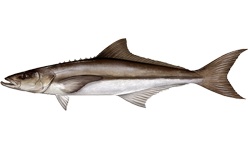
A big, brown, torpedo-shaped bruiser that shows up in spring and gives you one shot to make a good cast. Cobia fight hard, grow heavy, and are one of the more prized inshore-to-nearshore gamefish on the Carolina and Virginia coast.
Cobia are long, torpedo-shaped fish with a broad flat head and a underslung, shark-like profile that makes people mistake them for small sharks or remoras at the surface. The body is dark brown to chocolate on top fading to dull white or yellow on the belly, usually with a dark horizontal stripe running down each side from eye to tail, though that stripe can fade in and out depending on the fish's mood.
The most common mix-up is with the remora (shark sucker), since cobia have a similar shape and both species like to swim alongside boats, sharks, and rays. Remoras have a flat sucking disk on top of the head and stay small, usually under two feet. Cobia have no sucking disk, grow much larger, often three to six feet, and have a set of short, stout spines in front of the dorsal fin instead of a single soft fin. Cobia are also sometimes confused with sharks from a distance because of the flat head and dark color, but a cobia has a rounded tail fin and pectoral fins set low on the body, not the crescent tail and dorsal fin cutting the surface that a shark shows.
The app forecasts these conditions for your spot, and learns which ones you catch on.
Season
Where it lives
Cobia are coastal wanderers. In the mid-Atlantic and Carolinas they show up as water warms in spring, cruising just under the surface along beaches, over nearshore structure, and around inlets, buoys, and sea markers. They are famous for following rays, sharks, and turtles, using them as cover while they hunt.
Sight-fishing is the classic way to find them: anglers run the beach or the mouth of a sound with someone up on a tower or platform, scanning for a dark shape or shadow near the surface. They also stack up around channel markers, wrecks, and reef structure in the Chesapeake Bay and off the Carolina coast during their spring and early summer run.
What it eats
Cobia eat crabs, eels, squid, and baitfish, with a strong preference for anything crab-shaped. They are opportunistic and aggressive once they commit to a bait, often circling it a few times before striking.
How to catch it
Sight-casting is king. Get up high, cruise the beach or channel edges in calm, clear water, and look for a brown shadow near the surface. When you spot one, cast a bucktail jig, a large soft plastic, or a live eel well ahead of the fish and let it swim into the bait rather than working it aggressively at first.
Where sight-fishing is not practical, anchor up near a buoy, marker, or known structure and soak a live eel or a big chunk of cut bait on a fish-finder rig near bottom or under a float. Heavy tackle is not optional. Use at least 50 to 80 pound leader and a stout rod, since cobia fight hard right up to the boat and often make a final run when they see it. Chesapeake Bay's bay bridge tunnel and the nearshore waters off the Outer Banks and Carolina beaches are known spring hotspots.
- How big do cobia get?
- Most fish caught run 20 to 40 pounds, but cobia can top 100 pounds and stretch past five feet. Anything over 50 pounds is considered a big one.
- What do cobia eat?
- Cobia eat crabs, eels, squid, and smaller fish like menhaden, pinfish, and mullet. They are opportunistic and will eat almost anything that swims near them, including bait meant for other species.
- When is the best time to catch cobia?
- Spring is prime time, when cobia migrate along coastlines and stage near structure to spawn. They show up as water warms into the 68 to 72 degree range and often travel with rays, sharks, and sea turtles.
- Where do you find cobia?
- Look near buoys, markers, wrecks, reefs, and anything else floating or fixed in open water. Cobia are curious and often swim right up to boats, so sight fishing from a bow or tower is a common way to target them.
- Are cobia good to eat?
- Yes, cobia have firm, white meat and are considered excellent table fare, similar in texture to swordfish or mahi. Many anglers rank them among the best eating fish in the ocean.
- Do cobia have size or bag limits?
- Most coastal states regulate cobia with minimum size limits and small daily bag limits, and rules can change year to year based on stock assessments. Check current regulations before you keep one, since limits vary by region and season.