

Common Carp
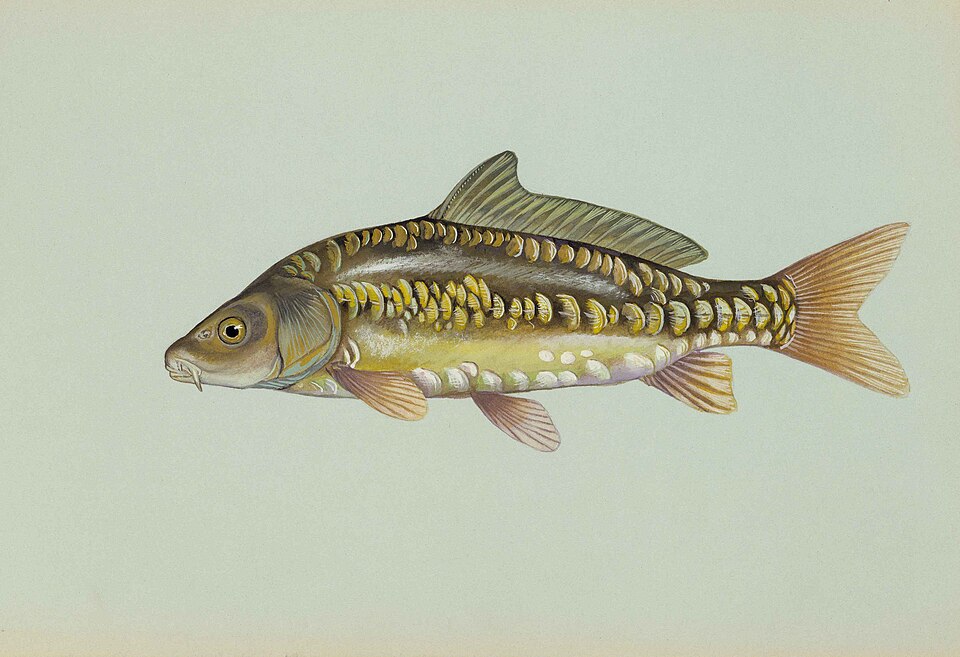
A big, wary, hard-pulling fish that most anglers ignore and a growing number chase on purpose. Carp get huge, fight harder than almost anything else in freshwater, and require real patience to fool.
Common carp have a heavy, football-shaped body covered in large, mirror-bright scales, a single long dorsal fin with a hard serrated spine at the front, and two pairs of barbels on the upper lip, one short and one longer. Color runs from bronze to golden brown on the sides fading to a pale yellow belly. The mouth is small, downturned, and made for sucking food off the bottom, not for grabbing prey.
Anglers most often mix up common carp with grass carp and buffalo fish. Grass carp are longer and more torpedo-shaped, lack barbels entirely, and have a terminal mouth built for cutting vegetation. Buffalo fish also lack barbels and have a more sucker-like, rounded mouth without the fleshy whiskers. If the fish has barbels, it is a common carp; no native North American fish that gets confused with carp has them. Koi, which are a domesticated color form of the same species, show the same barbels and body shape but come in blotchy orange, white, and black patterns instead of plain bronze.
The app forecasts these conditions for your spot, and learns which ones you catch on.
Season
Where it lives
Lakes, reservoirs, slow rivers, and farm ponds across North Carolina, South Carolina, and Virginia. Carp tolerate warm, murky, low-oxygen water that would stress out bass or trout, so you find them in places other fish avoid: silty backwaters, canal systems, and the shallow flats of big reservoirs.
Look for them in shallow water on calm mornings, tailing or rooting in the mud like a redfish on a flat. They cruise coves and shorelines in spring and summer, and they push into current seams and river mouths when the water warms further.
What it eats
Carp are bottom feeders with a vacuum-like mouth built for sucking food out of mud and silt. They eat insect larvae, crayfish, snails, decaying plant matter, seeds, and just about anything starchy that lands in the water, including bread, corn, and dough baits. They feed mostly by smell and taste, rooting through the bottom rather than chasing prey.
How to catch it
Still fishing on the bottom is the standard approach. Use a simple sliding sinker rig with a size 6 to 10 hook, and thread on a few kernels of canned corn, a dough ball, or a chunk of nightcrawler. Cast to a shallow flat or cove, cast out, put the rod in a holder, and wait. Carp often mouth bait for a while before committing, so resist the urge to set the hook on the first tap.
Chumming a spot with corn or oatmeal balls a day ahead, or even just before you fish, concentrates carp in casting range. Once hooked, carp make long, powerful runs and will test your drag, so use tackle heavier than the fish's size suggests. Sight fishing for tailing or mudding carp in skinny water with a small bait or fly is a more active method and works well in spring and early summer when carp move shallow to feed and spawn.
- When do common carp spawn?
- Spring into early summer, once water temperatures climb into the 60s. They move into shallow, weedy, or flooded areas and thrash around noisily near the surface, which is often how anglers first notice them.
- What do common carp eat?
- Almost anything organic on or near the bottom: insect larvae, crustaceans, plant matter, seeds, and decaying material. This is why boilies, corn, bread, and dough baits all work so well for them.
- How big do common carp get?
- Most fish caught run 5 to 15 pounds, but they can grow well past 30 pounds in fertile water. Fish over 40 pounds show up in lakes and rivers with a good long-term food supply.
- When is the best time to catch carp?
- Warm months are best, with early morning and evening the most productive windows. Carp feed heavily through summer and fall and slow down considerably once water temperatures drop in winter.
- Are common carp good to eat?
- They are edible and popular table fare in many parts of the world, but the flesh can taste muddy if the fish comes from warm, stagnant water. Bleeding the fish immediately and keeping it on ice helps the flavor a lot.
- Are there rules about keeping or releasing carp?
- Common carp are considered invasive in much of North America, so many places have no bag limit and some even encourage removal. Check local regulations, since a few waters do have special rules for carp fishing tournaments or bowfishing.