

False Albacore
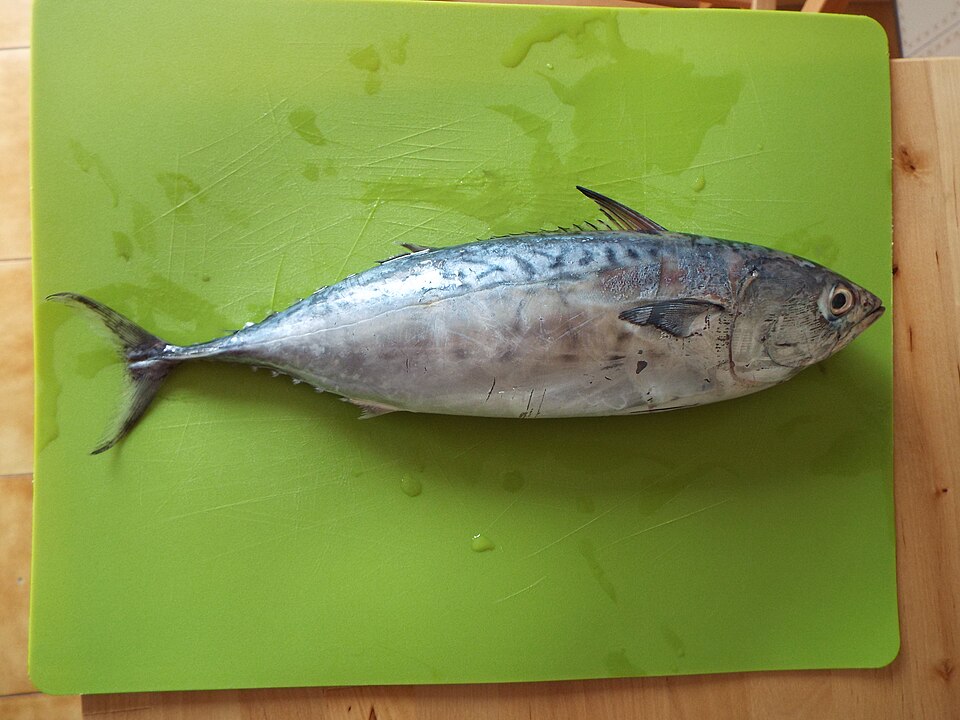
Anglers call them "albies" and chase them for the fight alone, since nobody wants to eat one. Pound for pound they pull harder than almost anything else swimming inshore, and they show up in blitzes that make grown men run down the beach.
False albacore get mistaken for bonito and small tunas, especially skipjack. The fastest tell is the pattern on the back. False albacore have a wormy, squiggly dark pattern above the lateral line that never runs in straight stripes, along with a small dark patch below the pectoral fin dotted with a few loose spots. Bonito, by contrast, show clean diagonal stripes running down from the back, and they lack that dark spotted patch near the pectoral fin.
Body shape is another giveaway. False albacore are thick and torpedo-shaped with a noticeably deep belly, closer to a small tuna than a mackerel. The first dorsal fin is tall and sweeps back into a series of small finlets toward the tail, same as a tuna. They have no teeth worth mentioning, just tiny ones, while bonito have a mouth full of sharp visible teeth. If you catch one and see a scribbled, random pattern on its back with no scales except on the corselet near the head, you have a false albacore, not a bonito or a young tuna.
The app forecasts these conditions for your spot, and learns which ones you catch on.
Season
Where it lives
Open ocean water near shore, usually where bait gets pushed up against structure or current lines. Look for them around inlets, along beachfronts, near buoys, and offshore of piers wherever bait schools concentrate. They range widely and follow water temperature and forage more than any fixed spot.
The best-known run in the region is off Cape Lookout and around Beaufort and Morehead City in the fall, where albies push glass minnows and silversides into tight balls near the surface. They also show along the Outer Banks and down into South Carolina waters when conditions line up.
What it eats
Small baitfish almost exclusively: glass minnows, silversides, anchovies, and young menhaden. They feed by speed, slashing through bait schools at the surface and picking off anything disoriented by the attack. When they are keyed in on a specific bait size, they can be maddeningly picky about matching it.
How to catch it
Watch for birds diving and bait showering on the surface, then run to it and cast ahead of the school, not into the middle of it. A small metal jig or epoxy minnow retrieved as fast as you can turn the reel handle is the standard approach. Fly anglers do well with small baitfish patterns stripped hard and fast on an intermediate line.
Speed matters more than color most days. Albies often blow up, sound, and reappear somewhere else entirely, so keep the boat or yourself mobile and be ready to make a quick cast when they surface again. Use fluorocarbon leader since they can be leader-shy in calm, clear water, and expect a long, hard first run once hooked. A fish this size will outpull redfish and most striped bass on light tackle.
- What do false albacore eat and what should I use to catch one?
- They key in on small baitfish like silversides, anchovies, and rain bait, often blitzing on the surface. Small metal jigs, epoxy flies, and soft plastics that match the size of the bait work best. They rarely touch cut bait or anything slow moving.
- Are false albacore good to eat?
- Most anglers throw them back. The meat is dark, bloody, and strong tasting, nothing like tuna used for sushi or steaks. A few people smoke it or use it for bait, but it is not popular table fare.
- How big do false albacore get?
- Most run 5 to 12 pounds, with fish over 15 pounds considered big. They rarely approach 20 pounds.
- When is the best time to catch false albacore?
- Late summer through fall is prime time in most areas, when they push inshore chasing bait schools. Look for diving birds and surface blitzes on calm mornings.
- Why do they fight so much harder than their size suggests?
- They are built like small tuna, thick-bodied and built for speed, and they make long, fast runs that strip line off a reel fast. Pound for pound they are one of the hardest fighting inshore fish around.
- Do false albacore school with real tuna or bonito?
- Yes, they often mix in with bonito, skipjack, and other small tuna in the same bait schools, which is part of why misidentification is so common. Checking the back pattern is the quickest way to sort them out on the spot.