

Gag Grouper
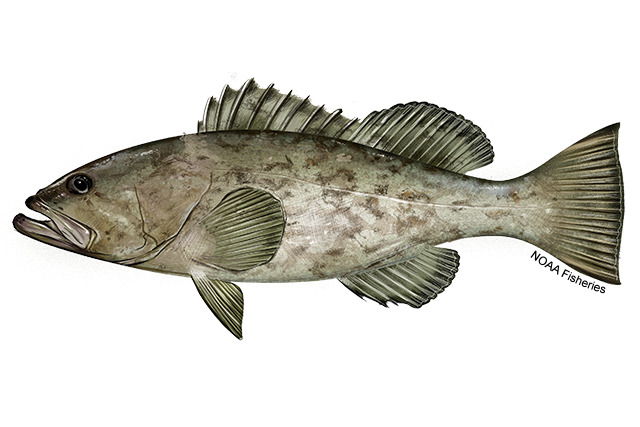
A hard-fighting bottom dweller from the Gulf and the South Atlantic coast that ambushes bait around structure and does everything it can to get you back into the rocks. Great table fare, but tightly regulated, so check your state's season and limits before you keep one.
Gag grouper are the fish most often mixed up with black grouper and red grouper, and the confusion causes real problems since bag limits and seasons differ between them. Gag are dusky gray to brown with faint, worm-like or blotchy dark markings that run in irregular streaks down the body, never forming the tight, chain-like octagons you see on a black grouper. The tail is the fastest tell: gag grouper have a squared-off or slightly concave rear edge on the caudal fin, while black grouper show a more rounded tail edge.
Against red grouper, look at the pectoral fin and body shape. Red grouper have a squared pectoral fin with a pale margin and a stockier, more compressed body, while gag are longer and more torpedo-shaped with a pointed pectoral fin. Gag also have a distinct dark saddle blotch near the base of the tail that fades as they grow, something red grouper lack. Young gag are more boldly marked than adults, so a small gag can look strikingly patterned compared to the plainer, muddier adults that anglers usually pull off structure.
The app forecasts these conditions for your spot, and learns which ones you catch on.
Season
Where it lives
Gag grouper live along the Gulf coast and the South Atlantic coast, from nearshore reefs and ledges out to deeper offshore structure. Young fish hang around inshore grass flats, mangrove shorelines, and passes, which is where a beginner is most likely to hook a smaller one from a boat.
Adults move offshore as they grow and hold near rock ledges, artificial reefs, wrecks, and rocky bottom in depths from about 60 to over 200 feet. They are structure-obsessed fish. If there is not hard bottom or something sticking up off the seafloor, gag grouper are not there.
What it eats
Gag grouper eat other fish almost exclusively once they reach adult size: pinfish, grunts, small jacks, herring, and squid. They are ambush feeders. A gag sits near a ledge or hole and waits for something to swim past, then closes the gap in one burst and inhales it whole.
How to catch it
Heavy tackle is not optional. Use a stout boat rod, a reel with a strong drag, and 50 to 80 pound leader, because a hooked gag will run straight for the nearest rock or wreck and cut you off in seconds if you cannot stop it. Drop a live pinfish, grunt, or squid on a knocker rig or a fish-finder rig straight to the bottom near structure, then reel up tight and hold on.
The fight is short and brutal. The first few seconds after the bite decide everything. Lock down the drag and lift hard to turn the fish's head before it reaches cover. This is not a finesse fish and it is not beginner-friendly gear, which is part of why it rates high on the difficulty scale.
Gag grouper are managed with seasons, size limits, and bag limits that change often and vary by region and sometimes by boat type (private vs charter). Check your state's current regulations before you head out, and be ready to release fish outside the slot.
- When do gag grouper spawn?
- Gag grouper spawn offshore in late winter through spring, gathering at specific deepwater sites to do it. Many fisheries close to grouper harvest during this window to protect spawning fish, so check local season dates before you plan a trip.
- What do gag grouper eat?
- Adult gag grouper eat other fish, squid, and crabs, and they are ambush feeders that hold near structure and inhale prey that swims too close. Live pinfish, grunts, and cut bait fished near wrecks or ledges all work well.
- How big do gag grouper get?
- Gag grouper commonly run 5 to 15 pounds, with fish over 30 pounds considered big and fish past 50 pounds rare but possible. They grow slowly and live for decades, so a truly large gag is an old fish.
- What is the best way to catch a gag grouper?
- Fish bottom structure like reefs, wrecks, and rock ledges with heavy tackle, since a hooked gag will bolt straight back into cover the moment it feels the hook. You need to horse it away from structure immediately, which means stout rods and heavy leader are not optional.
- Are gag grouper good to eat?
- Yes, gag grouper are excellent table fish with firm, white, mild fillets, and they are one of the more popular grouper species for that reason. That popularity is also why many areas manage them with closed seasons and size limits.
- Is it hard to tell a gag grouper from a black grouper?
- It takes a careful look. The clearest difference is the tail shape, squared or concave on gag versus rounded on black grouper, along with the irregular blotchy markings on gag instead of the black grouper's tighter chain pattern. When in doubt, check your local rules since misidentifying the two can mean an illegal fish in the box.