

Golden Trout
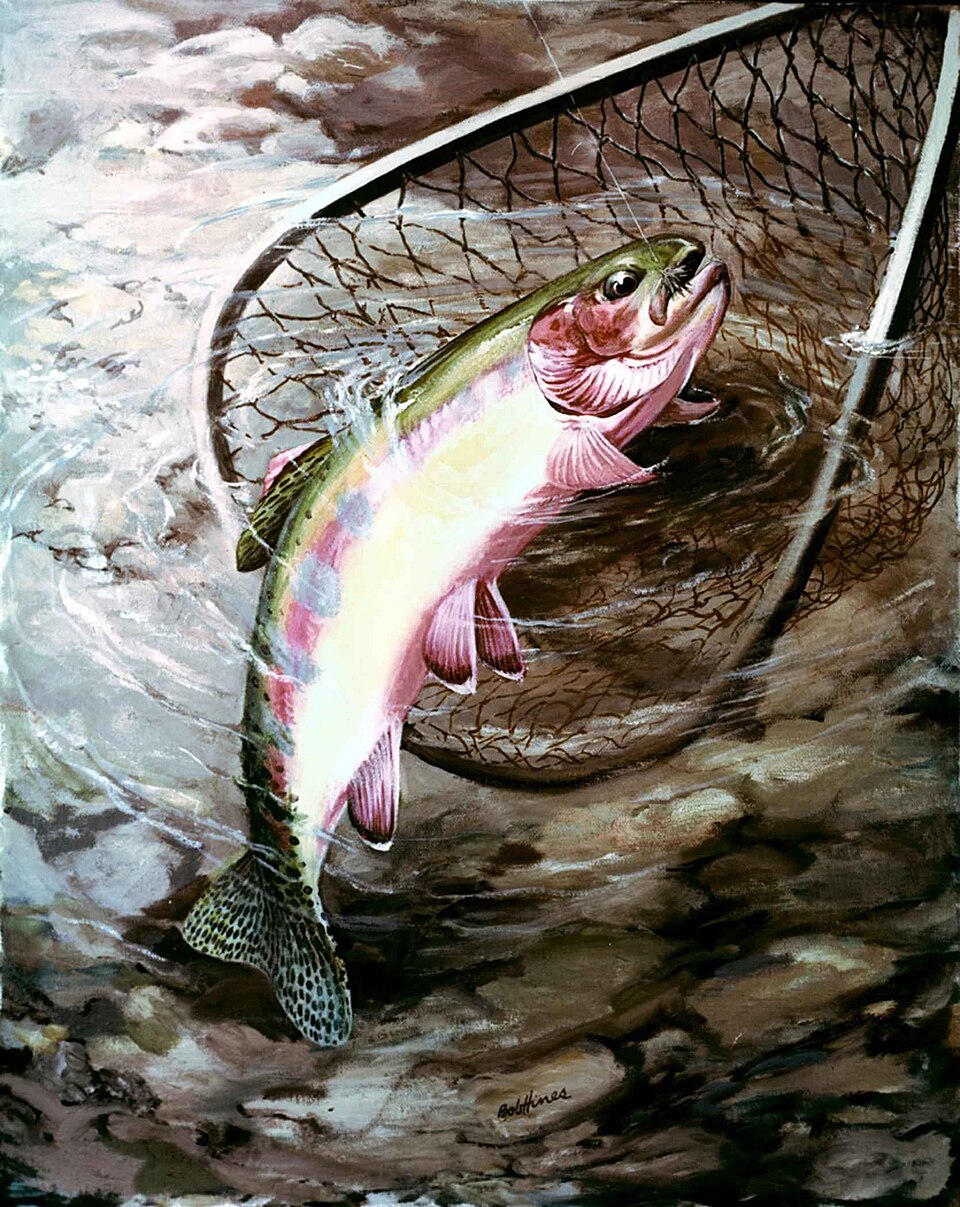
The most beautiful trout in the country, with flanks like polished brass and crimson stripes down its sides. It lives in cold, remote high-altitude water and makes you work for every fish.
Golden trout are one of the most colorful freshwater fish in North America, and that coloring is the main way to identify them. Look for a bright golden-yellow body, a red or orange stripe along the lateral line, and a white-tipped bottom fin edged in black. Ten to twelve dark, oval parr marks sit along the sides, and they stay visible into adulthood, which is unusual for trout. The back is often olive to golden with black spots concentrated near the tail.
The main lookalikes are rainbow trout and cutthroat trout, since golden trout are technically a subspecies of rainbow and share the basic body shape. Rainbow trout lack the deep gold and red coloring and have heavier spotting spread over the whole body instead of concentrated near the tail. Cutthroat trout have the telltale red or orange slash mark under the jaw, which golden trout do not have. Where golden trout have hybridized with rainbows or cutthroat, which happens often since they interbreed easily, the coloring gets muddier and the parr marks and spotting pattern are the more reliable clues than color alone.
The app forecasts these conditions for your spot, and learns which ones you catch on.
Season
Where it lives
Golden trout are a fish of high mountain wilderness, native to the Sierra Nevada and now stocked in scattered alpine lakes and streams across the Mountain West. Look for them in cold, clear, oxygen-rich water above 8,000 feet: granite-bottomed creeks, small headwater streams, and remote backcountry lakes fed by snowmelt.
Getting to them is usually the hardest part. Most golden trout water sits miles from a trailhead, reachable only by hiking or on horseback. The reward for the walk is a fish that rarely sees another lure.
What it eats
Golden trout feed on aquatic insects, larvae, and terrestrial bugs that fall into the water. Mayflies, midges, caddisflies, ants, and beetles make up most of the diet in these nutrient-poor high-altitude waters. Because the growing season is short and food is scarce, golden trout grow slowly and rarely reach large size.
How to catch it
Bring a light setup. A short, ultralight fly rod or a small spinning outfit with 2 to 4 pound line is plenty, since these fish are small, spooky, and living in gin-clear water. Approach pools and undercut banks low and slow. A shadow across the water or a heavy footstep on the bank will shut down a bite fast.
A small dry fly like an Adams or a parachute pattern in size 14 to 18 works well when insects are hatching, usually midday in summer. If you are spin fishing, a tiny inline spinner or a small spoon worked through pools and slow runs will draw strikes. Many golden trout waters are catch-and-release only or carry special regulations because of their limited range and slow growth, so check your state's rules before you go and handle every fish gently.
- How big do golden trout get?
- Most golden trout run six to twelve inches in the high-elevation streams and lakes they naturally prefer. In better lake habitat with more food, they can reach two to five pounds, but that size is rare and usually the result of stocking into fertile lakes rather than wild stream populations.
- When do golden trout spawn?
- They spawn in late spring through mid-summer as snowmelt fills the small streams they use for spawning. Timing depends heavily on elevation and how late the snowpack holds, since these fish live in cold, high-altitude water.
- What do golden trout eat?
- Mostly aquatic and terrestrial insects: mayflies, midges, ants, and beetles that fall or hatch in the thin, cold water they live in. They are not picky, but the food supply in high-elevation lakes and streams is limited, which keeps most fish small.
- What is the best time to fish for golden trout?
- Summer, once high-elevation lakes and streams are ice-free and accessible. Mornings and evenings tend to produce the best surface activity, since these fish key heavily on insect hatches.
- Are golden trout good to eat?
- Yes, they have firm, good-tasting flesh like other trout. That said, many golden trout populations live in fragile, isolated high-elevation waters, so check local regulations since catch and release or reduced limits are common to protect wild populations.
- Why are golden trout hard to find?
- They naturally occur only in a small native range of high-elevation streams, and most populations outside that range come from historical stocking efforts. Reaching them often means a hike into remote alpine terrain rather than a drive to a roadside lake.