

Gray Triggerfish
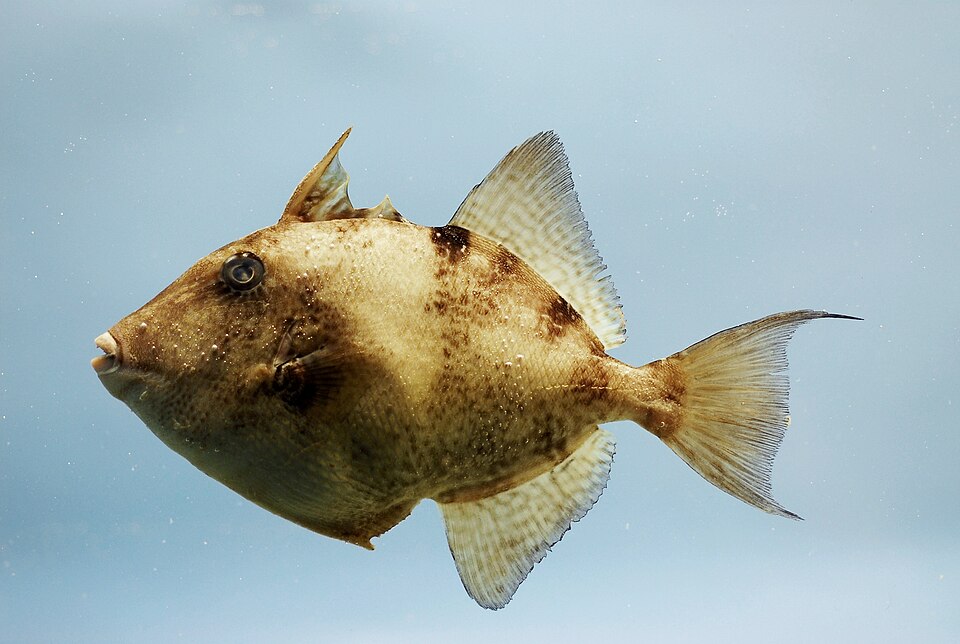
A tough-mouthed reef fish with a leathery hide and a knack for stealing bait. Gray triggerfish taste great and make you work for every one that ends up in the cooler.
Gray triggerfish have a tough, leathery skin instead of scales, an odd oval body that looks almost hand-cut, and a small mouth with strong teeth built for crunching shellfish. The first dorsal spine locks upright like a trigger, which is where the name comes from, and you can only release it by pressing the smaller second spine behind it. Color runs dull gray to olive, sometimes with faint blue speckles or wavy lines, and it can shift lighter or darker depending on mood and surroundings.
They get confused with other triggerfish species like the queen triggerfish, but queen triggerfish show bright blue markings around the face and much bolder color overall, while gray triggerfish stay drab and muted. They also get mistaken for filefish, since both have that same odd leathery-skinned, small-mouthed body plan. Filefish have a single thin dorsal spine and a more compressed, almost paper-thin body, while gray triggerfish are thicker bodied and have that distinct locking trigger spine that filefish lack.
The app forecasts these conditions for your spot, and learns which ones you catch on.
Season
Where it lives
Gray triggerfish live around structure offshore: natural rock ledges, artificial reefs, wrecks, and rubble bottom in 60 to 200 feet of water. They hold tight to the structure itself rather than roaming open bottom, hanging just above or beside it.
Off North Carolina, South Carolina, and Virginia, look for them on the same live-bottom and reef sites you would fish for black sea bass and grouper. They like warm water, so they push a little shallower and further inshore in summer and retreat to deeper, more stable structure as water temperatures drop.
What it eats
Triggerfish have small mouths but strong, chisel-like teeth built for crushing. They eat crabs, barnacles, urchins, small mollusks, and other hard-shelled bottom life, plus the occasional small baitfish. That crushing bite is also why they are notorious bait thieves, they can pick a hook clean without ever getting caught.
How to catch it
Fish a small strong hook, size 1 to 2/0, on a simple bottom rig with just enough weight to hold near the structure. Cut squid or cut bait works, but a small piece of shrimp or a chunk of clam fished right on the bottom often outperforms bigger baits, since it matches what a trigger can actually get in its mouth.
The bite is a series of light taps as they nibble and test the bait before committing. Resist the urge to set the hook on the first tap. Wait for real weight or a steady pull, then set hard, their mouths are bony and hooks can pop free easily. Because they sit right on structure, expect some break-offs, use fluorocarbon leader and be ready to retie often.
- When do gray triggerfish spawn?
- They spawn in warmer months, generally late spring through summer, when water temperatures rise. Males guard nest sites on the bottom, which is why you'll sometimes catch aggressive fish repeatedly from the same spot during that season.
- What do gray triggerfish eat?
- They feed mostly on crabs, barnacles, shrimp, sea urchins, and other hard-shelled bottom life, using their strong teeth to crush it. This is why they're notorious for stealing bait off a hook without you ever feeling a solid bite.
- What's the best way to catch them?
- Fish small, tough baits like squid strips or cut shrimp near structure such as reefs, wrecks, or rock piles, and use a small hook since they have small mouths. Bites are often light nibbles, so pay attention and set the hook on any subtle tap rather than waiting for a hard pull.
- How big do gray triggerfish get?
- Most fish caught run one to three pounds, though they can reach eight pounds or more in some areas. Anything over five pounds is a solid fish.
- Are gray triggerfish good to eat?
- Yes, they have firm, white meat and are considered excellent table fare by most anglers who target them. The tough skin makes them a little more work to fillet, but the meat is worth it.
- Are there size or bag limits on gray triggerfish?
- In many areas yes, especially in the Gulf and South Atlantic where they've faced tighter restrictions due to population concerns. Always check current regulations before keeping any, since seasons and limits can change or close entirely.