

Hybrid Striped Bass
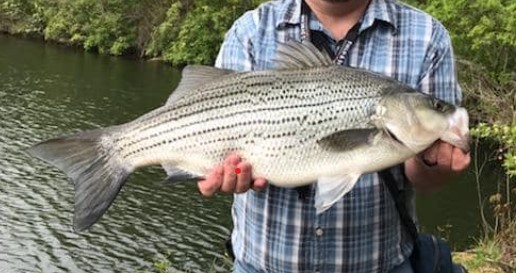
A stocked cross between striped bass and white bass, bred for hard fights and freshwater living. It hits like a truck and pulls harder than its size suggests.
Hybrid striped bass, often called wipers or whiterock bass, are a cross between striped bass and white bass, and they land right in the middle of both parents in looks. The real challenge is telling them apart from pure striped bass and pure white bass.
Look at the sides. Hybrids have broken, interrupted stripes that often zigzag or skip sections along the body, while true striped bass have longer, smoother, unbroken lines running the full length. White bass show only faint, thin stripes and rarely have the bold, choppy pattern hybrids carry. Body shape is another clue: hybrids are deep-bodied and stocky like white bass, not long and torpedo-shaped like a true striper. Hybrids also tend to have two distinct patches of teeth on the back of the tongue, similar to striped bass, which white bass lack. Overall, if the stripes look broken and jagged and the body is short and chunky, you have a hybrid, not a pure striper.
The app forecasts these conditions for your spot, and learns which ones you catch on.
Season
Where it lives
Reservoirs and large lakes across the Carolinas and Virginia, plus the tailraces below dams where they get stocked in numbers. Hybrids are open-water fish. They roam in schools chasing baitfish rather than sitting on cover, so you find them by finding shad, not by finding structure.
Look for them around river mouths, humps, and channel edges in summer, and up in the headwaters or below dams in cooler months when baitfish push shallow. Lakes like Norman, Wylie, and Jordan in NC, or Moomaw in Virginia, get regular hybrid stockings and hold good populations.
What it eats
Almost entirely shad and other small baitfish. Hybrids feed in packs, herding baitfish to the surface and blitzing them, which is the classic way to spot and catch them. They will also eat herring, minnows, and shiners where available.
How to catch it
Watch for surface activity. Birds diving on bait, or shad skipping across the top, mean hybrids are pushing a school up from underneath. Run over quietly, cut the engine, and cast a topwater lure or a bucktail jig into the commotion. Retrieve fast. Hesitation costs you strikes.
When fish are not busting the surface, troll or drift live shad and herring on planer boards or downlines over open water, especially near river channels and creek mouths. In the tailraces below dams, cast heavy jigging spoons or bucktails into the current seam and let them swing through. Use stout tackle. A hybrid running twenty feet down and turning sideways in current will test light line fast.
- What do hybrid striped bass eat?
- They feed mainly on shad and other small baitfish, along with insects and crustaceans when baitfish are scarce. They are aggressive, opportunistic feeders that will chase down schools of bait in open water.
- How big do hybrid striped bass get?
- Most run one to five pounds, with fish over ten pounds considered big. Because they are stocked and grow fast, some fisheries produce fish in the mid-teens, but that is the exception, not the rule.
- When is the best time to catch them?
- Early morning and evening are best, especially in warmer months when they push shad to the surface and feed in visible, splashy schools called breaks. In cooler months they hold deeper near creek channels and structure and you need to fish them slower.
- Do hybrid striped bass spawn?
- No. Hybrids are sterile and cannot reproduce, which is why nearly every fishery with hybrids depends on regular stocking to maintain the population.
- Are hybrid striped bass good to eat?
- Yes, the meat is firm, white, and mild, similar to white bass but with less of the strong flavor some people dislike in that fish. Most anglers rate them as excellent table fare.
- What tackle works best for hybrids?
- Medium to medium-heavy spinning gear handles most situations. They hit hard and fight well above their weight, so use enough line and drag to handle sudden runs, especially when fishing near schools of feeding fish.