

Kelp Bass
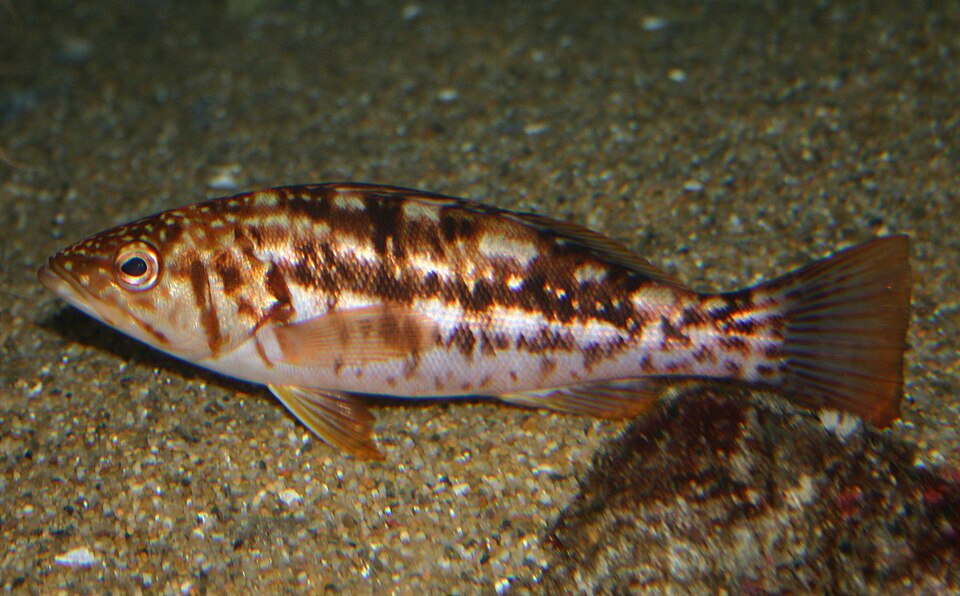
A tough, resident kelp bed predator found along the Pacific coast. Kelp bass ambush from cover and fight hard for their size, making them a favorite target for anglers fishing structure from boats or kayaks.
Kelp bass have a heavy-bodied, bass-shaped profile with a large mouth and a slightly humped back in front of the dorsal fin. Color runs from mottled brown to olive to almost gray, broken up with irregular dark blotches down the sides. The tail is nearly square to slightly rounded on the edge, not forked, which is one of the easiest ways to pick them out at a glance.
The main lookalike is barred sand bass, a close cousin in the same genus. Sand bass tend to be a bit deeper-bodied and more evenly speckled, without the bold, patchy blotching kelp bass show, and the third spine of the dorsal fin is noticeably shorter than the spines next to it on a sand bass, while on a kelp bass those spines are all closer to the same length. Habitat is also a tell: kelp bass sit tight to kelp beds, rock piles, and structure, while sand bass are more often found over open sand and mud flats. Spotted bay bass are another relative that gets mixed in, but they run smaller, show rounder dark spots rather than blotches, and stick to bays and harbors instead of open coastal structure.
The app forecasts these conditions for your spot, and learns which ones you catch on.
Season
Where it lives
Kelp bass live along the Pacific coast, from rocky nearshore reefs up through dense kelp canopies. They hold tight to structure: kelp stalks, rock piles, jetties, and pilings. Depth ranges from just a few feet of water around shallow reefs down to sixty or more feet along the edges of kelp forests.
They are homebodies. A kelp bass will often stake out a favorite piece of structure and stay there for long stretches, which is why the same rock or kelp stringer can produce fish trip after trip.
What it eats
Kelp bass eat small fish, squid, and crustaceans. Anchovies, sardines, and juvenile rockfish make up a big part of the diet, along with shrimp and small crabs picked off the bottom or out of the kelp itself. They are ambush feeders, holding near cover and darting out to grab anything that swims too close.
How to catch it
Fish the edges of kelp beds and rocky structure with a live anchovy or sardine on a light sliding sinker rig, just heavy enough to get the bait down without dragging it away from cover. Drop it right along the kelp edge or beside a rock pile and let it sink on a semi slack line. Kelp bass often hit on the drop.
Soft plastic swimbaits on a jig head also work well, fished slow along the bottom or bounced through the lower part of the kelp canopy. Once you hook one, get its head up and out of the structure fast. They will dive straight back into the kelp or rocks and wrap you off if you give them slack.
Kelp bass are managed with minimum size and bag limits along the Pacific coast, and there are seasonal closures in some areas. Check your state's current regulations before you keep any fish.
- What do kelp bass eat?
- Small fish like anchovies, sardines, and juvenile rockfish, plus crabs, shrimp, and other invertebrates they pick off structure. They are opportunistic ambush feeders that hold near cover and dart out at anything that gets close.
- When is the best time to catch kelp bass?
- Warmer months, roughly spring through fall, when they move shallower and feed more actively around kelp beds and rocky structure. Early morning and late afternoon bites are usually best, but kelp bass will feed throughout the day if bait is around.
- How big do kelp bass get?
- Most fish caught run 12 to 18 inches, with anything over 5 pounds considered a good one. They can grow past 10 pounds, but fish that size are uncommon.
- Are kelp bass good to eat?
- Yes, they have firm, mild white meat and are a popular table fish. Many areas have minimum size and bag limits, so check local regulations before keeping any.
- Do kelp bass spawn, and when?
- Yes, they spawn in the warmer months, generally summer, when adults gather near kelp beds and structure. Many fisheries close or restrict harvest during peak spawning to protect the population.
- What is the best way to target kelp bass?
- Fish soft plastics, live bait, or small swimbaits right along the edges of kelp beds, rocky reefs, and other structure rather than open water. Working your bait close to cover without snagging it is the key to getting bit.