

Kelp Greenling
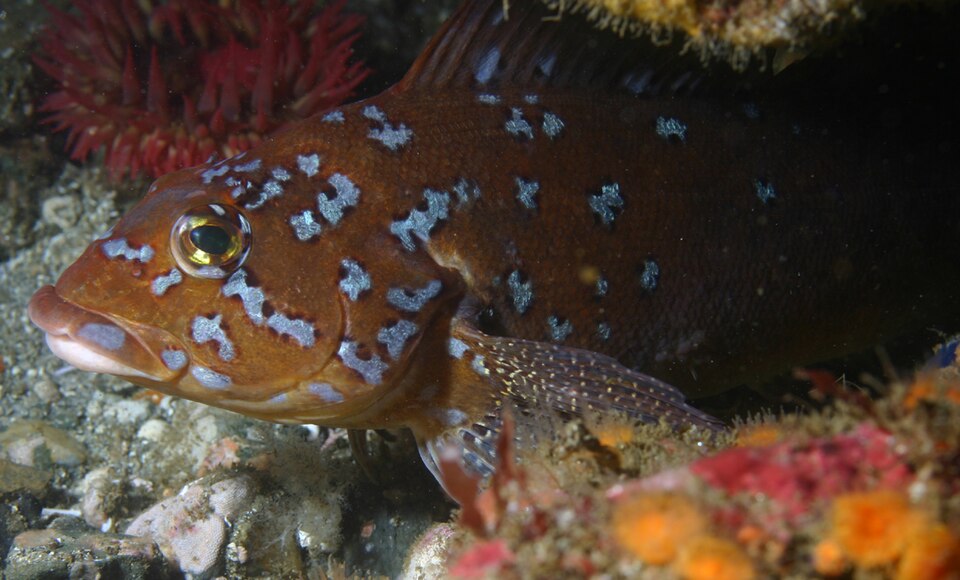
A small, blue-speckled bottom fish common along the Pacific coast. Kelp greenling are easy to catch off rocky shorelines and piers, and their odd color pattern makes them one of the more memorable fish a beginner will land.
Kelp greenling are small, mottled bottomfish, usually under 18 inches, with a slim body and a small mouth built for picking at crabs and shrimp rather than chasing baitfish. The best field mark is the pattern of pale blue spots on males and reddish-brown or golden spots on females. Males and females look different enough that many anglers assume they are two different species, but they are the same fish. Look also for the row of small dark spots along the lateral line area and the slightly elongated, almost eel-like taper toward the tail.
The main lookalikes are rockfish and lingcod. Rockfish have larger, spinier fins, bigger mouths, and bony ridges or spines on the head, none of which kelp greenling have. Lingcod get confused with greenling because they share the same rocky, kelp-filled water, but lingcod have a much bigger mouth full of sharp teeth, a longer body, and no spotted color pattern like the male greenling's blue dots. Painted greenling, sometimes called convict fish, are much smaller and have bold vertical stripes instead of scattered spots, which separates them at a glance.</identification_md"> <parameter name="faqs">[{"question": "What do kelp greenling eat?", "answer": "Mostly crabs, shrimp, small worms, and other bottom-dwelling invertebrates. They pick at cover rather than chase baitfish, so small pieces of bait or small jigs work better than big lures."}, {"question": "When is the best time to catch kelp greenling?", "answer": "They are available year round, but fishing is easiest during calm summer and fall conditions when you can work light tackle right along rocky bottom and kelp edges. Low light, early morning or evening, tends to produce more bites."}, {"question": "How big do kelp greenling get?", "answer": "Most run 12 to 18 inches and a couple pounds. Fish over 20 inches are considered large for the species."}, {"question": "Are kelp greenling good to eat?", "answer": "Yes, the meat is white, mild, and firm, similar to rockfish. Note that the flesh can look slightly blue or greenish raw, which is normal and disappears when cooked."}, {"question": "Why do some kelp greenling look so different from each other?", "answer": "Males and females are colored differently. Males show bright blue spots, while females have reddish-brown or gold spots, which leads a lot of anglers to think they caught two different species."}, {"question": "Do I need to worry about regulations when keeping kelp greenling?", "answer": "Many areas group greenling in with rockfish or bottomfish bag limits and may have size minimums or seasonal closures. Check local saltwater regulations before keeping any, since rules vary by location and change often."}]
The app forecasts these conditions for your spot, and learns which ones you catch on.
Season
Where it lives
Kelp greenling live along the Pacific coast from the Northwest down through central California. They stick close to structure: rocky reefs, jetties, kelp beds, and pilings in water anywhere from a few feet deep to sixty feet or more.
They do not roam far. A greenling will hold near one patch of rock or kelp and wait for food to come to it, which makes them a good target from piers, jetties, and small boats fishing close to shore.
What it eats
Small crustaceans, crabs, shrimp, marine worms, and small fish. They also pick at kelp-dwelling invertebrates like amphipods and isopods. Greenling feed low in the water column, right down in the rocks and weed, rather than chasing bait through open water.
How to catch it
Fish a simple bottom rig or a small jig tipped with shrimp or a piece of cut herring, dropped right along the edges of rocks and kelp lines. A high-low rig with size 2 to 1/0 hooks works well from a pier or jetty. From a boat, a small leadhead jig bounced slowly along the bottom near structure will draw strikes.
Fish light. Greenling have modest-sized mouths, so keep hooks and bait small. Bites are often a soft tap, not a hard strike, so pay attention to your line rather than waiting for a big pull. Male kelp greenling show bright blue spots and are often released to protect breeding fish, so check your state's size and bag limits before keeping any.
- What do kelp greenling eat?
- Small crustaceans, marine worms, and small fish make up most of their diet. They feed close to the bottom around kelp beds, rocky reefs, and pilings rather than chasing prey through open water.
- How big do kelp greenling get?
- Most run 12 to 18 inches and a pound or two. Fish over 20 inches are considered large, and they do not approach the size of lingcod, which they are sometimes mistaken for.
- When is the best time to catch kelp greenling?
- They bite year round, but they are most active and easiest to find shallow in spring and early summer. Low light periods, dawn and dusk, tend to produce the most consistent action.
- Are kelp greenling good to eat?
- Yes, the meat is white, mild, and firm, similar to lingcod. One quirk worth knowing is that the flesh can look pale blue-green when raw, which is normal and cooks up white.
- What is the best bait or lure for kelp greenling?
- Small jigs, shrimp flies, and cut bait fished right on the bottom near rocks or kelp work well. They hold tight to structure, so getting your bait down into the rocks matters more than lure choice.
- Do kelp greenling have any size or bag limits?
- Limits vary by location and often fall under a combined bottomfish or greenling quota, so check local regulations before you keep any. Some areas also protect spawning males guarding nests, so handle any fish you release carefully.