

Kokanee
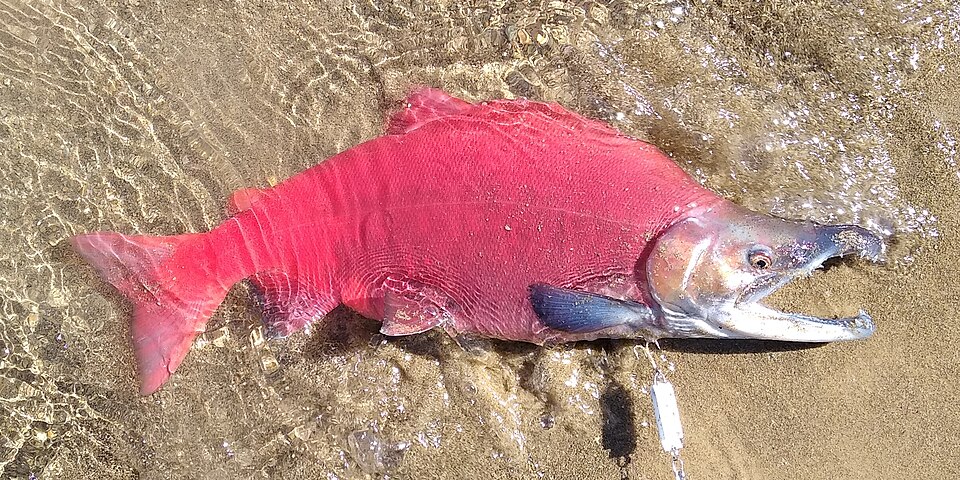
Kokanee are landlocked sockeye salmon, silver and schooling, prized for their firm bright-red flesh and their habit of turning deep water into a numbers game once you find them.
Kokanee are landlocked sockeye salmon, and outside of spawning season they get mistaken for trout, especially rainbow trout or small lake trout sharing the same water. The giveaway is the mouth and the tail. Kokanee have small, toothless-looking mouths and a deeply forked tail with faint but visible black speckles scattered on the upper half, while rainbow trout have a more heavily spotted body all over, including the tail, and lake trout have a pale, unspotted body with a lighter, more irregular pattern. Kokanee also have no spots on the body itself, just a clean silver flank, which separates them from both trout species at a glance.
The other common confusion is with juvenile chinook or coho salmon in systems that stock both. Kokanee run smaller and school tightly in open water, and they have a distinct silvery, almost chrome look with a dark blue-green back and no spots on the dorsal fin, while young chinook and coho usually show more mottling. Come spawning season, the confusion disappears fast. Kokanee turn brilliant red with olive-green heads, males develop a hooked jaw and humped back, and at that point they look nothing like any trout in the lake.</identification_md> <parameter name="faqs">[{"question": "When do kokanee spawn?", "answer": "Kokanee spawn in fall, usually from late summer into early winter depending on water temperature. They run up tributary streams or gather near shoreline gravel in lakes, turn bright red, and die shortly after spawning, since they only spawn once in their lives."}, {"question": "What do kokanee eat, and what is the best bait?", "answer": "Kokanee feed almost entirely on plankton, so they rarely hit bait or lures out of aggression or hunger the way trout do. Anglers trigger strikes with small, flashy lures like dodgers and hoochies or wedding-ring spinners tipped with corn or maggots, fished slow and deep near where the fish are marked on a graph."}, {"question": "What is the best time of year to catch kokanee?", "answer": "Summer is prime time, when kokanee school up at consistent depths and can be targeted with downriggers or leaded line. Fall fishing near spawning tributaries can also be productive, though the flesh quality drops fast once fish start to color up and stop feeding."}, {"question": "How big do kokanee get?", "answer": "Most kokanee run 10 to 14 inches and a pound or less, though some lakes with good forage produce fish up to 18 to 20 inches and a couple pounds. They are smaller than their sea-run sockeye relatives because they spend their whole life in freshwater with less food available."}, {"question": "Are kokanee good to eat?", "answer": "Yes, kokanee are excellent table fish with firm, orange-red flesh similar to sockeye salmon, and many anglers rate them among the best-tasting freshwater fish around. Catch them before they start spawning, since the meat softens and the flavor drops off once they color up and quit feeding."}, {"question": "Do I need special gear to catch kokanee?", "answer": "Light tackle works fine, but most consistent kokanee anglers use downriggers or leaded line to keep small lures at a precise depth, since these fish suspend at specific depths tied to water temperature and oxygen. A good fish finder to locate schools makes a bigger difference than any specific rod or reel."}]
The app forecasts these conditions for your spot, and learns which ones you catch on.
Season
Where it lives
Kokanee live in cold, deep reservoirs and natural lakes across the Mountain West and the Pacific Northwest, with scattered stocked populations in high-elevation lakes elsewhere in the West. They are open-water fish, suspending in the pelagic zone rather than hugging structure, and they follow water temperature more than any single depth.
In spring and early summer they hold in the upper layers where the water is cool. As the surface warms they drop deeper, often thirty to eighty feet down, tracking the thermocline. In fall, mature fish push into feeder streams and river arms to spawn, and that is when they turn a deep red and are legal to snag or catch in some waters. Check local rules before targeting spawners.
What it eats
Kokanee are filter feeders that live almost entirely on zooplankton, straining tiny crustaceans out of open water with fine gill rakers. They do not chase baitfish or hit lures out of aggression. Anything you catch them on is imitating plankton or triggering a reflex, not matching a real forage item they hunt.
How to catch it
Trolling is how almost everyone catches kokanee. Run small dodgers or flashers ahead of a bare hook or a tiny hoochie tipped with a kernel of white corn, usually soaked in shrimp or garlic scent. Troll slow, often under two miles per hour, and use a downrigger or leaded line to hold your gear at whatever depth your fish finder shows the school, which is frequently well below the surface once summer sets in.
Boat electronics make a big difference here because kokanee suspend in open water with no structure to give away their position. Watch for tight schools showing as a solid band on the sonar and set your baits just above or right in that band. In fall, where regulations allow, some anglers cast small spoons or use snagging gear for spawning fish staging near stream mouths, but check your state's rules first since many waters close this to protect the spawn.
- What do kokanee eat?
- Mostly zooplankton, strained from the water with fine gill rakers. This is why they rarely bite on bait or big lures and why small spoons, spinners, and flashers behind a dodger are the standard approach.
- When do kokanee spawn?
- In fall, usually late summer through autumn depending on water temperature. Spawning fish leave open water and run up tributary streams or gather along shoreline gravel, turning bright red with a green head.
- How big do kokanee get?
- Most run 10 to 18 inches and a pound or two, though some waters with rich plankton produce fish pushing 20 inches or more. They are naturally smaller than the sea-run sockeye they come from since they never reach the ocean.
- Is the best fishing early morning or can you catch them all day?
- Kokanee suspend at specific depths tied to water temperature and light, so a fish finder matters more than time of day. Early and late light often push them shallower, but trolling the right depth band will produce fish any time.
- Are kokanee good to eat?
- Yes, kokanee are considered excellent table fish with firm, orange-red flesh similar to sockeye salmon. Fish caught before they start turning red and spawning have the best quality and fat content.
- Do kokanee die after spawning like other salmon?
- Yes. Like their sea-run sockeye relatives, kokanee spawn once and die within a few weeks afterward. This is why fisheries rely on natural reproduction or hatchery stocking to maintain populations each year.