

Mahi-mahi
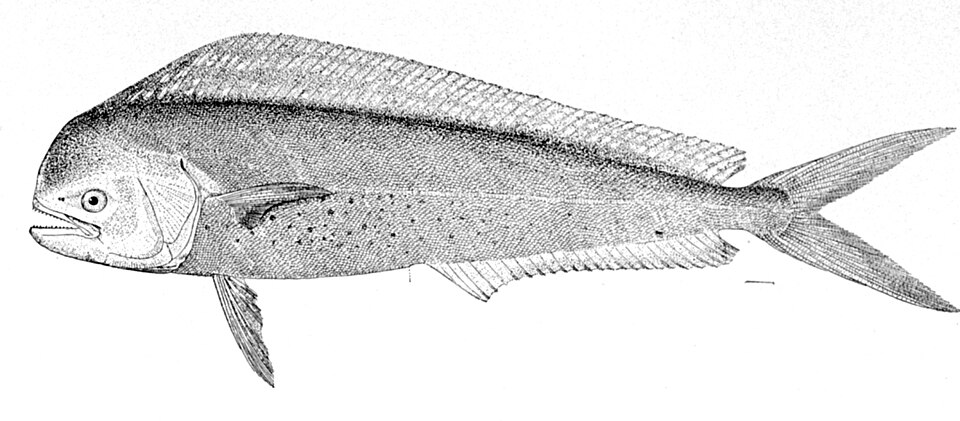
A blue-water speedster in electric green and gold that fights hard, jumps often, and tastes as good as anything in the ocean. Find floating debris or a weed line offshore and mahi are often right underneath it.
Mahi-mahi are hard to mistake once you see one boatside. They run brilliant green-gold and blue on the sides with scattered dark spots, a body that tapers to a deeply forked tail, and a single long dorsal fin that runs almost the entire length of the back. Males (bulls) have a blunt, squared-off forehead that gets more pronounced with age, while females (cows) keep a rounder, sloped head. That color fades fast to gray and yellow once the fish is out of the water, so do not rely on it alone.
The species people confuse mahi-mahi with is pompano dolphinfish, a smaller, less common relative in the same genus. Pompano dolphinfish rarely exceed a couple feet, have a shorter, more rounded dorsal fin profile, and a deeper, more compressed body relative to length. True mahi-mahi grow much larger, have a longer and lower-slung body, and that unmistakable rainbow flash of color while alive. Anglers sometimes also lump juvenile mahi-mahi in with other open-ocean baitfish because of their small size and metallic sheen, but the long single dorsal fin and forked tail give them away immediately.</identification_md> <parameter name="faqs">[ {"question": "How big do mahi-mahi get?", "answer": "Most fish caught run two to fifteen pounds, but bulls can top 30 pounds and the biggest recorded fish have pushed close to 90 pounds. Anything over 20 pounds is considered a big one by most anglers."}, {"question": "What do mahi-mahi eat?", "answer": "They feed on flying fish, small baitfish, squid, and crustaceans near the surface. They are aggressive, opportunistic feeders and will chase down trolled lures, ballyhoo, and cut bait without much hesitation."}, {"question": "When is the best time to catch mahi-mahi?", "answer": "Warm months are best, when surface water temperatures climb into the mid 70s and above. They follow weed lines, floating debris, and current edges, so timing matters less than finding structure offshore."}, {"question": "Are mahi-mahi good to eat?", "answer": "Yes, they are one of the most popular eating fish in the ocean. The meat is firm, mild, and holds up well to grilling, frying, or blackening."}, {"question": "Do mahi-mahi spawn all year?", "answer": "In warm tropical and subtropical waters they spawn nearly year round, with peaks in warmer months. They grow extremely fast and mature within their first year, which is part of why populations bounce back quickly from fishing pressure."}, {"question": "Why do you sometimes catch a whole school of them at once?", "answer": "Mahi-mahi travel in loose schools, often grouped by size, and they hold under floating weed lines, debris, or anything casting shade on the surface. Hook one and it is common for the rest of the school to follow it right up to the boat, so keeping a hooked fish in the water a bit longer can trigger more bites."} ]
The app forecasts these conditions for your spot, and learns which ones you catch on.
Season
Where it lives
Warm offshore water along the Atlantic coast, the Gulf, and the Pacific waters off the southern coast and Hawaii. Mahi-mahi follow warm currents and are most common where surface temperatures sit in the high 70s and up.
Look for them near anything floating in blue water: weed lines, logs, buoys, patches of sargassum, or debris. That structure holds baitfish, and baitfish hold mahi. They also gather under floating birds and around temperature breaks and current edges well offshore, usually miles past the reef or the last sight of land.
What it eats
Flying fish, small baitfish, squid, and crustaceans picked off the surface and just below it. Mahi are aggressive daytime feeders and will hit a lure or bait that looks alive and moves fast. A school of mahi under a weed line will often eat one after another with little hesitation.
How to catch it
Run offshore until you find warm blue water and start looking for floating structure or a weed line. Troll ballyhoo or small skirted lures along the edges at moderate speed. Once you raise a fish or see one flash, cut the engine and pitch a live bait or a bucktail jig right at it. Mahi travel in schools, especially the smaller ones, so keep a hooked fish in the water near the boat to hold the school close and catch several more on cut bait or live chum.
They hit topwater plugs and poppers hard when you find them busting bait on the surface. Light to medium tackle is enough for most fish, but be ready for long runs and acrobatic jumps right at the boat.
- How big do mahi-mahi get?
- Bulls can top 50 pounds and 5 feet, but most fish caught run 5 to 20 pounds. Cows tend to run smaller than bulls.
- What do mahi-mahi eat?
- Small baitfish, flying fish, squid, and anything else they can chase down near the surface. They are aggressive daytime feeders and will hit trolled ballyhoo, cut bait, and jigs.
- When and where is the best time to catch mahi-mahi?
- Warm, blue offshore water is the key, usually near weed lines, floating debris, or current edges where bait collects. Seasonal runs peak in the warmer months when water temperatures push into the mid 70s and up.
- Are mahi-mahi good to eat?
- Yes, they are one of the most popular eating fish in the ocean. The meat is mild, firm, and holds up well to grilling.
- Do mahi-mahi school together?
- Yes, especially smaller fish, which often travel in packs under floating structure. If you hook one, keep a bait in the water since more are usually nearby.
- How fast do mahi-mahi grow, and how long do they live?
- Very fast. They can reach full adult size in under a year, but they are also short-lived, rarely making it past 4 or 5 years.