

Pacific Barracuda
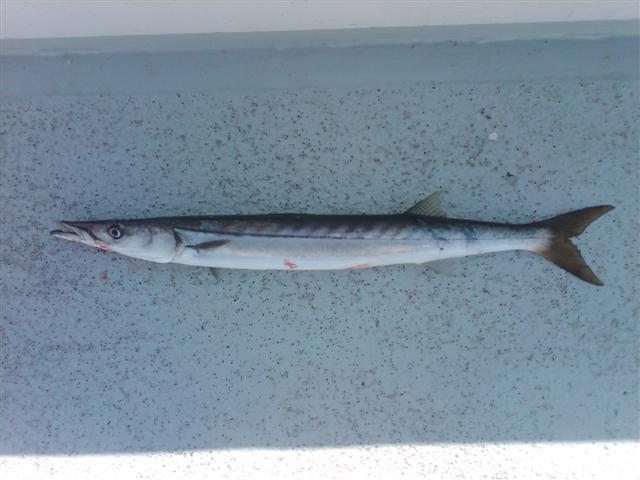
A long, silver, toothy predator that shows up along the Pacific coast in warm-water years and tears into schools of baitfish on the surface. Fast, aggressive, and fun on light tackle once you find them.
Pacific barracuda have a long, slender, almost torpedo-shaped body with a pointed head and a lower jaw that juts out past the upper one, packed with sharp, visible teeth. They run silvery to blue-gray on the back with a bright silver belly, and a faint yellowish tint often shows along the sides. Two widely separated dorsal fins sit far back on the body, closer to the tail than the head.
Anglers new to them sometimes confuse Pacific barracuda with California halfbeaks or needlefish because of the elongated shape and pointed jaws, but barracuda are much thicker-bodied and have that unmistakable underbite with real teeth, not the thin needle-like bill of a needlefish. They also get mixed up with young wahoo in warmer waters, but wahoo have a more compressed body, a longer continuous dorsal fin, and bold vertical bars that Pacific barracuda never show. Pacific barracuda stay smaller than great barracuda too, rarely topping four feet, and lack the scattered dark blotches found on that species.
The app forecasts these conditions for your spot, and learns which ones you catch on.
Season
Where it lives
Pacific Barracuda range along the West Coast, most reliably from the Southern California coast up through central California in years when the water runs warm. They follow bait schools along kelp beds, drop-offs, and open coastal waters, often close to the surface.
They show up seasonally, usually from late spring through fall, and move with water temperature. Party boats and private skiffs find them by watching for diving birds and surface bait activity, since barracuda often feed right at the top.
What it eats
Anchovies, sardines, and other small schooling baitfish make up most of the diet. Pacific Barracuda are sight feeders that slash through bait balls at speed, often feeding in loose packs near the surface.
How to catch it
Light tackle and fast retrieves work best. A metal jig or a feathered lure cast into a surface-feeding school and retrieved quickly will draw hard, slashing strikes. Live anchovies fished on a light wire leader also work well, since barracuda teeth will cut straight through mono.
Look for bird activity and nervous bait on the surface, then get a lure in front of the school before it moves off. Once you hook one, the school often stays nearby, so keep casting back into the same spot. A fast, erratic retrieve triggers more strikes than a slow one. Check your state's regulations for size and bag limits before keeping fish.
- How big do Pacific barracuda get?
- Most run one to three feet long, with fish over four feet being rare. Anything over ten pounds is a solid fish.
- What do Pacific barracuda eat?
- They feed on small schooling baitfish like anchovies, sardines, and smelt. Fast trolled lures or jigs that mimic these baitfish work well.
- When is the best time to target Pacific barracuda?
- Spring through fall is prime, especially as water warms and baitfish schools push inshore. They tend to bite best early in the morning or late in the day.
- Are Pacific barracuda good to eat?
- Yes, the meat is white and firm with a mild flavor, though it does not keep as well as some other saltwater fish. Bleed and ice them quickly after catching.
- Do Pacific barracuda have sharp teeth I need to worry about?
- Yes, their teeth are sharp enough to cut light leader and can easily nick fingers during hook removal. Use pliers and handle them the same way you would a small pike.
- Where do Pacific barracuda spawn?
- They spawn offshore in warmer months, and juveniles show up in nearshore waters and bays later in the season. You will often catch smaller fish closer to shore during summer.