

Pacific Bonito
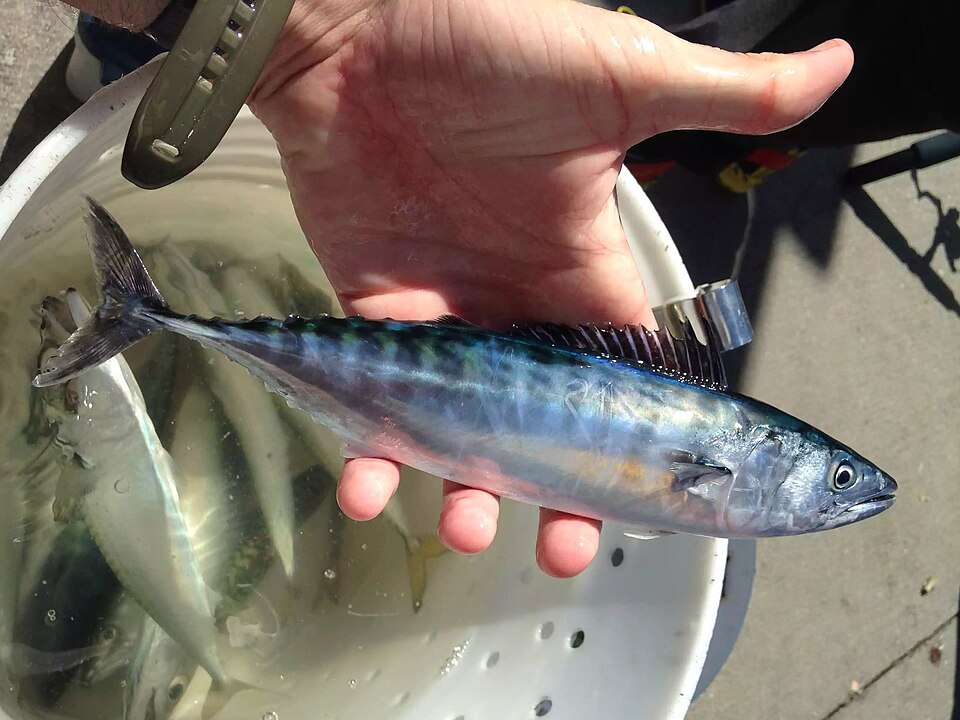
A fast, hard-pulling tuna relative that runs the Pacific coast in schools. Bonito hit like a truck and fight way above their size, making them a favorite target for anglers who want a real fight without a long boat ride.
Pacific bonito get mistaken for small tuna, especially skipjack, and for false albacore where their ranges overlap. The giveaway is the back pattern: bonito have dark, slanted stripes that run somewhat obliquely down the upper sides, not the horizontal stripes of skipjack or the wavy, broken markings of a false albacore. Bonito also have a longer, more pointed snout and a mouth full of visible teeth, something tuna and albacore do not have.
Body shape is another clue. Bonito are more slender and torpedo-shaped than skipjack, with a single stripe pattern that does not extend below the lateral line. They lack the dark spots between the pectoral and pelvic fins that mark little tunny. Fins are similar across all these species, small finlets running back to the tail, so do not rely on fin count. Stripe direction and snout length are the fastest field checks.
The app forecasts these conditions for your spot, and learns which ones you catch on.
Season
Where it lives
Pacific bonito range along the West Coast, most reliably from the Southern California coast up through central California, with numbers pushing further north into the Pacific Northwest in warmer years. They are a nearshore pelagic fish, roaming open water but often coming surprisingly close to shore, around kelp beds, points, harbor mouths, and offshore islands.
They travel in fast-moving schools that chase bait to the surface. When bonito are in, you find them by watching for diving birds and surface boils, sometimes visible from piers and jetties, more often worked from small boats and kayaks.
What it eats
Bonito are aggressive baitfish predators. They feed on anchovies, sardines, small mackerel, squid, and anything else small and silvery that schools in open water. They chase bait to the surface and slash through it, feeding by sight in fast, short bursts rather than cruising and grazing.
How to catch it
Speed is the whole game. Cast small metal jigs or spoons past a breaking school and retrieve them fast and steady, no pauses. A bonito that sees a lure stall will usually lose interest. Feathered jigs and small trolled Rapala-style plugs also work well when you are covering water looking for a school.
Live bait works if you can get it. A live anchovy or sardine fished on light line with no weight, freelined near a school, draws savage strikes. Bonito have sharp eyes and can be leader shy in clear water, so drop down to fluorocarbon leader when the bite gets tough. Keep your drag smooth and your hands ready, since the first run after the hookup is fast and hard, and a lot of fish are lost right at the boat.
- How big do Pacific bonito get?
- Most run one to eight pounds, with a good fish pushing into the low teens. They grow fast but rarely rival true tuna in size.
- What do Pacific bonito eat?
- They chase anchovies, sardines, and other small baitfish, along with squid. They feed aggressively near the surface when bait gets pushed up, which is when they are easiest to target.
- When is the best time to catch Pacific bonito?
- Warmer months bring them closer to shore and into bays, usually late spring through fall. Early morning and late afternoon feeding blitzes are your best shot at consistent action.
- Are Pacific bonito good to eat?
- Yes, but the dark, bloodline-heavy meat is stronger flavored than tuna. Bleed and ice them immediately and many anglers prefer them smoked or grilled rather than raw.
- Do Pacific bonito fight hard for their size?
- Yes. Pound for pound they pull harder than most inshore fish, with fast runs and a stubborn fight even on light tackle.
- What is the easiest way to catch one?
- Cast small metal jigs or spoons into surface feeding schools and retrieve fast. Trolling small feathers or spoons along bait schools also works well when fish are scattered.