

Pacific Halibut
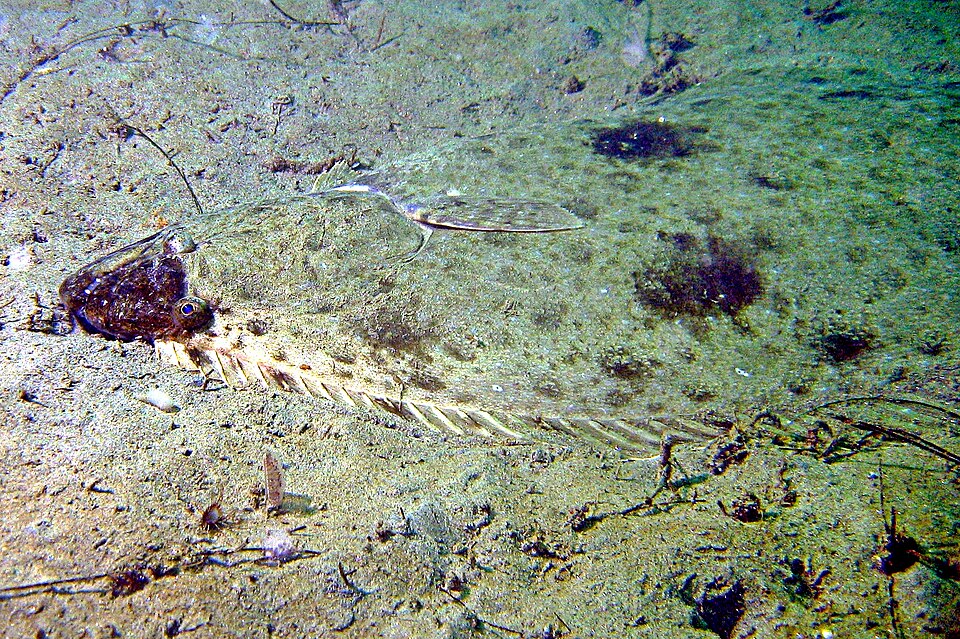
A giant flatfish that lies on the bottom of cold Pacific waters and grows big enough to fight back. Landing one is a bucket-list trip, not a casual afternoon.
Pacific halibut are flatfish, both eyes on the right side of the body, with a diamond-shaped body that is much longer than it is wide compared to other flatfish. The skin is dark olive to brown on the eyed side, often with mottled blotches, and pure white on the blind side. The tail is slightly concave to nearly straight across the edge, not rounded.
The main lookalike is arrowtooth flounder, which shares the same waters and a similar diamond shape. Arrowtooth have a larger mouth with long, sharp teeth visible even with the jaw closed, and their flesh turns mushy when cooked, which halibut never does. Greenland halibut and other large flounders are another point of confusion, but those species have a more slender, elongated body and a deeply forked or notched tail, while Pacific halibut are broader and thicker through the middle with a squared-off tail. Size is also a clue: Pacific halibut regularly grow far larger than any of these lookalikes, with fish over 100 pounds common and the record well past 400.
The app forecasts these conditions for your spot, and learns which ones you catch on.
Season
Where it lives
Cold, deep saltwater along the North Pacific coast. Pacific halibut live on sand, mud, and gravel bottoms from nearshore shallows down to several hundred feet of water. They are most commonly targeted well offshore, over banks, ledges, and current-swept flats where baitfish gather.
The best fishing runs from the northern Pacific coast up through the coastal waters of the far Northwest and into Alaska, where the largest numbers and the biggest fish are found. Inshore fisheries exist in bays and sounds, but the trophy-class fish come from deeper offshore structure.
What it eats
Halibut are ambush predators that lie flat on the bottom and wait. They eat herring, sand lance, cod, octopus, crab, and pretty much any smaller fish or invertebrate that swims or crawls within striking distance. Big halibut will also chase and eat salmon.
How to catch it
This is heavy gear fishing. Expect a stout boat rod, a conventional reel loaded with 60 to 100 pound braid, and enough lead or a heavy jig to hold bottom in strong current, often a pound or more of weight. A circle hook baited with a whole herring or a chunk of salmon belly, fished right on the seafloor, is the standard rig. Halibut jigs, heavy metal jigs worked just off bottom, also produce well and cut down on wasted bait.
Fish structure and current breaks where bait stacks up. Bites can feel like a soft thump or dead weight, so keep steady pressure and let the circle hook do its job rather than jerking to set it. Bringing a big halibut to the boat takes real muscle, and many charters use a gaff or tail rope for fish too large to net. Pacific halibut are managed with strict seasons, size limits, and bag limits that vary by region, so check current regulations before you go.
- How big do Pacific halibut get?
- Most fish caught run 10 to 40 pounds, but they can grow much larger. Fish over 100 pounds show up every year, and the biggest ones on record top 400 pounds.
- What do Pacific halibut eat?
- They are aggressive bottom feeders that eat other fish, squid, octopus, and crab. Larger halibut will actively chase and ambush prey well off the bottom, not just wait for food to drift by.
- When is the best time to catch Pacific halibut?
- Spring through late summer is prime season, once water temperatures rise and fish move onto feeding grounds. Many anglers find the bite strongest around tide changes, when moving water pushes bait around structure.
- Are Pacific halibut good to eat?
- Yes, they are one of the most prized eating fish in the ocean. The meat is firm, white, and mild, and it holds together well whether you grill, bake, or fry it.
- Where do you catch Pacific halibut?
- Look for them on sandy or gravel bottoms near drop-offs, banks, and current-swept structure, usually in water from 100 to 600 feet deep. Bigger fish tend to hold in deeper water.
- Are there size or bag limits on Pacific halibut?
- Yes, limits are strict and change often based on annual stock assessments and area. Always check current regulations before you keep a fish, since size limits, bag limits, and seasons vary by region and year.