

Rainbow Trout
A stocked, cold-water import that gives North Carolina anglers a shot at trout fishing without leaving the state. Rainbows fight hard for their size and take both bait and flies, which makes them a good next step after panfish.
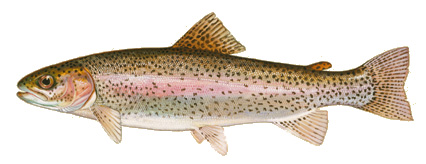
Look for the broad pink to reddish stripe running down the side from gill to tail, laid over a silvery to olive-green body covered in small black spots. The spots extend onto the tail fin in dense rows, which is one of the fastest ways to tell a rainbow from a brown trout, whose spots are larger, often ringed with a pale halo, and mostly stay off the tail. Rainbows also lack the red and orange spots scattered along the sides that mark most brown trout.
The other common mix-up is with cutthroat trout, especially in waters where the two overlap or have hybridized. Cutthroat show a red or orange slash mark under the jaw that rainbows never have, and their spotting is usually concentrated toward the tail rather than spread evenly over the body. Steelhead are the same species as rainbow trout, just a sea-run or lake-run form, and they look more silver and less colorful because they have spent time away from freshwater feeding, but the spotting pattern and tail markings match up the same way.
The app forecasts these conditions for your spot, and learns which ones you catch on.
Season
Where it lives
Cold, clean, moving water. In North Carolina that means mountain streams and rivers in the western part of the state, plus a scattering of tailwaters below dams that stay cold year-round. They need water that mostly stays under 70 degrees, so you will not find wild populations east of the foothills.
Look for them holding in current seams, below riffles, in deep pools, and anywhere shade falls across the water. Stocked fish often sit right where the truck dumped them, near bridges and easy-access pull-offs, for the first week or two after stocking. Wild and holdover fish push into tighter cover: undercut banks, root wads, and boulder pockets.
What it eats
Aquatic insects make up most of the diet: mayflies, caddisflies, stoneflies, and midges, eaten both as nymphs underwater and as adults off the surface. They also take small minnows, worms, and eggs when available. Feeding often lines up with hatches, so activity can turn on and off through the day depending on what insects are moving.
How to catch it
For bait fishing, a small hook with a nightcrawler piece or a single salmon egg, drifted naturally through a pool with minimal weight, works well on stocked water. Let it tumble along the bottom instead of dragging it.
Fly anglers do best with a nymph rig under an indicator, bumping bottom through likely holding water. A pheasant tail or hare's ear in size 14 to 18 covers most days. When fish are rising, switch to a dry fly that matches the size and color of what is hatching. Ultralight spinning gear with small inline spinners, like a size 1 or 2 Panther Martin or Rooster Tail, also works and is easier for a beginner to manage than fly gear.
North Carolina stocks trout waters heavily from spring through fall, and Delayed Harvest streams offer catch-and-release fishing with artificial lures only during the cooler months before they reopen to harvest in June.
- When do rainbow trout spawn?
- Most rainbow trout spawn in spring, typically March through May, when water temperatures climb into the mid 40s to 50s Fahrenheit. Some stocked and lake-run populations spawn in fall instead, so timing can shift depending on the strain and the water.
- What do rainbow trout eat?
- Aquatic insects make up most of their diet, especially mayflies, caddisflies, and midges in both nymph and adult forms. They also eat small baitfish, scuds, worms, and eggs from other spawning fish, which is why egg patterns and small spinners work well.
- What is the best time to catch rainbow trout?
- Early morning and evening are usually best, especially in warmer months when trout avoid the heat of midday. Overcast days can produce good fishing all day long, and in cooler months a warm afternoon often triggers the most insect activity and feeding.
- How big do rainbow trout get?
- Stream and stocked rainbows typically run 10 to 18 inches and a pound or two. Lake-run and steelhead forms grow much larger, commonly 5 to 10 pounds, with some trophy fish topping 20 pounds in the right waters.
- Are rainbow trout good to eat?
- Yes, rainbow trout are one of the most popular eating trout, with firm, mild, pink to orange flesh. Wild fish from cold, clean water tend to taste better than trout from warm or heavily fished waters.
- Do I need to release rainbow trout I catch?
- It depends on the water. Many lakes and rivers allow you to keep stocked rainbows under a daily limit, but wild trout streams, catch-and-release sections, and steelhead runs often have strict size and gear restrictions. Always check local regulations before keeping one.