

Red Drum
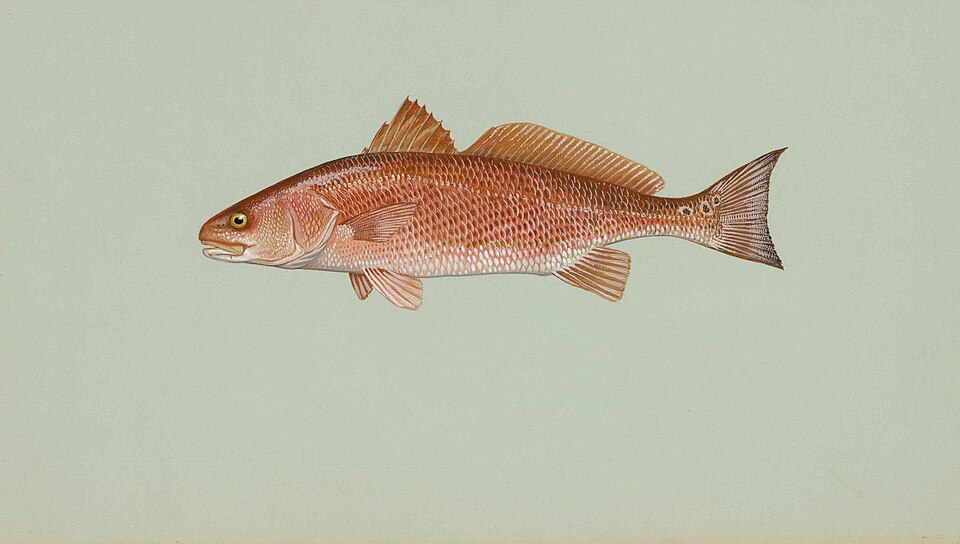
The signature inshore fish of the Carolinas. Red drum pull hard, tolerate almost any beginner mistake, and show up in creeks, sounds, and surf from Virginia to South Carolina.
Red drum are copper to bronze along the back, fading to white on the belly, with one or more black eyespots at the base of the tail. That single spot, or occasionally several, is the fastest way to identify one. No other common inshore fish reliably shows it, though on rare fish the spot is faint or missing entirely, so do not rule out red drum just because you cannot find it.
Anglers most often confuse red drum with black drum, especially small ones. Black drum are grayish or silvery with faint dark vertical bars instead of an eyespot, and they carry a cluster of barbels under the chin used for feeling out crabs and mollusks on the bottom. Red drum have no chin barbels. Red drum are also sometimes mixed up with striped bass, but a striper has clear horizontal stripes down its sides and a more torpedo-shaped body, while a red drum has that deep copper color, a slightly humped back, and a small, downturned mouth built for feeding on the bottom.
The app forecasts these conditions for your spot, and learns which ones you catch on.
Season
Where it lives
Red drum live in the marshes, creeks, sounds, and surf along the entire NC coast, and they range up into Virginia's lower Chesapeake and down through South Carolina's tidal creeks. Juveniles and mid-size "puppy drum" stack up in shallow, grassy backwaters and around oyster rocks. Bigger, older fish move out to inlets, nearshore wrecks, and the surf, especially in fall.
Look for tailing fish on shallow flats at low tide, where their tails and backs break the surface as they root for crabs in the mud. Docks, oyster bars, and creek mouths hold fish all year in the deeper sounds like Pamlico and Core Sound.
What it eats
Crabs are the main course, especially blue crab and fiddler crab, along with shrimp, mullet, menhaden, and other small baitfish. Red drum feed by smell and vibration as much as sight, which is why they root along the bottom in murky water and still find food. Bigger drum in the surf and inlets key in on cut bait and larger baitfish.
How to catch it
For puppy drum on the flats and in creeks, a Carolina-rigged live shrimp or finger mullet fished on bottom is hard to beat. A popping cork with a live shrimp underneath works well over grass flats and around oyster rocks, and the pop draws fish in from a distance. Gold spoons and soft plastic paddletails on a light jighead also produce, especially sight-casting to tailing fish on a falling tide.
For bigger drum in the surf or at inlets, fish cut mullet or menhaden on a fish-finder rig with enough weight to hold bottom. Pyramid sinkers work in current. Fall run fish along the Outer Banks surf can be some of the best big-drum fishing on the East Coast, so heavier tackle and stout circle hooks matter to land and release these fish safely.
- What do red drum eat?
- Crabs, shrimp, and small baitfish make up most of their diet. Their downturned mouth is built for rooting food off the bottom, so cut bait, live shrimp, and crab imitations all work well.
- When is the best time to catch red drum?
- Early morning and late afternoon are usually best, especially around moving tides. Fall is a peak season in most areas as big schools of adult fish gather near passes and inlets before winter.
- How big do red drum get?
- Inshore fish, often called puppy drum or slot fish, typically run 15 to 30 inches. Older fish that move offshore can top 40 inches and exceed 40 pounds, though most anglers never catch one that large.
- Are red drum good to eat?
- Yes, smaller slot-sized fish are excellent table fare with mild, firm white meat. Large bull reds are usually released, both because the meat gets tougher with age and because most states restrict keeping oversized fish.
- Do red drum spawn in fresh or salt water?
- They spawn in nearshore and inlet waters in late summer and fall. Juveniles then move into marshes, grass flats, and estuaries to grow, which is why small red drum are so common in inshore creeks.
- Is there a size or bag limit on red drum?
- Most states enforce a slot limit that protects both very small and very large fish, since big breeder-sized adults are key to the population. Always check local regulations before keeping one, since limits vary and change often.