

Red Snapper
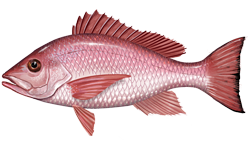
A hard-fighting reef fish with a bright red hide and a reputation for filling coolers. Red snapper seasons are short and tightly managed, so check regulations before you plan a trip around one.
Red snapper have a solid rosy-red body that gets darker on the back and fades to white on the belly, with a red eye that stays red even after the fish dies. The anal fin is rounded, not pointed, and that one detail separates them from most lookalikes. They also have a fairly large mouth for a snapper, with a slightly protruding lower jaw.
The fish they get mixed up with most are vermilion snapper and other red-colored reef fish sold or caught in the same waters. Vermilion snapper run smaller, have a more pointed anal fin, and show blue streaks and spots on the upper body that red snapper lack. Red porgy and rockfish get called red snapper too, but neither has the same thick body shape or the sharp spine count in the dorsal fin, which runs ten spines and thirteen or fourteen soft rays in true red snapper. Young red snapper have a dark spot near the tail that fades as they grow, and this can trick you into thinking you have a different species entirely.
The app forecasts these conditions for your spot, and learns which ones you catch on.
Season
Where it lives
Red snapper live in the Gulf, over natural reefs, rock ledges, and hard bottom in 60 to 200 feet of water. They also stack up hard around artificial structure: oil rigs, sunken wrecks, and purpose-sunk reef material. Younger fish sometimes show up shallower, but the bigger, older fish hold deep and tight to structure.
They do not roam much. Once a school sets up on a piece of bottom, it tends to stay there for years, which is why serious anglers guard their GPS numbers like gold.
What it eats
Red snapper are opportunistic bottom feeders. They eat smaller fish, squid, crabs, shrimp, and just about anything that swims or drifts near their reef. They feed up in the water column too, not just on the bottom, especially when bait is thick.
How to catch it
Heavy tackle is not optional here. Run a conventional reel on a stiff boat rod, 50 to 80 pound braid or mono, and a knocker rig or fish-finder rig with 4 to 8 ounces of weight to get down fast through the current. Bait with cut squid, cigar minnows, or live pinfish and drop straight to the structure.
Once you feel bottom, reel up a few cranks so the bait sits just above it and hold on. Red snapper hit hard and immediately try to dive back into the structure, so the fight is won or lost in the first few seconds. Because seasons and bag limits change every year and are often measured in days, not months, check current federal and state rules before you go, including any private recreational angler reporting requirements.
- How big do red snapper get?
- Most fish caught are in the 5 to 15 pound range, but red snapper can live 50 years or more and top 40 pounds. Fish over 20 pounds are usually decades old.
- What do red snapper eat?
- They feed on smaller fish, shrimp, crabs, and squid. They hold near structure and ambush prey rather than chasing bait over open bottom.
- When is the best time to catch red snapper?
- Warmer months are best, since red snapper feed more actively in summer. Early morning and late afternoon around structure tend to produce the most bites.
- Where do you find red snapper?
- They stick close to hard bottom, reefs, wrecks, and rock piles, usually in water from 30 to over 200 feet deep. Bigger fish tend to hold deeper and tighter to structure.
- Are red snapper good to eat?
- Yes, they are one of the most sought-after eating fish in the ocean. The meat is firm, white, and mild, and it holds up well to almost any cooking method.
- Is there a season or limit on red snapper?
- Yes, red snapper fisheries are tightly managed with specific seasons, size limits, and bag limits that vary by area and change year to year. Always check current regulations before you keep one.