

Redear Sunfish
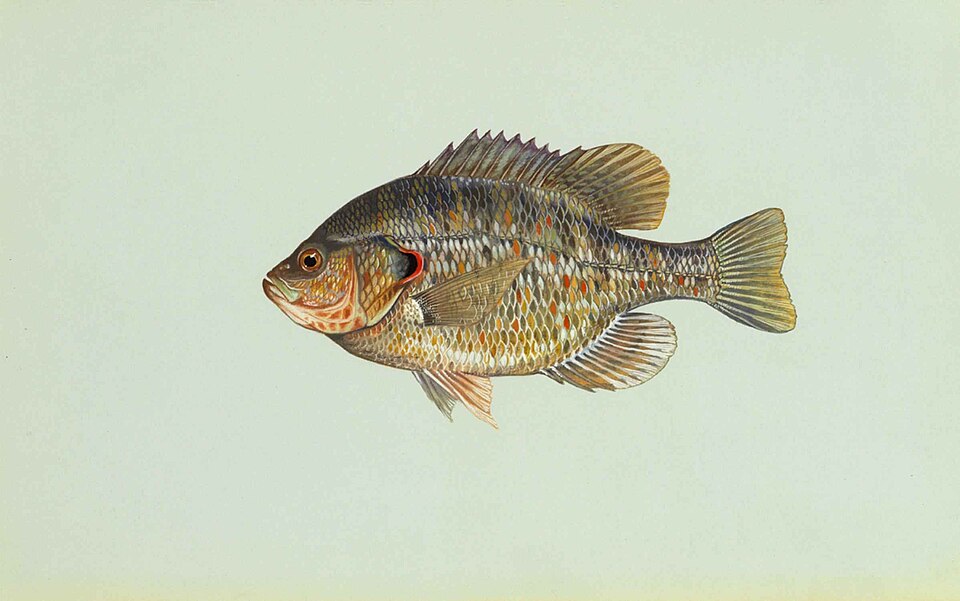
Also called shellcracker, this sunfish grows bigger than most bluegill and specializes in crushing snails. Find a pond with a healthy snail population and you may find a real slab.
Redear sunfish get mistaken for bluegill and pumpkinseed, the two other panfish they share water with. The giveaway is the ear flap. Redear have a black ear flap with a distinct red or orange margin on the edge, which is where the name comes from. Bluegill have a solid black ear flap with no color trim, and pumpkinseed have a black flap with a bright red or orange spot, not a border.
Body shape sorts out the rest. Redear are deep-bodied and slab-sided like bluegill, but their coloration runs more olive to gray-green with faint dusky vertical bars, without the vivid orange belly and blue-green cheek streaks pumpkinseed show. Redear also have a smaller mouth and a shorter, more rounded pectoral fin than bluegill. If you catch one and it feels heavy for its length, that is normal. Redear pack on weight fast because of what they eat.
The app forecasts these conditions for your spot, and learns which ones you catch on.
Season
Where it lives
Ponds, lakes, and slow river backwaters with soft bottoms where snails and clams live. Redear hold near cover like bluegill do, but they spend more time close to the bottom than up in the water column.
They spawn in shallow sand or gravel beds in spring, often earlier than bluegill, and will nest near docks, stumps, and brush piles in two to five feet of water.
What it eats
Snails and small clams make up most of their diet, which is why the name shellcracker stuck. Their throat has hard, flattened plates built for crushing shells. They also eat insect larvae, worms, and small crustaceans, but they key in on snails whenever they can find them.
How to catch it
Red worms and crickets fished on the bottom beat everything else. Use a small hook, a light split shot, and just enough weight to hold near the bottom in three to six feet of water. A slip float set deep works well since redear feed low, not up near the surface like bluegill often do.
Target them in spring around spawning beds, which you can often spot as pale circles on a sandy bottom near cover. Outside the spawn, fish quiet coves and dock pilings with a bait sitting still on the bottom. Patience matters more than lure choice with this fish.
- Why are they called shellcrackers?
- Redear sunfish have hard, flattened teeth in the back of their throat built for crushing snails and small clams. Shellcracker is the common nickname anglers use in a lot of areas because of that snail-crushing habit.
- What is the best bait for redear sunfish?
- Red worms and nightcrawlers fished right on the bottom are the classic choice, since redear feed mostly on snails, insect larvae, and other bottom life. Small pieces of worm on a light wire hook with just enough weight to hold bottom will outfish artificial lures most days.
- When do redear sunfish spawn?
- They spawn in spring into early summer once water temperatures reach the mid 60s to low 70s, usually a bit later than bluegill. Males fan out shallow, sandy or gravel beds in coves and along shorelines, and you can often see the beds in clear water.
- How big do redear sunfish get?
- Most run six to ten inches, but they are one of the largest sunfish species and fish over a pound are not unusual in good lakes. The record fish push close to five pounds, which is huge for a sunfish.
- Are redear sunfish good to eat?
- Yes, they are considered one of the best-tasting panfish, with firm white meat. Their diet of snails and clams instead of insects is often cited as the reason they have such a mild, clean flavor.
- What is the best time to fish for redear sunfish?
- Focus on the spring spawn when they group up shallow near sandy or gravel bottoms, since they scatter into deeper water the rest of the year and get harder to locate. Early morning and evening bites also pick up in summer once the water warms.