

Scup
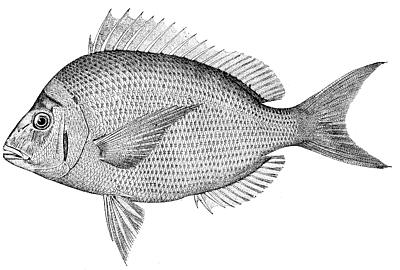
Scup, also called porgy, are scrappy panfish-sized bottom feeders that school up thick around structure. They put up a decent fight for their size and taste great, which makes them a favorite for anglers fishing piers and wrksks off Virginia and North Carolina.
Scup are deep-bodied, silvery panfish with a spiny dorsal fin and a small, sharp-toothed mouth built for picking at crabs and worms. Look for faint dusky bars across the back and sides, a forked tail, and a body so flattened side to side it looks almost like a coin from a distance. There is no barbel under the chin and no red tint to the fins.
The main mix-up is with porgy species that share the same deep, silvery shape, and with black sea bass when the fish are small. Sea bass have a longer body, a more pointed and continuous dorsal fin with a notch, and often a dark blotchy color instead of scup's clean silver. Sheepshead, where ranges overlap, have obvious black vertical stripes and heavy human-like teeth that scup do not have. Compared to other true porgies, scup run smaller, have a steeper forehead profile, and lack any bright yellow or blue markings on the head.
The app forecasts these conditions for your spot, and learns which ones you catch on.
Season
Where it lives
Scup live over hard bottom, rocky reefs, wrecks, and mussel beds in coastal and offshore waters. They school tightly around structure and will stack up on artificial reefs, jetties, and bridge pilings.
In North Carolina and Virginia they show up seasonally, moving inshore and northward as water warms in spring, then pulling back out to deeper continental shelf waters as it cools in fall. They are more of a mid-Atlantic staple than a year-round Carolina fish, so timing matters more than location.
What it eats
Scup feed on small crustaceans, worms, mollusks, squid strips, and small baitfish picked off the bottom. They have small mouths built for nibbling rather than inhaling, and they will pick a bait apart if you let them.
How to catch it
A simple bottom rig with two small hooks, a pyramid or bank sinker, and pieces of squid, clam, or bloodworm is the standard setup. Fish it tight to structure such as reef balls, wrecks, or pier pilings, since scup rarely stray far from hard bottom.
Use small hooks, size 4 to 1, since their mouths are tiny compared to their body. Bites are often light taps rather than a hard pull, so set the hook on the first tap instead of waiting for a big bend in the rod. Once you find one, you have usually found the whole school, so drop back down right away.
- How big do scup get?
- Most run 8 to 14 inches and under a pound and a half. Fish over 3 pounds are considered big and get called humpback scup or porgies in some areas.
- What do scup eat?
- Small crabs, worms, squid, clams, and other bottom invertebrates. They have small mouths, so they nibble and steal bait as often as they eat it clean.
- When is the best time to catch scup?
- Late spring through early fall, once water warms up and they move onto nearshore structure. They bite best on an incoming tide and often school up thick around wrecks, reefs, and pilings.
- What is the best bait or rig for scup?
- A simple high-low bottom rig with small hooks baited with squid strips, sandworms, or clam works well. Keep the hooks small since scup have tiny mouths and will strip a big bait without ever getting hooked.
- Are scup good to eat?
- Yes. The flesh is mild, white, and flaky, and scup are one of the more underrated panfish on the plate. Watch for the sharp dorsal spines when handling and filleting them.
- Do scup have size or bag limits?
- In many areas yes, since they are a heavily fished species. Check local regulations before keeping a cooler full, as minimum size and daily limits vary by region and season.