

Sheepshead
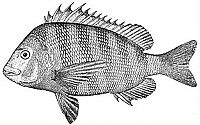
Nicknamed the "convict fish" for its black and white stripes, and the "bait thief" for its uncanny ability to strip a hook clean. Sheepshead have human-like teeth built for crushing shellfish, and catching one on purpose takes real timing.
Sheepshead have a deep, flat body covered in five to seven thick black vertical bars on a silvery gray background, which gets them mistaken for black-and-white panfish or even juvenile black drum. The giveaway is the mouth. Sheepshead have thick lips packed with human-like flat teeth, incisors up front and molars in the back, built for crushing shell, not the small cone-shaped teeth of drum or the underslung sucker mouth of a black drum.
Black drum are the closest lookalike where the two overlap, especially small ones that show faint bars. Black drum have a single barbel-free but chin covered in short whisker-like barbels, a longer sloped snout, and a rounder body, while sheepshead have a sharper, more triangular face and a stiff, sail-like dorsal fin with sharp spines that stand up when the fish is handled. Sheepshead also have a small mouth set low and slightly forward, made for scraping barnacles and crushing crabs off pilings, not the vacuum-style bottom mouth of a drum.
The app forecasts these conditions for your spot, and learns which ones you catch on.
Season
Where it lives
Sheepshead live around hard structure in brackish and coastal saltwater: pilings, docks, bridge abutments, jetties, oyster rocks, and sunken debris. They want current and something vertical to hold barnacles and crabs. Look for green, algae-covered pilings, that slime means food is growing there.
In spring they stage around nearshore reefs, rock jetties, and bridges to spawn. In winter some fish drop back to deeper wrecks and reefs, but plenty stay around inlet structure year-round in the Carolinas.
What it eats
Barnacles, fiddler crabs, mussels, oysters, and small crustaceans. Sheepshead crush shellfish with thick, human-like teeth and pick food off hard surfaces rather than chasing prey through open water. That diet is why they hang so tight to pilings and rock.
How to catch it
Fiddler crabs are the best bait, hands down. Sand fleas and small pieces of fresh shrimp also work. Use a small, strong hook and just enough weight to hold near the bottom or tight against the piling, with as little terminal tackle as possible. A knocker rig or a simple split shot rig keeps things subtle.
The bite is soft, a few light taps rather than a hard pull, and you have to set the hook fast on the first tap or the crab is already gone. This is the main reason sheepshead earn their reputation as a hard fish for beginners. Fish current breaks right against pilings and bridge pilings, drop straight down, and stay in contact with the line at all times. Bridges, jetties, and dock pilings around Beaufort, Morehead City, Charleston, and the Chesapeake Bay mouth are classic spots.
- What do sheepshead eat?
- Mostly barnacles, crabs, oysters, and small crustaceans that they scrape and crush off pilings, jetties, and reefs. Their strong teeth are built for crushing shell, not chasing baitfish.
- When is the best time to catch sheepshead?
- Late winter into spring, when they group up around structure to spawn, is usually the best window. Many anglers also do well around bridge pilings and jetties any time the water is cool to moderate.
- How big do sheepshead get?
- Most run one to five pounds, with fish in the eight to ten pound range considered a good catch. They can top twenty pounds, though fish that size are rare.
- Are sheepshead good to eat?
- Yes, they have firm, white, mild fillets and are considered excellent table fare. Filleting them takes some skill since they have a tough, bony frame.
- Why do sheepshead steal bait so easily?
- Their small mouths and precise, crushing bite let them nip crabs and shrimp off a hook without triggering an obvious bite. Using smaller hooks and paying close attention to light taps helps you hook up more often.
- Do sheepshead have any special regulations?
- Many coastal areas set minimum size limits and bag limits for sheepshead, especially since they group up predictably around structure during spawning season. Check local rules before keeping a catch.