

Sockeye Salmon
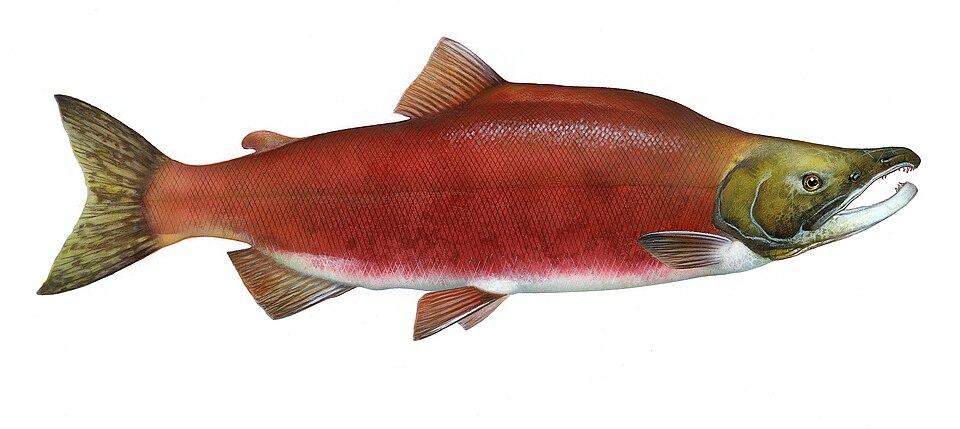
Sockeye salmon are the hardest-fighting salmon most anglers will ever hook and among the trickiest to convince to bite, since they run in schools but mostly ignore bait and lures on their way upriver. Prized for bright red meat and a spawning run that turns whole rivers crimson.
In salt water and fresh water before spawning, sockeye salmon are hard to tell from coho and chinook salmon at a glance. The best field mark is inside the mouth: sockeye have white gums and a mouth mostly free of the black coloring that coho and chinook show along the gumline and inside the jaw. Sockeye also lack the dark spots on the back and tail that both coho and chinook carry. Their body is sleek and silver with a greenish-blue back and fine speckling is absent, which is the quickest way to rule out chinook, a heavily spotted fish even at sea.
Once sockeye enter rivers to spawn, identification gets easy. Males and females turn brilliant red on the body with an olive-green head, a color change no other Pacific salmon shows to that degree. Pink salmon and chum salmon, the other two species anglers mix them up with, never turn solid red. Pinks develop a humped back and blotchy markings, and chum show reddish-purple vertical bars rather than an all-over red body. Sockeye also run smaller and slimmer than chinook and coho, rarely topping ten pounds, with a slightly forked tail that lacks the spotting found on those two species.
The app forecasts these conditions for your spot, and learns which ones you catch on.
Season
Where it lives
Sockeye are anadromous. They hatch in freshwater lakes and streams, migrate to the ocean to grow, then return to their home water to spawn and die. You find them along the Pacific coast and up into Alaska, in river systems that connect to nursery lakes. Bristol Bay and the rivers feeding it hold the largest runs in the country, but smaller runs show up throughout coastal Alaska and the Pacific Northwest wherever a river system has a lake in its headwaters.
In freshwater, look for sockeye staging in deep pools and slow current seams below spawning gravel, then pushing upstream in dense schools once water temperature and flow trigger the run. Landlocked sockeye, called kokanee, live their whole lives in freshwater lakes and behave more like a small trout, holding in cool, deep water most of the year.
What it eats
In the ocean and in lakes, sockeye feed almost entirely on zooplankton, filtering it out of the water column rather than chasing prey. This is unusual among salmon and it is the main reason they are so hard to catch with a lure. Once they enter rivers to spawn, they stop feeding altogether. Any fish you hook in fresh water is striking out of aggression, reflex, or territorial irritation, not hunger.
How to catch it
Since river sockeye will not bite out of hunger, the standard technique is flossing or lining: a bare hook and leader drifted through a school so the leader slides into the fish's open mouth as it faces upstream and the hook sets in the corner of the jaw. Where flossing is legal, use a short leader, small weight, and no bait, and drift it naturally through known holding water at the pace of the current. Many areas restrict this method or ban it outright, so check your state's regulations before you rig up.
Where bright flies or small spoons are allowed, some anglers do trigger strikes from aggressive fish by working a fly or lure right through a dense pod, especially early in the run before fish are worn down. For kokanee in lakes, troll small spoons or hoochies behind a dodger or flasher near the depth where fish are holding, usually located with a fish finder.
Sockeye runs are short, intense, and tightly managed. Check current regulations before you go, since seasons, gear restrictions, and bag limits change year to year and river to river.
- When do sockeye salmon spawn?
- Most sockeye runs happen from early summer through fall, depending on the river system. They spawn in freshwater streams and rivers, often ones connected to a lake where the young will rear for a year or more before heading to sea.
- What do sockeye salmon eat, and what should I use to catch them?
- In the ocean sockeye feed mainly on plankton and small crustaceans, which is why they rarely strike lures the way other salmon do. Anglers target them with small, bright flies or lures fished on a drift, and a lot of river fishing for sockeye is actually flossing or lining rather than true strikes, so check local regulations on technique.
- How big do sockeye salmon get?
- Sockeye are one of the smaller Pacific salmon species, typically running four to eight pounds with fish up to ten or twelve pounds considered large. They are noticeably slimmer than chinook or coho of similar length.
- Are sockeye salmon good to eat?
- Yes, sockeye have some of the richest, reddest flesh of any salmon and are widely considered one of the best eating salmon species. Their firm texture and high oil content make them a favorite for grilling and smoking.
- What is the best time to fish for sockeye salmon?
- Target them during their spawning migration when they are concentrated in rivers, since they scatter and feed on plankton in open ocean water the rest of the year, making them hard to target there. Early morning and evening are usually best once fish are staged in rivers or near river mouths.
- Can I keep sockeye salmon I catch?
- In many areas sockeye seasons are short and tightly managed because runs vary a lot year to year, so bag limits and open dates change often. Always check current local regulations before you fish, since some rivers open only for a few weeks or even days.