

Spot
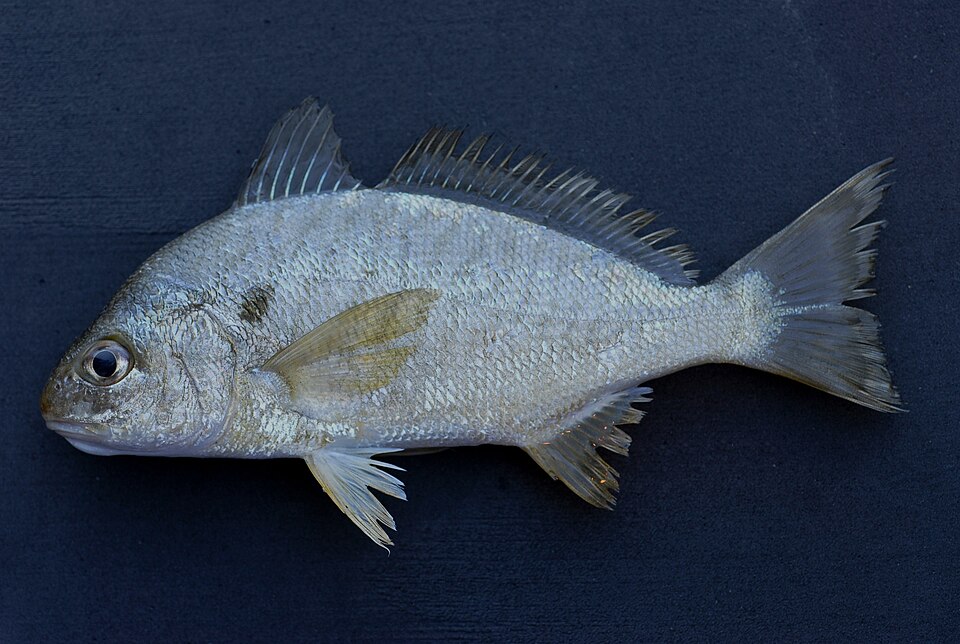
A small, hard-fighting panfish of the coast that shows up in huge numbers every fall. Easy to catch, good to eat, and a great way to introduce a beginner to saltwater fishing.
Spot are small, deep-bodied panfish of the drum family, easy to identify once you know the one field mark that never fails: a dark spot right behind the gill cover, above the pectoral fin. No other common panfish-sized drum has it in that exact spot, which is where the name comes from. Body color is silvery brass to gold, with 12 to 15 faint diagonal dark bars running down the sides above the lateral line. The tail is slightly forked, and the mouth is small and set low on the head for picking food off the bottom.
The most common mix-up is with juvenile Atlantic croaker. Both are small, silvery, bottom-feeding drum that show up in the same nets and the same coolers. Croaker lack the shoulder spot entirely, have a more elongated, less humpbacked body, and a longer snout that overhangs a slightly larger mouth. Croaker also have small barbel-like fringes on the chin and make a distinct croaking sound when handled, which spot do not do. Young spotted seatrout get confused with spot too, but seatrout have a much bigger mouth, sharp canine teeth, and black spots on the tail and rear body instead of one shoulder spot near the head.
The app forecasts these conditions for your spot, and learns which ones you catch on.
Season
Where it lives
Spot live in bays, sounds, inlets, and the surf along the whole Carolina and Virginia coast. They favor sandy or muddy bottom and school up over flats, channel edges, and around piers and bridges.
They move into estuaries and rivers in spring and summer, then push out toward the ocean and nearshore surf as water cools in fall. That fall run is the big event: thick schools stack up in inlets, piers, and the surf, and word travels fast when it starts.
What it eats
Spot feed on small worms, shrimp, and other bottom-dwelling invertebrates. They root along the bottom with a small, down-turned mouth built for sucking up food rather than chasing it. They are not picky and they feed in schools, which is why a bite often turns into a flurry.
How to catch it
A simple bottom rig with two small hooks, a pyramid or sputnik weight, and bits of bloodworm or shrimp is the standard setup. Fish it on the bottom in the surf, off a pier, or from a dock near an inlet. Size 4 to 6 hooks work best since spot have small mouths.
During the fall run you often do not need much finesse. Find the school, drop bait to the bottom, and expect fast action, sometimes two fish at a time on a double rig. Piers and bridges over deeper channels are reliable spots to intercept them as they move.
- How big do spot get?
- Most run 8 to 12 inches and under a pound, with anything close to 14 inches considered a big one. They are a small, short-lived fish, so trophy size is not the point.
- When is the best time to catch spot?
- Late summer through fall is prime, when big schools move along the coast and into bays and river mouths before heading offshore to spawn. Early morning and evening tend to produce the fastest action.
- What do spot eat and what is the best bait?
- They feed on worms, small crustaceans, and tiny invertebrates picked off the bottom. Bloodworms, cut shrimp, and small pieces of squid on a bottom rig or small hooks under a float are the standard baits.
- Are spot good to eat?
- Yes. They have mild, sweet white flesh and are popular fried whole or filleted, especially in the fall when they fatten up before their offshore migration.
- Do spot spawn in the same water you catch them in?
- No. Spot spawn offshore in the ocean, usually in late fall and winter, then the young drift into estuaries and stay inshore through spring and summer before moving back out as adults.
- Is there a size or bag limit on spot?
- Rules vary by state and sometimes by season, and some areas have no limit at all since spot are so abundant and short-lived. Check local regulations before keeping a cooler full.