

Spotted Seatrout
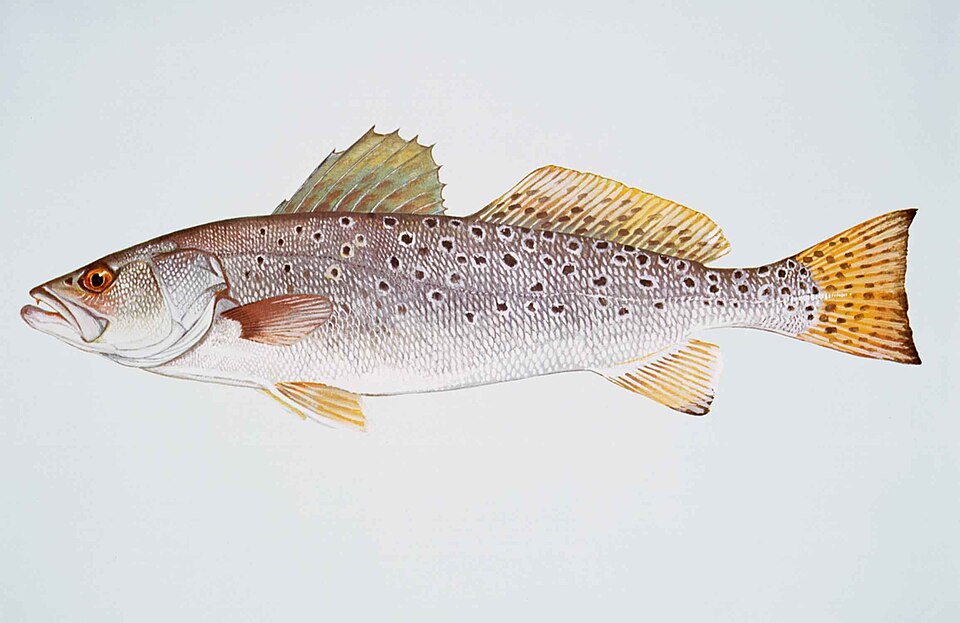
A speckled inshore predator that rewards anglers who fish soft baits slow and low over grass and mud. Prized for its light, delicious flesh and its willingness to smash a topwater plug on a calm morning.
Spotted seatrout get mixed up with weakfish and with young sand seatrout, since all three are slim, silvery members of the same family with a yellow mouth and prominent front teeth. The giveaway on a spotted seatrout is exactly what the name promises: bold, round black spots scattered across the back, upper sides, and both the dorsal and tail fins. Weakfish have a similar body shape but show faint wavy lines or dusky blotches instead of clean round spots, and those markings fade out before they reach the tail fin. Sand seatrout run smaller, look washed out and pale overall, and have no spots at all.
Body shape helps too. Spotted seatrout have a long, torpedo-shaped body, a dark gray to greenish back that fades to silver on the sides, and two noticeably large canine teeth at the tip of the upper jaw. That mouth is bigger and more built for grabbing baitfish than the small, weak mouth on a sand seatrout. If you catch a trout-shaped fish with clean black polka dots that run onto the tail, you have a spotted seatrout and not one of its cousins.</identification_md> <parameter name="faqs">[ {"question": "When do spotted seatrout spawn?", "answer": "They spawn through the warmer months, generally spring through summer, in bays and estuaries near grass flats and inlets. Spawning happens mostly at dusk and after dark, which is why calm evenings in the shallows can be productive during that stretch."}, {"question": "What do spotted seatrout eat?", "answer": "Mostly shrimp and small baitfish like mullet, menhaden, and pinfish. Larger trout key in on baitfish more than shrimp, which is why bigger lures and bigger live baits tend to weed out the small ones."}, {"question": "What is the best time to catch spotted seatrout?", "answer": "Early morning and late evening are the most reliable windows, especially over grass flats or near deeper channels next to shallow water. A moving tide, either incoming or outgoing, usually beats a dead flat tide."}, {"question": "How big do spotted seatrout get?", "answer": "Most fish you catch will run one to three pounds. A trout over five pounds is a very good fish, and anything past eight pounds is considered a trophy in most areas."}, {"question": "Are spotted seatrout good to eat?", "answer": "Yes, they have mild, flaky white meat and are one of the more popular inshore fish to keep for the table. The flesh is soft, so keep them cold quickly after the catch and handle the fillets gently."}, {"question": "Do spotted seatrout have size or bag limits?", "answer": "Most coastal states with a spotted seatrout fishery set a minimum size and a daily bag limit, and some have slot limits or seasonal closures to protect spawning fish. Always check the current regulations for the water you are fishing before keeping any."} ]
The app forecasts these conditions for your spot, and learns which ones you catch on.
Season
Where it lives
Spotted seatrout live in coastal sounds, marshes, and estuaries, rarely straying far from grass beds, oyster rock, and deep holes along channel edges. They like structure and slightly warmer water than most inshore species, so they hold in creek mouths and deep bends when it turns cold.
In North Carolina, look for them around Pamlico Sound, the marshes behind the Outer Banks, and the deeper holes of coastal rivers. In summer they spread into shallow grass flats to feed, then in winter they stack up in the same deep, soft-bottom holes year after year. A hard freeze can kill them off in shallow water, so cold snaps push them into their deepest wintering spots.
What it eats
Shrimp, small crabs, and baitfish like mullet, menhaden, and mud minnows make up most of the diet. Trout are ambush feeders that hold near structure and dart out to grab prey rather than chasing it far. They feed most actively at dawn, dusk, and through moving tide, and they slow way down in cold water.
How to catch it
A popping cork rigged with a live shrimp or a soft plastic shrimp imitation is the standard setup, and for good reason. Fish it over grass flats and along channel edges on an incoming tide, popping it every ten or fifteen seconds to call fish in.
Soft plastic jigs on a light jighead, worked slowly along the bottom near oyster rock or drop-offs, catch trout when the topwater bite is off. In cold months, slow down further and fish deep holes with patience. On calm mornings in warmer months, a walk-the-dog topwater plug worked over shallow grass at first light draws the most exciting strikes of the year.
- When do spotted seatrout spawn?
- Spawning runs from spring through summer, peaking as water warms into the 70s. Fish gather over grass flats and near passes at dusk, and you can sometimes hear their drumming calls in shallow water during this period.
- What do spotted seatrout eat?
- Mostly shrimp and small baitfish like mullet, pinfish, and menhaden. A live shrimp under a popping cork or a soft plastic paddletail worked over grass will cover most situations.
- What is the best time to target spotted seatrout?
- Early morning and evening are best, especially in warmer months when they move onto shallow flats to feed. In cooler weather, shift to deeper holes, channels, and creek mouths where they hold once the flats cool off.
- How big do spotted seatrout get?
- Most fish caught run 12 to 20 inches. Anything over 24 inches is a genuinely big trout, often called a gator trout, and fish that size are usually big females.
- Are spotted seatrout good to eat?
- Yes, the flesh is mild and flaky and one of the more popular inshore table fish. Handle them carefully though, since they have soft mouths and thin flesh that bruises easily if mishandled or iced poorly.
- Do I need to worry about regulations before keeping one?
- Yes. Spotted seatrout have size and bag limits nearly everywhere they are caught, and some areas close seasons around spawning. Check local rules before you fish, since limits vary a lot by location.