

Striped Mullet
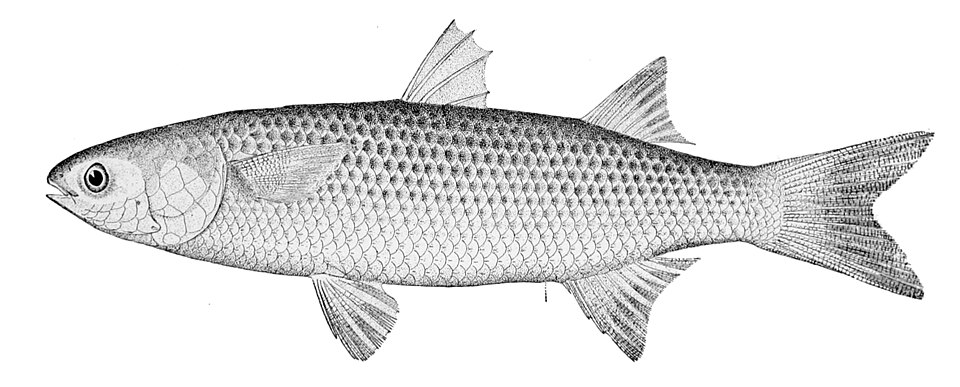
A silvery, torpedo-shaped fish that swims in schools along the coast and often jumps clear of the water for no obvious reason. Striped mullet are hard to catch on hook and line because they mostly eat mud, not bait, which makes landing one a real accomplishment.
Striped mullet have a stout, torpedo-shaped body, small mouth, and a blunt, rounded snout, nothing like the underslung jaw of a sucker or the sharp teeth of a baitfish predator. Their scales are large and give a faint striped look along the sides, which is where the name comes from, though the stripes are subtle and not always obvious. A key giveaway is the small triangular dorsal fin set well back on the body, plus a fatty eyelid that partly covers the eye, a feature almost no other inshore or freshwater fish has.
The main lookalike is the white mullet, which shares the same silvery body and blunt head. White mullet run smaller, have a more compressed body, and lack the well developed fatty eyelid that striped mullet show as adults. In fresh water, people sometimes confuse mullet with gizzard shad or menhaden, but those fish have deeply forked tails, sawtooth bellies, and a soft dorsal ray extension that mullet do not have. Mullet also swim differently, cruising in tight schools near the surface and jumping clear of the water for no obvious reason, a habit shad and menhaden rarely show.
The app forecasts these conditions for your spot, and learns which ones you catch on.
Season
Where it lives
Coastal waters from tidal creeks and marshes to sounds, inlets, and the surf itself. Striped mullet tolerate almost any salinity, so you will find them well up into brackish rivers and even pushing into freshwater for short stretches.
They travel in tight, often huge schools that cruise just under the surface. Look for nervous water, dimpling rings, or fish skipping and jumping over shallow flats, mud bottoms, and along grass edges. In fall, schools stage up before making a mass run offshore to spawn.
What it eats
Mostly detritus, algae, and organic matter sifted out of mud and sand, along with small invertebrates picked up in the process. They feed by grubbing along the bottom and filtering material through fine gill rakers, not by chasing prey. This is why they largely ignore hooks baited with meat, shrimp, or lures.
How to catch it
Traditional bait rarely works. The standard rig is a small gold hook, size 6 to 10, tipped with a tiny piece of dough bait, bread, or a bit of earthworm, fished under a small float right in the middle of a visible school. Chumming the water with wet bread or oatmeal draws them into range and gets them competing, which is often what triggers a bite.
Many anglers instead snag mullet with a treble hook fished on a heavy sinker and cast into a school with a sharp upward jerk. This is legal in NC waters for personal use bait harvesting and is the most reliable way to fill a livewell for cut bait, which is exactly what most people are really after when they target mullet. Cast nets work even better if you just want mullet for bait rather than sport.
- What do striped mullet eat?
- Mostly algae, detritus, and organic material they filter or scrape from the bottom and from submerged surfaces. They are not aggressive predators, which is why you rarely catch them on a hook and line using normal lures or bait.
- How do you catch striped mullet if they don't bite lures?
- Most anglers use a cast net over schools, or fish very small hooks baited with bread, dough balls, or tiny pieces of worm fished right on the bottom. Snagging with treble hooks is also common in areas where it's legal, since mullet are hard to hook conventionally.
- Why do mullet jump out of the water so much?
- Nobody knows for certain. Theories include shaking off parasites, gulping air, or escaping predators, but mullet jump even when nothing seems to be chasing them. It's one of the most recognizable things about the species.
- How big do striped mullet get?
- Most run 12 to 18 inches and a pound or two, with larger fish pushing 3 to 5 pounds in good habitat. Anything over that is a notably large individual.
- Are striped mullet good to eat?
- Yes, especially smoked. The flesh is oily and mild, and they're a popular smoked or fried fish in coastal areas, though some people find the darker flesh along the lateral line strong tasting and trim it out.
- When and where are striped mullet most active?
- They school heavily in warmer months in shallow bays, canals, and river mouths, moving between fresh and salt water depending on the season. Fall often brings large schools staging near passes and inlets before offshore spawning runs.