

Summer Flounder
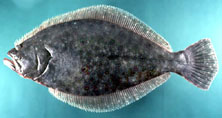
Also called fluke, this flatfish ambushes bait from the bottom and puts up a solid fight for something shaped like a dinner plate. A prized summer target from the surf, piers, and inshore boats along the Carolinas and Virginia.
Summer flounder are left-eyed flatfish, meaning both eyes sit on the left side of the body when the fish is held with the dark side up and the head pointing away from you. That single detail separates them from most other confused species right away. The body is broad, diamond-shaped, and mottled brown to gray on top with scattered dark spots that are roughly the same size as your eye, sometimes ringed lighter, though the pattern fades or shifts with the bottom they are lying on. The mouth is large and full of sharp teeth, reaching well back under the eye, which sets them apart from smaller-mouthed flatfish.
The most common mix-up is with other flounder species that share the same coastline, most of which are right-eyed, meaning the eyes are on the right side when viewed the same way. Flip the fish over in your head, or just look, and that alone settles most identification arguments. Winter flounder and similar right-eyed species also tend to have smaller mouths, thicker bodies, and duller, less distinct spotting. Halibut can show a similar left-eyed layout but grow far larger and have a more elongated, less rounded body shape, with a noticeably smaller mouth relative to their size. Summer flounder also have a distinctive lateral line that arcs sharply above the pectoral fin, a feature many lookalikes lack or show only faintly.
The app forecasts these conditions for your spot, and learns which ones you catch on.
Season
Where it lives
Summer flounder live on sandy or muddy bottom in bays, sounds, inlets, and nearshore ocean waters. They bury themselves with just their eyes showing and wait for food to swim overhead. Look for them around channel edges, drop-offs, bridge pilings, inlet mouths, and the deeper holes behind sandbars.
They move inshore in spring to feed and spawn-migrate, then push back out to deeper continental shelf waters as the weather cools in fall. In North Carolina, the sounds behind the Outer Banks and inlets like Oregon and Beaufort hold good numbers through summer.
What it eats
Ambush feeders that eat mostly baitfish: mullet, menhaden, silversides, and small croaker, along with shrimp and squid. They strike hard from below and often follow a bait before committing, which is why a slow retrieve matters more than a fast one.
How to catch it
Drift fishing over sandy bottom with a bucktail jig tipped with squid strip or a live mullet minnow is the standard approach. Bounce it slowly along the bottom, just fast enough to feel the jig tick sand. A Carolina rig with a live finger mullet or mud minnow, fished slow along channel edges and drop-offs, also works well from a boat or kayak.
From piers and bridges, fish live bait on a simple bottom rig near pilings and structure. When you feel the bite, resist setting the hook immediately. Flounder often mouth the bait first, so give it a few seconds before you reel down and strike.
- What do summer flounder eat?
- Small baitfish, squid, and crustaceans make up most of their diet. They are ambush predators, burying in sand or mud and darting up to grab anything that swims within range.
- When is the best time to catch summer flounder?
- Warmer months are best, generally late spring through early fall when the fish move into shallower bays, inlets, and nearshore structure. They shift to deeper offshore water as temperatures drop.
- How big do summer flounder get?
- Most fish caught run one to five pounds, but they can grow past twenty pounds. Females grow larger than males, so the biggest fish in any catch is almost always a female.
- Are summer flounder good to eat?
- Yes. The fillets are mild, white, and flaky, and summer flounder are one of the most popular flatfish on the table.
- Is there a minimum size or limit on summer flounder?
- Size and bag limits are common and change often based on stock assessments and location. Always check current local regulations before keeping fish.
- What is the best bait or lure for summer flounder?
- Live minnows, squid strips, and small jigs tipped with bait work well. Fishing slow along the bottom near structure or drop-offs is more important than any specific lure choice.