

Tarpon
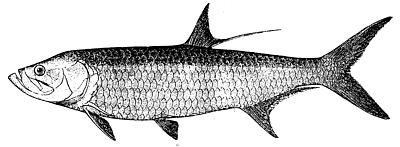
A giant silver fish that jumps like it's trying to throw a saddle rider, tarpon show up along the NC and SC coast in summer and give anglers one of the hardest fights in inshore or nearshore water. They are almost never kept, this is a catch-and-release, bragging-rights fish.
Tarpon are hard to mistake once you have seen one, but small "baby" tarpon in backcountry creeks sometimes get called ladyfish, and the two do share the same silvery, herring-like build. Ladyfish stay small, rarely past two or three pounds, have a more slender, torpedo-shaped body, and lack the single long filament trailing off the back of the dorsal fin that every tarpon has. Tarpon also have huge, hard, coin-sized scales you can count individually, an upturned bucket-shaped mouth, and a stiff, bony plate under the jaw. Ladyfish scales are small and soft like a typical baitfish.
The other mix-up is with milkfish, found in the same warm coastal waters. Milkfish have a similar forked tail and silver body but a small toothless mouth and no dorsal filament. If the fish you are looking at has that long trailing whip off its back fin and rolls at the surface gulping air, it is a tarpon.
The app forecasts these conditions for your spot, and learns which ones you catch on.
Season
Where it lives
Tarpon are a warm-water migratory fish that push up the Southeast coast as water temperatures climb. In North Carolina, look for them from the Cape Fear River area south, around inlets, sounds, and beaches near Southport, Wrightsville Beach, and down into the Pamlico and Core Sound region in good years. South Carolina's inlets and the lower Cape Fear see more consistent numbers than points further north.
They hold in deep inlet channels, along beachfronts where bait pods stack up, and in the mouths of sounds and rivers with moving current. Tarpon roll at the surface to gulp air, which is often the only sign you get that they are around. Watch for that roll on calm mornings and evenings.
What it eats
Menhaden, mullet, croaker, shrimp, and crabs make up most of their diet. Tarpon are opportunistic and will key in on whatever bait is thick in the area, which in the Carolinas usually means big schools of pogies (menhaden) moving along the beach in summer and fall.
How to catch it
Fish a live menhaden or mullet, either free-lined or under a float, near inlet mouths and along beaches where you see bait getting worked. Heavy tackle is not optional: a 6/0 to 8/0 circle hook, 60 to 80 pound fluorocarbon leader, and a rod with real backbone. Tarpon have hard, bony mouths, so a circle hook fished on a tight line that sets itself works far better than trying to swing on a fish yourself.
This is not a beginner's easy afternoon. Expect long fights, several jumps, and a real chance the fish throws the hook. Best months in North Carolina waters run July through September, with South Carolina producing fish a bit earlier and later in the season. Handle any tarpon you land carefully and keep it in the water for release, they do not survive rough handling on a dock or in a boat.
- When do tarpon spawn?
- Tarpon spawn offshore in warm months, generally late spring through summer, in open water well away from the coast. The young drift into estuaries, mangroves, and backcountry creeks to grow up before heading to open water as adults.
- What do tarpon eat?
- Adult tarpon eat baitfish and crustaceans like mullet, pinfish, crabs, and shrimp. They are opportunistic and will also hit large flies, plugs, and soft plastics that imitate a fleeing baitfish.
- How big do tarpon get?
- Adult tarpon commonly run 60 to 150 pounds, and fish over 200 pounds have been caught. They can live decades and keep growing slowly throughout their life.
- Are tarpon good to eat?
- No. Tarpon are bony, oily, and not considered good table fare, and most anglers release every fish they catch. In many places tarpon are a catch-and-release-only or heavily regulated species.
- When is the best time to catch tarpon?
- Warm months are best, when tarpon migrate along coastlines and stage in passes, beaches, and river mouths. Early morning and evening, especially around moving tide, produce the most consistent action.
- Why do tarpon roll at the surface?
- Tarpon have a modified swim bladder that lets them gulp air directly, which helps them survive in low-oxygen water. That rolling, gulping behavior at the surface is a normal part of how they breathe, not a sign of feeding or distress.