

Tautog
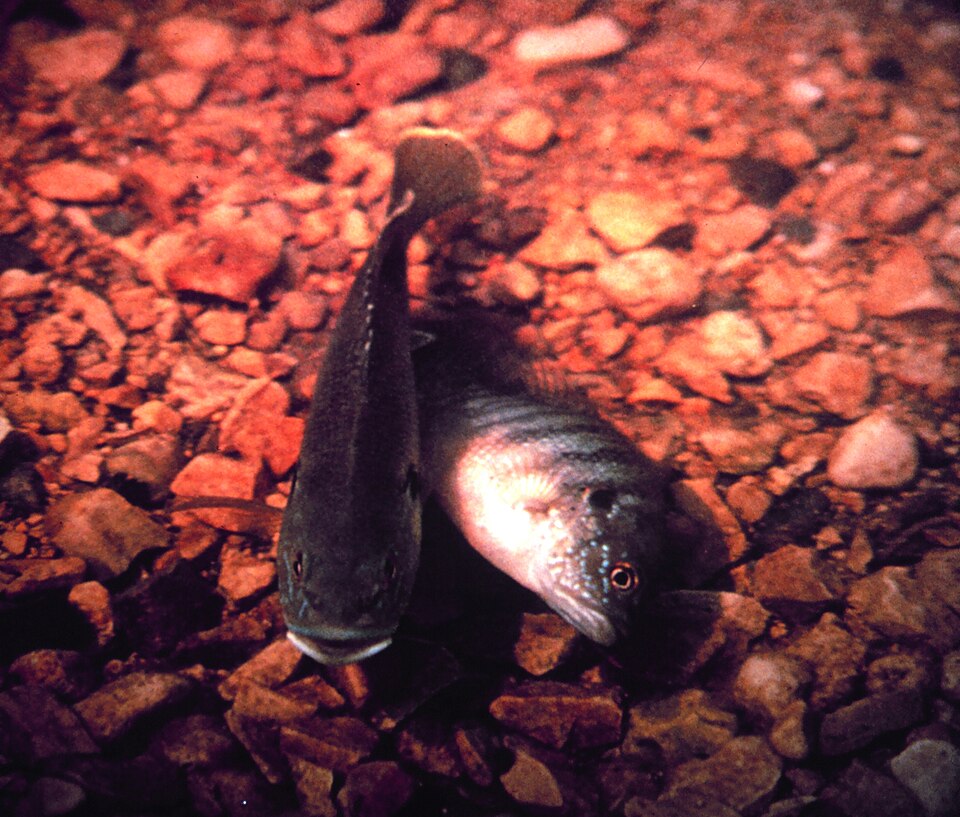
A hard-headed wreck and rock fish with rubbery lips and crushing teeth. Tautog fight dirty, hugging structure, and they are one of the better cold-water bites on the coast when most other saltwater fish have shut down.
Tautog have a thick, chunky body, rubbery lips, and small mouth packed with strong, blunt teeth built for crushing shellfish. Color runs from dark slate gray to mottled brownish black, often with a blotchy or marbled pattern along the sides. There is no sharp, clean pattern to them, just dull camouflage that blends with rocks and pilings.
The closest lookalike is the cunner, a smaller relative in the same wrasse family that shares the same rocky habitat and similar body shape. Cunner are slimmer, lighter in color (usually reddish brown to olive), and have a pointed snout with a more visible single continuous dorsal fin edge. Tautog are heavier bodied, darker, and blunter in the face, and they grow far larger, with cunner rarely topping a pound while tautog regularly reach several pounds. Black sea bass get confused with tautog too, but sea bass have a longer, more streamlined body, a spiny dorsal fin that stands up sharply, and a larger mouth built for grabbing baitfish rather than crushing shells.
The app forecasts these conditions for your spot, and learns which ones you catch on.
Season
Where it lives
Tautog live on structure. Rock piles, jetties, bridge pilings, artificial reefs, and shipwrecks hold them, usually in fifteen to eighty feet of water. They do not roam far from cover. A wreck that holds tog one week will usually hold them the next, since the fish tend to stay put once they settle in.
In North Carolina and Virginia, nearshore and offshore wrecks are the main producers. In South Carolina they show up less often, mostly around live bottom and reef structure further offshore.
What it eats
Crabs, barnacles, and mussels make up most of the diet. Tautog have thick lips and heavy, blunt teeth built for crushing shellfish off rocks and pilings. A green crab or fiddler crab fished right on the structure is about as close to a sure thing as this fish offers.
How to catch it
Fish straight up and down over structure with a stout rod and enough weight to hold bottom against current. A simple knocker rig or jig head with a whole or half green crab is the standard setup. Keep your bait in direct contact with the wreck or rocks. Tautog bite short and mostly just mouth the bait rather than slamming it, so watch for a light tap-tap and a heaviness in the line rather than a hard strike.
Because they dive for cover the instant they feel the hook, you need heavier tackle and a firmer hookset than the fish's size would suggest. Fifty-pound braid and a stiff rod help you turn their head before they wrap you around the structure.
- What does tautog eat?
- Mostly crabs, clams, mussels, and other shellfish. Their strong teeth and lips are built to crush shells, so green crabs and fiddler crabs are the standard bait.
- When is the best time to catch tautog?
- Fall and spring are the prime seasons, when water temperatures sit in the 50s. They bite well in cold water and slow down once it gets too warm or too cold.
- Where do you find tautog?
- Around structure. Rock piles, jetties, wrecks, and mussel beds are where they live year round. They rarely stray far from hard bottom and cover.
- How big do tautog get?
- Most fish caught run one to five pounds, but they can grow past twenty pounds. A fish over ten pounds is a genuinely big one.
- Are tautog good to eat?
- Yes, the meat is firm, white, and mild, and it holds up well in chowders and fillets. They are one of the better eating fish among structure dwellers.
- Do tautog spawn in a specific season?
- They spawn in late spring into early summer once inshore water warms up. Fishing often slows during the peak of the spawn as fish focus on reproducing rather than feeding heavily.