

Warmouth
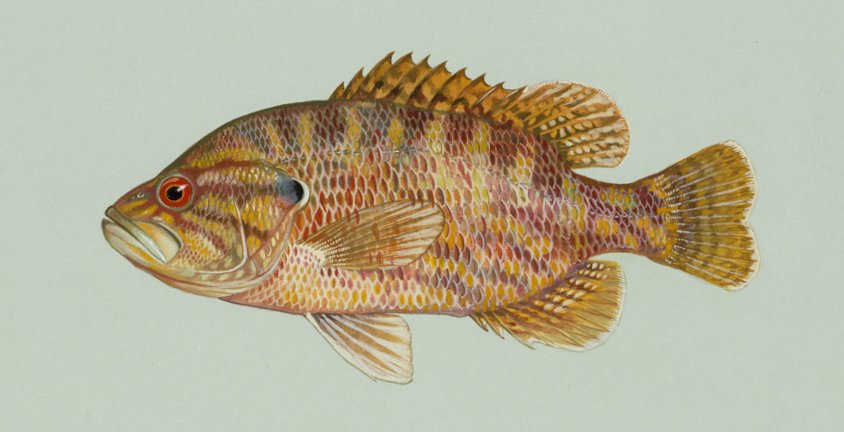
A chunky, big-mouthed sunfish that acts like a small bass. Warmouth sit in the nastiest cover they can find and ambush anything that gets close, making them an easy, scrappy catch for anyone fishing worms or jigs near wood.
Warmouth get mixed up with rock bass and with green sunfish, and it is easy to see why. All three are chunky, big-mouthed panfish with a similar olive-brown color scheme. The fastest tell is the eye: warmouth have reddish-orange eyes and several dark lines radiating back from them across the gill cover, like painted whiskers. Rock bass have that same big mouth but lack the eye stripes, and they usually show rows of dark spots forming lines along the side rather than a mottled pattern.
Green sunfish are the closer look-alike. Both have a large mouth that reaches back under the eye, which no true sunfish like bluegill or redear can match. Warmouth are stockier and more mottled, with a dark blotch at the base of the soft dorsal fin that green sunfish do not have. Green sunfish also tend to show a pale yellow to white edge on the dorsal, anal, and tail fins, which warmouth lack. Check the mouth size first to rule out bluegill and pumpkinseed, then check the eye stripes and fin blotch to separate warmouth from the rest.
The app forecasts these conditions for your spot, and learns which ones you catch on.
Season
Where it lives
Warmouth like still or slow water with structure to hide in: swamps, beaver ponds, farm ponds, oxbows, and the sluggish backwaters of blackwater rivers. They are especially common in tannic, stained water across the coastal plain.
Look for them tight to cover, sunk timber, stump fields, lily pad edges, brush piles, and undercut banks. They do not roam. A warmouth will sit in one spot and wait for food to come to it, so if you find good wood in shallow water you have probably found a warmouth.
What it eats
Crayfish, small fish, insects, worms, and just about anything else that fits in their oversized mouth. They are ambush feeders, not sight-grazers like bluegill, so they favor a slower, meatier bite over a quick nibble.
How to catch it
Fish a live worm or small minnow on a light jighead or a hook and split shot, and drop it right into the cover instead of casting past it. Flip it next to a stump or into a brush pile and let it sink. Warmouth do not chase far, so the bait needs to land close to their nose.
A small black or brown soft plastic jig worked slowly along the bottom near wood also works well, especially in tannic water where they hunt more by feel and vibration than sight. Once you hook one, get it moving away from cover fast. They will wrap you around a stump if you let them.
- How big do warmouth get?
- Most run six to nine inches and under half a pound. A one-pound fish is a solid one, and anything over a pound is a genuine trophy for the species.
- What do warmouth eat?
- Crayfish, small fish, insects, and worms. That big mouth lets them eat prey nearly as large as themselves, so they hit crankbaits and jigs meant for bigger bass just as readily as small panfish baits.
- When do warmouth spawn?
- In spring when water hits the mid to upper 60s, similar timing to bluegill. Males fan out shallow nests in soft bottom near cover and guard the eggs and fry.
- Where do you find warmouth?
- In and around heavy cover in still or slow water. Look for them in weed beds, brush piles, stumps, and lily pads in ponds, sloughs, and the calm backwaters of lakes and rivers. They tolerate low oxygen and murky water better than most panfish.
- Are warmouth good to eat?
- Yes. The fillets are firm and mild like other sunfish. They are small, so it takes a good number of fish for a meal, but plenty of anglers keep them for the pan.
- What is the best way to catch warmouth?
- Fish slow and close to cover. A small jig, live worm, or crayfish worked around wood or weeds will draw strikes. They are aggressive and not line shy, so light tackle is more about the fun of the fight than a real necessity.