

White Catfish
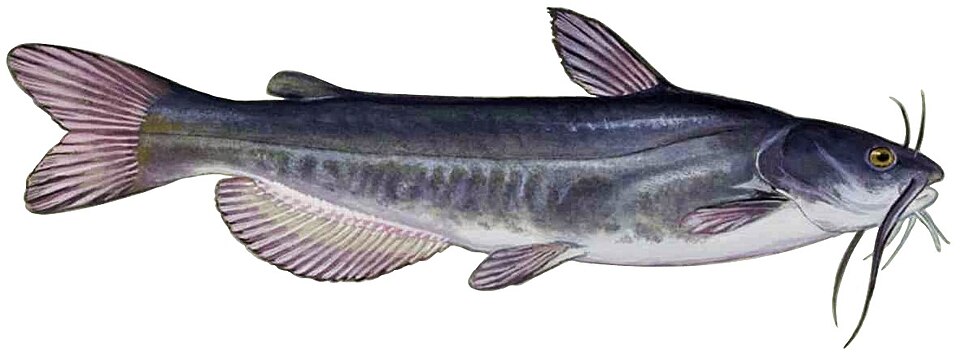
A smaller, sweeter-eating cousin of the channel and blue cat. White catfish are common in Carolina and Virginia rivers and ponds, easy to catch, and a good fish for a beginner to cut their teeth on cats.
White catfish get mistaken for channel catfish and for the larger bullhead species, and the mix-up usually comes down to not checking the fin and tail shape. A white catfish has a moderately forked tail, less deeply notched than a channel cat's, and a body that is stockier and more robust looking overall. Channel catfish also have small dark spots scattered on their sides, which white catfish never show, and channel cats run longer and leaner at the same weight.
The more common confusion is with bullheads, especially white and yellow bullheads, since all three share that broad head and pale belly look. Bullheads have a squared-off or barely notched tail, while the white catfish's tail fork is obvious even at a glance. Chin barbels are another tell: white catfish have dusky to gray barbels, bullheads usually show pale, whitish ones. Body color helps too. White catfish run bluish-gray to slate on the back fading to white or pale gray on the belly, without the yellowish or dark muddy tones you see on bullheads.
The app forecasts these conditions for your spot, and learns which ones you catch on.
Season
Where it lives
Slow rivers, tidal creeks, farm ponds, and reservoirs. White catfish tolerate brackish water better than other catfish, so you will find them well up into tidal creeks and the lower reaches of coastal rivers where the water still has a trace of salt.
They like soft mud or sand bottoms with some cover nearby: fallen trees, bridge pilings, deep holes below dams. They do not push as far upstream into current as channel cats do, and they hold in calmer water than you might expect for a catfish.
What it eats
Bottom feeders that eat by smell and taste more than sight. Worms, insect larvae, small fish, crayfish, and dead or dying baitfish all get eaten. They will also take clams and shrimp readily, especially in tidal water where those are part of the natural diet.
How to catch it
Fish the bottom with a simple Carolina rig: a sliding sinker, a swivel, and a foot of leader to a size 4 to 2 hook. Cut bait, worms, or shrimp all work. Cast into holes, along channel edges, or near submerged wood and let it sit.
White catfish feed most actively after dark, so evening into night is the best window. They do not fight as hard or grow as big as channel or blue cats, which makes them a forgiving target for someone new to catfishing. A simple bottom rig fished near cover after sundown will produce fish in most Carolina and Virginia rivers and ponds.
- How big do white catfish get?
- Most run one to three pounds, with a good fish in the four to six pound range. Anything over ten pounds is unusual and considered a trophy for the species.
- What do white catfish eat?
- They are opportunistic bottom feeders that take worms, cut bait, shrimp, small fish, and insect larvae. Cut bait and nightcrawlers fished on or near the bottom work well.
- When is the best time to catch white catfish?
- Late spring through summer is peak season, with dawn, dusk, and after dark being the most productive times. They feed actively in warm water and often move shallow at night.
- When do white catfish spawn?
- Spawning happens in late spring to early summer once water temperatures reach the high 60s to low 70s. Like other catfish, they nest in cavities or under cover and both parents guard the eggs and fry.
- Are white catfish good to eat?
- Yes, they have firm, mild white flesh and are considered good table fare, similar to channel catfish. Smaller fish under a few pounds tend to have the best texture and flavor.
- Are there any special rules for keeping white catfish?
- Regulations vary by location, so check local limits before keeping a mess of them. In many waters they are managed the same as other catfish species with generous bag limits.