

White Perch
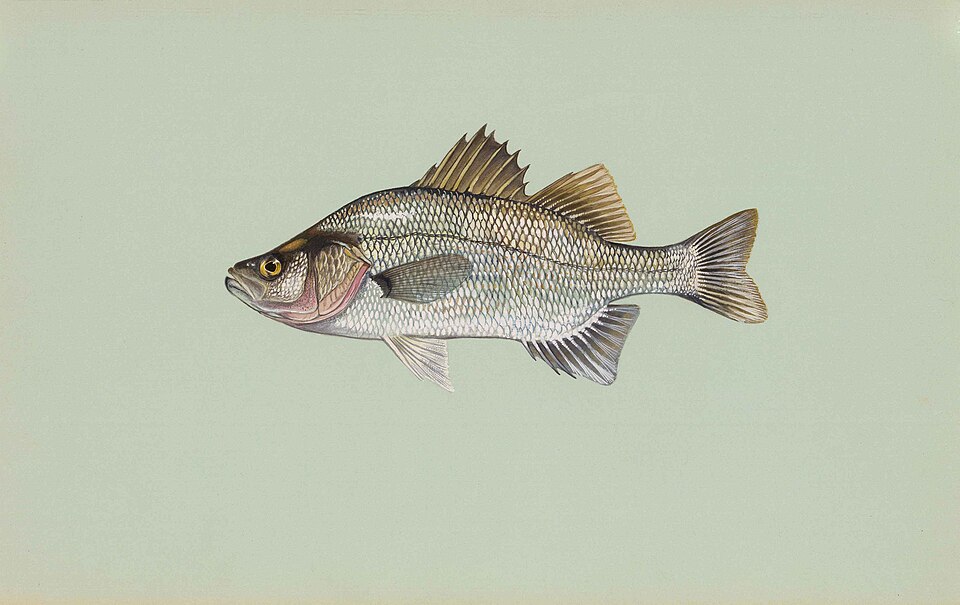
A silvery, panfish-sized cousin of the striped bass that schools thick in tidal rivers and reservoirs. Easy to catch in bulk once you find the school, and good eating too.
White perch are not perch at all, they are a true bass in the same family as striped bass and white bass. The name confusion causes real problems at the dock, so look past the name and check the body shape and markings instead.
The most common mix-up is with white bass. White bass have clear dark horizontal stripes running the length of the body, while white perch are plain silver to olive-gray or even dark gray on the back with no stripes at all, or at most a faint hint of one. White perch also have a deeper, more humpbacked body shape, especially behind the head, while white bass look more torpedo-shaped and level from head to tail.
White perch also get confused with black crappie, since both are silvery, deep-bodied panfish, but crappie have a much larger mouth that extends under the eye and a spiny dorsal fin that is clearly separate from the soft dorsal fin. White perch have two dorsal fins that are close together and nearly touching, and a smaller mouth. Where white perch overlap with true yellow perch, the difference is obvious once you know it: yellow perch have bold dark vertical bars down a golden-yellow body, while white perch are unbarred and silvery.
The app forecasts these conditions for your spot, and learns which ones you catch on.
Season
Where it lives
White perch live in brackish tidal rivers, sounds, and the reservoirs and lakes connected to coastal river systems. In North Carolina they are especially common in the tidal creeks and rivers feeding the Albemarle and Pamlico Sounds, and in lakes like Gaston and Tillery.
They school tight and move around a lot, following baitfish. Look for them around bridge pilings, river mouths, creek channel edges, and deep holes in winter. In spring they push far up rivers and creeks to spawn, which is when bank anglers catch the most fish.
What it eats
White perch feed on small baitfish, shrimp, worms, and insect larvae. They also eat a lot of fish eggs, including their own species' eggs during the spawn. They feed in loose schools and will chase a bait aggressively once they find it.
How to catch it
A small jig or a minnow under a float is the standard rig. Drop it near bridge pilings, creek mouths, or any current break and work it slowly. When you find one white perch you have usually found fifty, so once you get a bite, keep casting to the same spot.
In spring, fish the upper tidal reaches of coastal rivers like the Chowan, Roanoke, or Tar with small spinners, beetle spirits, or grubs on light spinning tackle. In summer and winter, look deeper, near channel edges and drop-offs, and slow down your presentation.
- How big do white perch get?
- Most run 7 to 10 inches and under a pound, with a big one pushing 2 pounds. Anything over a pound is a trophy-class fish.
- What do white perch eat?
- Small fish, insects, worms, and fish eggs. They are aggressive feeders and will hit small minnows, jigs, and worms fished near the bottom or suspended over structure.
- When is the best time to catch white perch?
- Spring is the best time, when they run up rivers and creeks to spawn and school up in huge numbers. Early morning and evening bites stay strong through summer and fall as well.
- When do white perch spawn?
- They spawn in spring, typically when water temperatures reach the mid to upper 50s, moving into tributary rivers, creeks, and shallow flats to do it.
- Are white perch good to eat?
- Yes, they have firm, mild white flesh and are considered excellent table fare, similar to yellow perch or crappie. Keep them on ice quickly since the meat softens fast in warm weather.
- Are there special rules for keeping white perch?
- In many waters white perch are considered invasive or overabundant, so limits are often generous or nonexistent, but always check local regulations since some states do restrict them, especially where they threaten native species.