

Winter Flounder
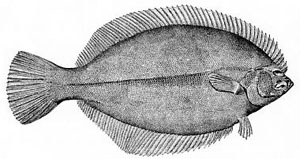
A flat, bottom-hugging fish of cold Northeast bays and harbors. It bites gently and fights small, but it's a mild, easy fillet and a good pick for a beginner fishing from a dock or anchored boat.
Winter flounder are a right-eyed flatfish, meaning both eyes sit on the right side of the body while it lies with its left side down on the bottom. That trait alone separates them from summer flounder (fluke), which are left-eyed. Winter flounder have a small mouth tucked under the head with fine teeth, a thick, rounded body, and a fine-grained, sandpapery skin. Color runs reddish-brown to dark olive or slate gray on top, often blotchy, with a pure white underside.
The main mix-up is with summer flounder and with yellowtail flounder. Fluke are left-eyed, have a much larger mouth full of sharp teeth, and a more elongated, angular body built for ambushing prey rather than grubbing on the bottom. Yellowtail flounder are also right-eyed and similar in shape, but they have a more slender, pointed tail, a brighter reddish-brown back, and a yellowish tint on the tail and fins that winter flounder lack. When in doubt, check the mouth first: a tiny, almost toothless mouth means winter flounder, not fluke.
The app forecasts these conditions for your spot, and learns which ones you catch on.
Season
Where it lives
Winter flounder live along the North Atlantic coast, from the bays and sounds of the Northeast down through the mid-Atlantic. They favor cold, shallow inshore water: harbors, estuaries, tidal creeks, and bays with mud or sandy-mud bottom.
They move inshore in the colder months, from late fall through early spring, which is how they got their name. In summer they drop back into deeper, cooler water offshore. Look for them around channel edges, mussel beds, and current seams in bays, usually in ten to thirty feet of water when they're in close.
What it eats
Winter flounder feed on worms, small crustaceans, clam siphons, and other tiny bottom-dwelling invertebrates. They have small mouths and feed by sucking prey off or out of the mud, not by chasing. This makes them slow, careful biters rather than aggressive strikers.
How to catch it
Fish a simple bottom rig: a small hook, a light sinker just heavy enough to hold bottom, and a short leader. Bloodworms and sandworms are the classic bait, cut into small pieces, since these fish have small mouths and peck rather than inhale. Squid strips and clam bits work too.
Anchor over mud or sand bottom in a bay or harbor and let the bait sit still. Winter flounder do not chase, so movement does not help much. When you feel a light tap or steady pressure, wait a beat before setting the hook gently, since a hard hookset often pulls the bait away from a fish that is still mouthing it.
Many states have tightened size and bag limits on winter flounder because populations have declined in parts of their range. Check your local regulations before you keep any.
- When do winter flounder spawn?
- They spawn in late winter through early spring, typically January through April depending on water temperature, in shallow bays and estuaries. This is also when they move inshore and become easiest to catch from shore or a dock.
- What do winter flounder eat?
- Their small mouth limits them to worms, small crustaceans, tiny mollusks, and other bottom invertebrates. This is why bait like sandworms, bloodworms, and clam strips outfishes big flashy lures.
- What is the best time to catch winter flounder?
- Late winter and spring, when they crowd into shallow bays, harbors, and river mouths to spawn and feed, is the most productive window. Many anglers fish for them right up until water warms in early summer, after which the fish move to deeper, cooler water.
- How big do winter flounder get?
- Most run 12 to 15 inches and a pound or two, with anything over 3 pounds considered a very good fish. They rarely approach the size of summer flounder, which can push into double digits.
- Are winter flounder good to eat?
- Yes, the fillets are thin but mild and sweet, among the best-tasting flatfish there is. Because they run small, it takes several fish to make a real meal.
- Are there rules about keeping winter flounder?
- Winter flounder populations have declined sharply in many areas, so size limits, bag limits, and closed seasons are common and vary a lot by location. Check local regulations before you keep any, since some areas now restrict harvest heavily or require release.