

Yellow Bullhead
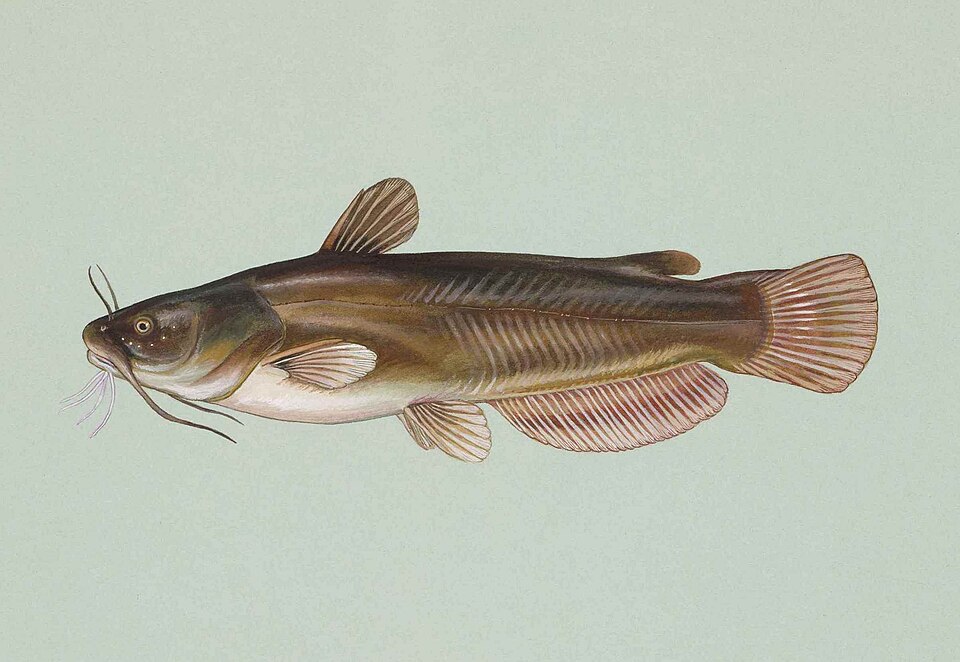
A small, sturdy catfish with a rounded tail and pale chin whiskers. Easy to catch, hard to mistake for anything else, and a great fish to hand a beginner who wants a bent rod.
Yellow bullheads get mixed up with black bullheads and brown bullheads, since all three are small, chunky catfish with rounded tails and eight barbels around the mouth. The easiest tell is the chin barbels, the whiskers under the jaw. On a yellow bullhead they are white to cream colored. Black and brown bullheads have dark, gray to black chin barbels. That one feature settles it in almost every case.
Body color helps but can fool you, since all three species range from yellow-olive to dark brown depending on the water they come from. Yellow bullheads tend to run more yellow-brown on the sides with a pale yellow belly, and the tail fin is only slightly notched, almost square. Brown bullheads usually show mottled or blotchy sides. Black bullheads run darker overall with a faint pale bar at the base of the tail. When in doubt, check the barbels first and use color as backup.
The app forecasts these conditions for your spot, and learns which ones you catch on.
Season
Where it lives
Ponds, small lakes, and slow, mucky sections of creeks and rivers. Yellow bullhead prefer still or barely-moving water with a soft bottom and plenty of cover: weed beds, brush piles, undercut banks, and fallen logs.
They tolerate low oxygen and warm, murky water better than most fish, so you will find them in farm ponds and backwater sloughs that other species avoid. They are most active after dark and move into skinny water at night to feed.
What it eats
Bottom scavengers with a strong sense of smell and taste, thanks to those whiskers. They eat worms, crayfish, insect larvae, snails, small fish, and dead or dying anything. They are not picky and will investigate almost any bait that sits still on the bottom.
How to catch it
Fish a simple bottom rig: a small hook, a light egg sinker, and a piece of nightcrawler, chicken liver, or cut bait resting right on the mud. No float needed. Cast it out near cover and let it sit. A bell or bite alarm helps since bullhead bites can be a slow pull rather than a sharp hit.
Evening and after dark are best, especially in warm months. Ponds and slow creek pools in the Piedmont and Coastal Plain of NC, SC, and VA all hold decent numbers. Handle them carefully. The dorsal and pectoral fins have sharp spines that can stick you if you grab them wrong.
- When do yellow bullhead spawn?
- Late spring into early summer, once water warms into the mid 60s to low 70s. Both parents guard the nest and will even fan and herd the young after they hatch.
- What do yellow bullhead eat?
- Just about anything on or near the bottom. Worms, insect larvae, small crayfish, snails, and dead or dying baitfish are all fair game. They feed mostly by smell and touch, using those barbels to find food in murky water or at night.
- What is the best time to catch yellow bullhead?
- After dark or in low light is best, since they feed most actively at night. Warm summer evenings on a pond or slow creek with a bait sitting on bottom will usually get you bites.
- How big do yellow bullhead get?
- Most run 8 to 14 inches and under a pound. A big one pushes two pounds, which makes them one of the smaller members of the catfish family.
- Are yellow bullhead good to eat?
- Yes. The meat is mild and firm, similar to other small catfish. Skin them before cooking since the skin is tough, and watch out for the sharp pectoral and dorsal spines when handling them.
- Do yellow bullhead have any sting or danger to handling?
- They cannot sting you, but the stiff spines on the dorsal and pectoral fins can puncture skin and cause a painful, sometimes swollen wound. Grip them firmly from the top, behind the head, to avoid the spines.